
Cookie consent

We use essential cookies to keep the website working. With your permission, we also use cookies for analytics and personalised advertising.

Everest Base Camp Trek

Everest Base Camp Trek

From the capital to the Base of Everest and back - Fly to Lukla, Trek Through Sherpa Trails, Sleep in Mountain Lodges and Return Changed.

Group rate from
US$

1,450

Duration

15 Days

Per person · 7+ travelers

Choose a departure date year-round

Private departure from US$ 1,450

Price details
  • Traveling with a group? Get a group discount
  • We’ll help tailor the trek to your budget

Duration

15 Days

This trip rating

Max elevation

5550 m

Best season

March to May and October to November

From group price

US$ 1,450

Per person · 7+ travelers

Amigo traveler rating: 4.9/5 across 548 reviews · Google, Tripadvisor, Amigo website

Is This Trek Right For You?

A sense of adventure is a great starting point, but proper preparation is the key to a successful trek. Ensuring you meet the required fitness level and prerequisites will help you make the most of this Everest Base Camp trekking journey.

Trekking involves altitude, weather, and trail risks. A planned itinerary, acclimatization days, and guide support cannot guarantee safety or reaching the planned destination. Conditions may require changes to the route.

  • Getting around

    Private Car & Flight

A good fit for

  • Physically fit trekkers capable of walking 5-8 hours daily and over steep and rugged mountain trails.
  • Travelers with 15 days or more to fully enjoy the trek without rushing the itinerary.
  • Trekkers with previous high-altitude (especially above 4000 meters) and multi-day trekking experience.

Consider before you go

  • Travelers with limited time (less than 15 days), little or no hiking experience and little to no preparation for high-altitude trekking.
  • Travelers uncomfortable with basic tea house accommodation and remote mountain conditions.
  • Travelers with any underlying health condition or medical conditions that may be aggravated by high altitude, unless cleared by their physician.
The Thoughts Behind This Itinerary

Four major thoughts...

  • To give you the experience of classic Everest Base Camp Trek as this 15-day itinerary follows the traditional EBC route, visiting destinations such as Namche Bazaar, Tengboche Monastery, Dingboche, Lobuche, Gorakshep, Everest Base Camp as well as Kala Patthar. 

  • To introduce an itinerary planned with acclimatization and rest days that combines trekking with adequate acclimatization and rest, supporting preparation for the route without guaranteeing safety or reaching Everest Base Camp. 

  • To create one itinerary that suits both first-time and experienced hikers, a wide range of fitness level, age group and schedules.

  • To offer the Everest Base Camp trek itinerary that ensures an ideal balance of adventure, culture and overall experience. 

Everest Base Camp Trek trip guidePDF

Your trip planning kit

Everest Base Camp Trek

Before You Go

Everest Base Camp Trek (Classic Trail, Standard Package)

Follow the world's most iconic trekking route on this 15-day Everest Base Camp adventure. With experienced guides, carefully planned acclimatization and unforgettable views of the Himalayas, this itinerary offers a rewarding and memorable journey to the foot of Mt. Everest.

Service level
Amigo Essential

Standard Everest Base Camp Trek in a Nutshell

Everest Base Camp Trek (15 days) is a standard Everest Base Camp Trek itinerary. It follows the classic EBC route, offering spectacular Himalayan scenery, rich Sherpa culture, and the rewarding experience of reaching the base camp of the world's highest mountain. The journey begins with your arrival in Kathmandu. You will fly to Lukla to start the trek. Including the two dedicated acclimatization days, it takes eight days to reach EBC and three days to return to Lukla. The trip ends with a flight back to Kathmandu from Lukla, followed by your departure from Kathmandu on the 15th day of this unforgettable Himalayan adventure.

What Makes This Trek Special

Classic trail, breathtaking Himalayan panoramas, iconic landmarks authentic Sherpa culture and the thrill of standing at the foot of the World's highest mountain.

  • Walking alongside world's highest glacier, the Khumbu Glacier, reach the base of world's highest mountain, Mt. Everest

  • Walk through traditional Sherpa villages and visit monasteries gaining insight into culture, traditions and hospitality of Khumbu region.

  • Experience scenic flight and thrilling takeoff and landing on a dramatic mountainside runway of Tenzing-Hillary Airport

  • Be surrounded by some of the most beautiful Himalayan peaks - Lhotse, Nuptse, Ama Dablam, Pumori etc.

Standard Everest Base Camp Trek Quick Facts:

  • Trek Style: Lodge trekking (Normal-Standard Lodges)

  • Route (in short): Lukla, Phakding, Namche, Deboche, Dingboche, Lobuche,  Gorakshep, Everest Base Camp, Gorakshep, Pheriche, Namche, Lukla.

  • Major Highlights: Everest Base Camp, Kala Patthar Sunrise/Sunset, Khumbu Glacier, Tengboche Monastery, Namche Bazaar and Sherpa Villages. 

Read full trip overview


Everest Base Camp Trek Trip Overview:

Everest Base Camp trek is an epic adventure in Nepal. This adventure takes you to explore a little world of mountains located in the Solukhumbu district of Nepal. This extraordinary mountain landscape is very special because it provides home to the highest peak in the world, the majestic Mt. Everest. 

This Everest Base Camp trek is a multi-day trekking journey that takes to the south base camp of Mt. Everest. This base camp is located in Nepal at the altitude of 5,364 meters above sea level. But the journey offers much more than just the base camp experience…

The spectacular panoramas of the towering Himalayan summits including Mt. Everest, Lhotse, Nuptse, Ama Dablam, Pumori, Cho Oyu, Number, Kusum Khangkaru, Thamserku, Kantega, Sunder Peak, Peak 38, Island Peak, Cholatse, Taboche, Makalu, Lobuche, Lingtren, Khumbutse, Lho La, Tibet mountain, Amphu Gyabjen as well as Changri unfold before you day after day, creating unforgettable backdrop throughout the journey and  immersing you in one of the world’s most breathtaking landscapes. 

Most parts of the trek are within Sagarmatha National Park, a UNESCO World Heritage Site, that offers an incredible journey through pristine Himalayan wilderness, rich biodiversity, ancient forests, glacier and Sherpa settlements, giving you a unique opportunity to experience the natural beauty, cultural heritage and remarkable landscapes in one trip. 

A walk along the highest glacier in the world, Khumbu glacier, with the crunch of ice beneath your feet and the world’s highest peaks standing above you feels surreal and unforgettable.

Tengboche monastery visit en route adds a meaningful cultural highlight to your trek, offering a chance to experience the spiritual heritage of the region against the backdrop of majestic peaks. 

Moreover, an experience that adds depth to your journey, the Sherpa villages en route, invites you to discover the unique mountain culture, warm hospitality and centuries-old traditions.

Did you know, Everest is not visible from its base camp due to surrounding terrain?

You actually need to climb Kala Patthar to get one of the closest accessible views of Mt. Everest without climbing the mountain itself. For this very reason, a hike to Kala Patthar (either during sunrise or sunset) is included in the itinerary. 

Standard Everest Base Camp Trek Route Overview:

This Everest Base Camp trek begins with your flight to Lukla. From Lukla, following the foot-steps of Sir Edmund Hillary and Mr. Tenzing Norgay Sherpa (the classic EBC trail), you will trek to the base camp of the highest mountain on Earth above sea level “Mt. Everest”. 

Starting Lukla, the trail goes through Phakding, Monjo, Jorsalle, Namche Bazaar, Sanasa, Phunki Tenga, Tengboche, Deboche, Pangboche, Dingboche, Thukla, Lobuche and Gorakshep, before culminating ‘the toward Everest Base Camp journey’ at Everest Base Camp. Gorakshep marks the final overnight halt on the approach to Everest Base Camp. Therefore, after achieving Everest Base Camp, you will trek back to Gorakshep for overnight stay. 

The starting point of the return journey, after Everest Base Camp, is Gorakshep. However, before starting the return journey, you will  take a side hike to the renowned viewpoint in the Everest region “Kala Patthar” to witness either a spectacular sunrise, or sunset over Mount Everest and the surrounding Himalayan beauty. 

After achieving Kala Patthar, you will first retrace your steps down to Thukla. At Thukla the trail forks, one leading to Dingboche and the other to Pheriche. Following the Pheriche trail you will hike down to the village of Pheriche, before retracing the trail taken during the ascent. You will then retrace your steps all the way down to Lukla past Somare, Pangboche, Deboche, Tengboche, Namche, Monjo and Phakding. 

The trek ends with a flight out of Lukla. 

The overnight stops on this standard Everest Base Camp trek are, Phakding, Namche (2 nights), Deboche, Dingboche (2 nights), Lobuche, Gorakshep, Pheriche/Pangboche, Namche and Lukla. 

Best Season to do this Everest Base Camp Trek:


This is a standard EBC trek itinerary and is planned to ensure a safe and enjoyable experience in every trekking season. 

However, for the best trekking experience, we recommend choosing one of the peak seasons. 

Autumn (October-Early December): It's the post monsoon season of the year. Therefore, the heavy rain gives way to crystal clear skies, offering exceptional visibility and breathtaking views of the Himalayan peaks. The trails are fresh and lush, the landscape vibrant, weather conditions stable and the temperature very comfortable. This season also coincides with  Nepal’s major festivals “Dashain and Tihar” and the biggest festival in the Everest region “Mani Rimdu”, providing trekkers with a unique opportunity to experience the country’s rich cultural traditions. 

  • Dashain is a 15-day festival and this year it will be celebrated from 11th October to 25th October. But, the main day of the festival is on 21st October.  

  • Tihar this year will be celebrated from 7th to 11th November. 

  • This year the dates for the Mani Rimdu festival celebrated at Tengboche monastery are 27th, 28th and 29th October. 

Spring (March-May): Monsoon in Nepal starts only after this season, therefore, the trails are still dry and prime for trekking. Days are balmy and the night-time temperature bearable. The skies are crystal clear and offer sharp mountain views and the air is crisp. The lower-elevation trails come alive with vibrant rhododendron blooms.The daylight hours are long, which offer more time for both trekking and photography.

Moreover, April-May of this season coincides with the Everest climbing season, providing a unique opportunity to interact with climbers from across the world and share their experiences. The entire trail from Lukla to EBC is very lively around this season. 

Winter (December-February): Although not as best as Autumn and Spring, due to cold and chances of snow, this season still offers a rewarding experience if you come well prepared with the right gears and flexible itinerary. This season is particularly suited to travelers who are comfortable with cold weather and snowy conditions and who value quieter trails, fewer crowds and the convenience of direct flight. 

Amigo Treks and Expedition’s 15 days Everest Base Camp Trek Package Overview:

This 15 days Everest Base Camp trek begins with your arrival in Kathmandu and ends with your departure from the same city in Nepal. This is a comprehensive package and includes accommodation (in Kathmandu and in the Everest region), transportation (all airport transfers as per the itinerary, transfers to and from Ramechhap and domestic flights), meals (breakfast and farewell dinner in Kathmandu and breakfast, lunch, dinner, tea/coffee and seasonal fruits, during the trek), equipment (down jacket, sleeping bag, duffle bag, trekking route map), drinking water, permits as well as guide and porter service.

For a complete list of what's included and excluded, please refer to the Inclusions and Exclusions section.

Who is this 15-day Everest Base Camp Trek Package Designed For?

Amigo Treks and Expedition’s 15 days Everest Base Camp trek package is designed for any traveler seeking the classic Everest experience with a balance of comfort, safety and value. Therefore, this 15-day EBC Trek package is perfect for… 

  1. Any adventure enthusiast with moderate to good level of fitness and can comfortably walk 5-8 hours a day. 

  2. Travelers who can spend at least 15 days to experience the iconic Everest Base Camp trek at a comfortable pace, with ample time for acclimatization and cultural immersion.

  3. First-time, Everest-region trekkers who want a safe and well-paced itinerary with proper acclimatization. 

  4. Budget conscious adventurers looking for excellent value without compromising on essential services. 

  5. Solo travelers, couples, friends, students and small groups who prefer the convenience of guided trek with porter support. 

  6. Those who want an authentic Himalayan teahouse/lodge experience while enjoying organized logistics, experienced guides, permits, accommodation and transportation. 

  7. Photography and culture enthusiasts interested in capturing some of the Himalaya’s most spectacular landscapes and experiencing Buddhism-influenced lifestyle, culture and tradition.

  8. Any one searching for a standard Everest Base Camp trek itinerary and package with regular flights, normal standard lodge stays on trek  and three star accommodation in Kathmandu 

Standard Everest Base Camp Trek Itinerary with Altitude, Distance (approximate) and Walking Hours

Outline itinerary:

Day 01: Arrival in Kathmandu (1,300m/4,265.09ft)

Day 02: Trek preparation and Drive to Ramechhap (474m/1555.12ft), (130km/80.78mi), (4-5h), (March to May & October-November)

Day 03: Fly to Lukla (12-15min) and trek to Phakding (2,610m/8,562.99ft), (8km/4.97mi), (4h)

Day 04: Trek to Namche Bazaar (3,440m/11,286.09ft), (10km/6.21mi) (7-8h)

Day 05: Acclimatization day in Namche

Day 06: Trek to Deboche (3,820m/12,532.81ft), (12km/7.46mi), (7-8h)

Day 07: Trek to Dingboche (4,410m/14,468.50ft), (11km/6.84mi), (5-6h)

Day 08:Acclimatization day in Dingboche

Day 09: Trek to Lobuche (4,910m/16,108.92ft), (8.5km/5.28mi), (5h)

Day 10: Trek to Gorakshep - Everest Base Camp (5,364m/17,598.43ft) - Gorakshep (5,164m/16,942.26ft), (10km/6.21mi), (7-8h)

Day 11: Hike to Kala Patthar (5,550m/18,208.66ft) and trek to Pheriche (4,240m/13,910.76ft), (11km/6.84mi), (7-8h)

Day 12: Trek to Namche (3,440m/11,286.09ft), (18km/11.18mi), (7-8h)

Day 13: Trek to Lukla (2,840m/9,317.59ft), (18km/11.18mi), (6h)

Day 14: Fly to Ramechhap (12-15 min) and drive to Kathmandu (1,300m/4265.09ft), (130 km/80.78mi) (4-5h)

Day 15: Final departure.

Please note: This is a standard, but fully customizable Everest Base Camp trek itinerary. Therefore, the duration, accommodation and other services can be adjusted to suit your available time, budget and personal preferences.

Got questions? Browse our FAQs or speak with one of our trekking specialists. 

Everest Base Camp Trek Quick Facts:

What is the duration of the Standard Everest Base Camp trek?
15 days
What is the highest point of this trek?
Kala Patthar (5,550m/18,208ft)
Where does this trip and trek start and end?
The trip starts and ends in Kathmandu and the trek starts and ends in Lukla.
Is this trek difficult?
Yes, it’s a multi-day, high-altitude, challenging trek that demands both mental and physical determination.

Why plan this standard Everest Base Camp trek with Amigo Treks and Expedition?

The Amigo Advantage…

Carefully designed itinerary - Amigo Treks and Expedition has designed this 15 days Everest Base Camp trek itinerary including all essential acclimatization days and following internationally recognized safe ascent guidelines to minimize the risk of altitude sickness. Therefore, the itinerary is suitable for both first-time trekkers and experienced hikers, providing a gradual and comfortable ascent to Everest Base Camp. 

Each overnight stop is thoughtfully selected based on altitude, accommodation availability and opportunities for acclimatization hikes. Similarly rest days are strategically scheduled to promote proper adaptation to higher elevations, helping ensure a safer, more enjoyable, and more successful trekking experience. 

Option To Customize the Standard Itinerary/Package - Does our standard Everest Base Camp Trek itinerary not fully match your requirements? We can customize it to create a trek that better suits your preferences, schedule and expectations.

Handpicked Accommodation, Even with Standard Package - Regardless of the package category you choose, every accommodation option is carefully chosen to provide the best possible balance of comfort, location and value for money.

Your safety is our top priority - This trek is led by licensed, experienced, and English-speaking guides who are well trained in first aid and wilderness safety. They possess extensive knowledge of the region and are sent fully equipped to monitor your health, provide guidance on altitude acclimatization and professionally handle unforeseen or unexpected events along the trail. Their expertise ensures that you can focus on enjoying the journey while trekking safely and confidently toward Everest Base Camp. 

Contribute to Local Economy Through Local Employment - By hiring local porters, we directly contribute to the economy of the Himalayan communities we operate in. Our local team members play an important role in making each trek successful while helping strengthen the livelihoods of the communities in the Everest region. 

Small Groups Experience - To ensure personalized attention, a better trekking experience and greater flexibility on the trail, we keep our groups small (max 20).

Transparent Pricing, No hidden Cost, No Extra Charge for a Private Trip: We provide a clear breakdown of inclusions and exclusions, ensuring you understand exactly what is covered and helping you avoid any unexpected expenses throughout your trekking experience. Additionally, we do not charge any extra charges for a private trip. 

Day-by-day route outline

15Days outlined

Review the route day by day, or expand all days to compare the details.

Altitude & distance by day

Published altitudes and walking distances for each day. Road and flight transfers are listed separately in the daily route data.

Altitude (m)Daily walking distance (km)

Swipe the chart to see every day.

Dots mark the altitudes listed in the itinerary, and bars show how far you’ll walk each day. If a day has no altitude listed, we keep the line at the last known height. For a distance range like 8–10 km, we show 9 km.

View daily route data
Published itinerary measurements. A dash means the measurement is not published.
DayRouteAltitudePublished distance
Day 1Arrival in Kathmandu1300 M—
Day 2Trek preparation and Drive to Ramechhap (During Peak Season)474 M130 kms (80.7miles)Transfer
Day 3Fly to Lukla (12-15min) and trek to Phakding2,610 M8 kmWalking / trekking
Day 4Trek to Namche Bazaar3,440 M10 kmsWalking / trekking
Day 5Acclimatization day in Namche——
Day 6Trek to Deboche3,820m12 kmsWalking / trekking
Day 7Trek to Dingboche4,410m11kmsWalking / trekking
Day 8Acclimatization day in Dingboche——
Day 9Trek to Lobuche4,910m8.5 kmsWalking / trekking
Day 10Trek to Gorakshep - Everest Base Camp (5,364m/17,598ft) - Gorakshep5,164m10 kmsWalking / trekking
Day 11Hike to Kala Patthar (5,550m/18,208ft) and trek to Pheriche4,240m11kmsWalking / trekking
Day 12Trek to Namche Bazaar3,440m18 kmsWalking / trekking
Day 13Trek to Lukla2,840m18 kmsWalking / trekking
Day 14Fly to Ramechhap (12-15min) and drive to Kathmandu1300m130 kmsTransfer
Day 15Departure day——
  1. Day 1

    Arrival in Kathmandu

    Location: KathmanduAltitude: 1,300 M / 4,265.09 ftOvernight: 3 Star HotelStay option: Apsara Boutique hotel or similar

    Day details

    Amigo Treks and Expedition welcomes you to Nepal for your 15 days Everest Base Camp Trek.

    Upon arrival at the Tribhuvan International Airport in Kathmandu, Nepal and after immigration formalities and luggage collection, one of the company representative from Amigo Treks and Expedition will meet and greet you at the arrival area and help you transfer to the hotel booked for you in Kathmandu. This transfer will be in a private vehicle (car/jeep/minivan/bus-depending on group size). This package includes accommodation at a 3-star hotel in Kathmandu, offering a comfortable and convenient stay before and after your trek.

    FAQ: My flight is scheduled to arrive during the early morning or late evening. Will I still be met at the airport?
    Ans:
    Yes, our airport pick up service is available regardless of your flight arrival time. Whether your flight lands early in the morning, late in the evening, or during the night , a representative will be there to met you at the airport and transfer you to your hotel. To ensure a smooth pick up, please provide us with your flight details in advance and once at the airport, do not leave the hall that is right outside the elevator.

    FAQ: What is a standard hotel check in time?
    Ans:
    The standard hotel check in time in Nepal is 2:00 PM.

    Upon reaching the hotel, the same representative will assist you with hotel check in formalities, after which, you can check into your hotel room, take rest, freshen up (if needed) and get ready for a short meeting that will be conducted at the hotel lobby 1-2 hours after you've checked into your hotel.

    During the meeting, you will be introduced to your guide formally, your trekking equipment will be checked, and one of our representatives will provide a brief overview of the upcoming trip. Following the meeting, you will have free time to relax or explore at your leisure.

    If your flight is delayed or arrives later in the day, including the afternoon, evening, or nighttime, the pre-trip briefing will be conducted the following morning before departing Kathmandu for Ramechhap.

    Overnight in Kathmandu.

    Room Type: Standard twin/double-room with twin/queen-sized bed

    Pro Tip

    As Kathmandu's tourism center, Thamel offers a wide variety of accommodation and dining options, gear shops, authorized money changers and travel services- all conveniently located within walking distance. Hence, spend some time exploring Thamel before your trek for a last-minute pre-trek preparation.

    Insider Tip

    Thamel's diverse restaurant scene offers everything from traditional Nepali fare to familiar Western classics. Therefore, before heading into the mountains, where food choices become more limited, treat yourself to your favourite meal.

  2. Day 2

    Trek preparation and Drive to Ramechhap

    (During Peak Season)

    Location: RamechhapAltitude: 474 M / 1,555.12 ftDuration: 4-5 hrsDistance: 130 KM / 80.78 mile (80.7miles)Overnight: Resort
    Meals includedBreakfastDinner

    Day details

    During peak trekking months (March, April, May, October and November), flights to and from Lukla typically operate via Manthali Airport in Ramechhap in accordance with aviation regulations. If direct Kathmandu-Lukla flights are reinstated, a full-day Kathmandu Valley sightseeing tour will be arranged, including visits to Pashupatinath, Boudhanath, Swayambhunath and the Kathmandu Durbar Square.

    Start your day with breakfast at the hotel in Kathmandu. You will leave Kathmandu for Ramechhap around 11 to 11:30am. Thus, the time before that can be used for last-minute shopping and packing your luggage. Once you are ready, your journey from Kathmandu to Ramechhap starts in a private vehicle (car/jeep/minivan-depending on the group size).

    From Kathmandu, following the B.P. Highway, you will drive towards Ramechhap, via Bhaktapur and Dhulikhel. Up till Khurkot, which is located at the conflux of the Sun Koshi and Tama Koshi River, the drive is mostly along the Sun Koshi River. As you drive past the confluence, the rest of the drive is mostly along the Tama Koshi River to Ramechhap. This narrow, snaking highway present some of the most beautiful rural sceneries throughout the drive. You will stop to buy lunch at one of the highway restaurants and then continue to Ramechhap. In Ramechhap, your guide will help you check into the resort booked for you. You can spend the remaining time resting and relaxing at the resort.

    Dinner and overnight in Ramechhap.

    Room Type: Standard twin-room with attached bathroom and hot shower.

  3. Day 3

    Fly to Lukla and trek to Phakding

    (12-15min)

    Location: PhakdingAltitude: 2,610 M / 8,562.99 ftDuration: 4 hrDistance: 8 KM / 4.97 mileOvernight: Normal Standard LodgeStay option: Hotel Pine Forest or similar
    Meals includedBreakfastLunchDinner

    Day details

    To avoid bad weather and wind around noon and afternoon, most flights, to and from Lukla are scheduled early in the morning. Passenger reporting time at the Ramechhap Airport is one hour before the flight departure time. Therefore,  as per your flight time, your guide will transfer you to the Ramechhap Airport.

    From here, you will fly to land at one of the most dangerous airports in the world, the Tenzing-Hillary Airport, in Lukla. The flight time is 12-15 minutes from Ramechhap Airport (30-35 minutes from Kathmandu). The flight is equally scenic and thrilling.

    Upon reaching the Lukla airport, your guide will introduce you to the rest of the crew members (porters), who will prepare the luggage, while you enjoy your first breakfast in the Everest region. Shortly after breakfast, the trek to our first overnight stop, Phakding, begins, leaving the bustling village of Lukla.

    Apart from an occasional uphill climb on stone steps, the trail is fairly easy, short, and mostly downhill. Mani walls, prayer wheels, small stupas, suspension bridges, and small Sherpa settlements along the trail - all contribute to making the trail very interesting. You will reach Phakding around lunchtime. You will have a few hours to have lunch, rest, and freshen up.

    Later in the afternoon, your guide will take you to a nearby monastery for an acclimatization hike. You will then come back to the lodge for dinner and an overnight stay.

    Room Type: Standard twin-room with private attached bathroom and hot shower facility.

  4. Day 4

    Trek to Namche Bazaar

    Altitude: 3,440 M / 11,286.09 ftDuration: 7-8 hrsDistance: 10 KM / 6.21 mileOvernight: Normal Standard LodgeStay option: Camp De base or similar

    Day details

    Shortly after breakfast in Phakding, trek to Namche beings. The hike from Phakding to Monjo is on an easy up and down trail that runs along the Dudh Koshi River, passing through soothing rhododendron forest. However, after crossing the third suspension bridge, past Zam Fute, Toktok, Bengkar, and Chhamuwa, after leaving Phakding, the trail to Monjo grows steeper.

    Monjo is a gateway to Sagarmatha National Park. Here, your guide will take care of the national park formalities, after which, you will continue to Jorsalle for lunch. After lunch, you will further continue on a fairly easy up and down the trail to Hillary Bridge - the highest and the longest suspension bridge in the Everest region. Crossing the bridge, you will further continue up on a very steep trail to Namche, enjoying the very first view of Mt. Everest that appears sometimes after crossing the bridge.

    Dinner and overnight in Namche.

    Room Type: Standard twin-room with private attached bathroom and hot shower facility.

  5. Day 5

    Acclimatization day in Namche

    Location: NamcheOvernight: Normal Standard LodgeStay option: Camp De base or similar
    Meals includedBreakfastLunchDinner

    Day details

    You are already over 3000 meters from sea level; therefore, before gaining more altitude, altitude acclimatization is a must. Keeping active boosts the process of acclimatization. Hence, you will go for an acclimatization hike, after breakfast. Your guide will either take you to Thame (an old Sherpa Village located at 3,820m), the Everest View Hotel at Syangboche (3,720m), or to the settlements of Khumjung (3,780m) and Khunde (3,840m). All of these destinations are located 280-400m higher in altitude than Namche.

    Therefore, taking a trip to these destinations will gradually expose your body to higher altitudes, allowing it to slowly get accustomed to the change in oxygen level in the air. These hikes will also give you an insight into Sherpa culture and lifestyle and allow you to treat your eyes to the enchanting views of Mt. Everest and the surrounding peaks. 

    After the hike, you can either choose to spend the remaining day relaxing in one of the cafes, bakeries, or restaurants in Namche Bazaar, or taking a stroll around the town of Namche.

    Overnight in Namche.    

    Room Type: Standard twin-room with private attached bathroom and hot shower facility.

  6. Day 6

    Trek to Deboche

    Location: DebocheAltitude: 3,820 M / 12,532.81 ftDuration: 7-8 hrsDistance: 12 KM / 7.46 mileOvernight: Normal Standard LodgeStay option: Himalayan Cultural Home or similar
    Meals includedBreakfastLunchDinner

    Day details

    Trek to Deboche begins shortly after breakfast in Namche. Leaving Namche, you will continue on a trail that first contours to Sanasa located high above the river, past the memorial Stupa of Tenzing Norgye and Khyangjuma.

    A well-maintained and comparatively flat trail to Sanasa provides the first view of Ama Dablam, Lhotse Shar, Taboche, Kangtega, and Thamserku. The trail to Gokyo Valley branches off at Sanasa.

    From here, you will descend to cross the Dudh Koshi River at Phunke Tenga, where you can also spot a water-driven prayer wheel. A steep uphill climb from Phunke Tenga will take you to Tengboche, which is popular for the infamous Tengboche Monastery - the largest monastery in the Khumbu region. You will visit the monastery complex and observe the daily prayer service by Buddhist monks and continue down to Deboche, through the very beautiful fir and birch forest.

    Overnight in Deboche.

    Room Type: Standard twin-room with private attached bathroom and hot shower facility.

  7. Day 7

    Trek to Dingboche

    Location: DingbocheAltitude: 4,410 M / 14,468.50 ftDuration: 5-6 hrsDistance: 11 KM / 6.84 mileOvernight: Normal Standard Lodge
    Meals includedBreakfastLunchDinner

    Day details

    Trek to Dingboche begins shortly after breakfast in Deboche. Leaving Deboche, you will first continue down to cross the river, through the beautiful forest. Then a pleasant hike through the forest will bring you to Pangboche, the valley's highest year-round settlement. From here, you will continue on a gradually ascending trail that runs along the Imja River to Somare.

    Trees completely vanish by the time you reach Somare and the trail starts to grow rockier. Continuing further on a flat trail, you will hike down to the bridge that comes right after the trail branches off to Pheriche. After crossing the bridge, an easy walk on a gradually ascending trail will take you to Dingboche. You will reach Dingboche around lunchtime. After lunch, your guide will take you to explore the settlement of Dingboche. Overnight in a lodge (twin-room) in Dingboche.  

    Room Type: Standard twin-room with private attached toilet.

  8. Day 8

    Acclimatization day in Dingboche

    Location: DingbocheOvernight: Normal Standard Lodge
    Meals includedBreakfastLunchDinner

    Day details

    You are already over 4000 meters from sea level; therefore, before gaining more altitude, second altitude acclimatization is a must. The acclimatization hike starts after breakfast in Dingboche. You will either hike to Nangkar Tshang Gompa and the viewpoint above it, or to Chhukung for acclimatization. The hike to the gompa and the viewpoint above it is an hour-long hike to the ridge north of Dingboche that presents a spectacular view of Cholatse and Taboche, the lake at the foot of Ama Dablam and Chhukung and Makalu.

    However, if you decide to go to Chhukung, it will be a full-day hike that presents the most elegant views of Ama Dablam, Baruntse, and Makalu. After the hike, you will come back to Dingboche and spend the remaining time either resting or exploring the village of Dingboche.

    Overnight in Dingboche.

    Room Type: Standard twin-room with private attached toilet.

  9. Day 9

    Trek to Lobuche

    Location: LobucheAltitude: 4,910 M / 16,108.92 ftDuration: 5 hrsDistance: 8.5 KM / 5.28 mileOvernight: Normal Standard LodgeStay option: Hotel New EBC or similar
    Meals includedBreakfastLunchDinner

    Day details

    Trek to Lobuche begins shortly after breakfast in Dingboche. Leaving Dingboche, a gradual climb will bring you to a trail junction at Thukla, past Dusa and Parlung Kharka. This section presents very mesmerizing views of Taboche and Cholatse.

    From the junction, you will continue down to a glacial stream, where you will cross the bridge and rise up the other side, heading directly up the rough moraine of the Khumbu Glacier, before the trail curves left to the number of memorials to the lost climbers and Sherpas.

    Soon the majestic Pumori makes a grand appearance. A little ahead of this point, you will come across a trail junction, from where a challenging northward ascent on a loose moraine will finally take you to Lobuche. After lunch in Lobuche, you will go for an acclimatization hike. Overnight in a lodge (twin-room) in Lobuche.

    Room Type: Standard twin-room. Common Toilet/bathroom.

  10. Day 10

    Trek to Gorakshep - Everest Base Camp - Gorakshep

    (5,364m/17,598ft)

    Location: GorakshepAltitude: 5,164 M / 16,942.26 ftDuration: 7-8 hrsDistance: 10 KM / 6.21 mileOvernight: Normal Standard Lodge

    Day details

    After breakfast in Lobuche, you will continue north on a narrow trail that runs in between the glacial moraine and the mountain wall. Walking past the trail junction to the Italian Pyramid, you will climb a few short vertical climbs, and then crossing the terminal moraine of the Changri Shar Glacier, you will continue to Gorakshep. In Gorakshep, you will leave your luggage, have lunch and continue to hike to the Everest Base Camp.

    The trail to the base camp will first head back to the Khumbu Glacier and then to the top of the ridge. Now following the mountain's spine, you will directly head north towards the mouth of the Khumbu glacier. Brightly colored fluttering prayer flags at the bottom of the Khumbu Icefall mark the arrival of the base camp. After spending some time here, you will retrace your steps to Gorakshep.

    Overnight in a lodge in Gorakshep.

    Room Type: Standard twin-room. Common Toilet.

  11. Day 11

    Hike to Kala Patthar and trek to Pheriche

    (5,550m/18,208ft)

    Location: PhericheAltitude: 4,240 M / 13,910.76 ftDuration: 7-8 hrsDistance: 11 KM / 6.84 mileOvernight: Normal Standard Lodge
    Meals includedBreakfastLunchDinner

    Day details

    If you are intending to enjoy the sunrise view from Kala Patthar (5,550m), you will have to start the hike 2 hours before sunrise. Therefore, you will start early in the morning and hike to Kala Patthar. After enjoying the sunrise view and the panorama of Pumori and Lobuche West to Nuptse, Lhotse, and the mighty Everest, you will hike down to Gorakshep for breakfast.

    After breakfast and short rest, the trek to Pheriche begins retracing the steps down the moraine to Dughla, past Lobuche. From Dugla, you will drop down to the bridge crossing the glacial stream, and hike all the way down to Pheriche following the Pheriche trail.

    Overnight in a lodge in Pheriche.

    Room Type: Standard twin-room. Common Toilet/bathroom.

    Pro Tip

    Short on time? You can opt for a helicopter flight from Gorakshep to Lukla and save up to three trekking days.

  12. Day 12

    Trek to Namche Bazaar

    Location: NamcheAltitude: 3,440 M / 11,286.09 ftDuration: 7-8 hrsDistance: 18 KM / 11.18 mileOvernight: Normal Standard LodgeStay option: Camp De base or similar
    Meals includedBreakfastLunchDinner

    Day details

    Trek to Namche begins after breakfast in Pheriche. Leaving Pheriche, you will first hike down to the trail junction, after crossing the Pheriche Pass. You will retrace the trail all the way back to Namche, past Orsho, Somare, Pangboche, Tengboche, Phunke Tenga, Sanasa, and Kyangjuma. Once in Namche, you can take shower, rest, and relax in one of the restaurants or cafes before dinner.

    Overnight in Namche. 

    Room Type: Standard twin-room with private attached bathroom and hot shower facility.

  13. Day 13

    Trek to Lukla

    Location: LuklaAltitude: 2,840 M / 9,317.59 ftDuration: 6 hrsDistance: 18 KM / 11.18 mileOvernight: Normal Standard Lodge
    Meals includedBreakfastLunchDinner

    Day details

    After breakfast in Namche, you will continue on a steeply descending trail to Hillary Bridge. Bidding farewell to the last view of Everest, you will further continue down to Monjo for national park check-out formalities.

    You will further continue to Phakding for lunch and after lunch, an easy uphill walk will finally bring you to Lukla. In Lukla, you can either choose to spend some alone time or celebrate your success with your crew members.

    Overnight in a lodge in Lukla.  

    Room Type: Standard twin-room with private attached bathroom and hot shower facility.

  14. Day 14

    Fly to Ramechhap and drive to Kathmandu

    (12-15min)

    Location: KathmanduAltitude: 1,300 M / 4,265.09 ftDuration: 4-5 hrsDistance: 130 KM / 80.78 mileOvernight: 3 Star HotelStay option: Apsara Boutique hotel or similar
    Meals includedBreakfastLunchDinner

    Day details

    While the guide takes care of the airport formalities, you can enjoy your last breakfast in the Everest Region. Soon, you will fly to Ramechhap Airport. A vehicle will be waiting for your arrival at the Ramechhap Airport to transfer you from Ramechhap to Kathmandu.

    After arriving in Kathmandu, you will check into the hotel. You can spend the remaining day either shopping or simply resting at the hotel. In the evening, a company representative will meet you for a farewell dinner and feedback.

    Overnight in Kathmandu.

    Room Type: Standard twin/double-room with twin/queen-sized bed

  15. Day 15

    Departure day

    Meals includedBreakfast

    Day details

    Breakfast will be provided at the hotel. If you are planning to extend your stay in Nepal and visit some other places, we can assist you with your requirements. Otherwise, as per your flight time, we will arrange a transfer to drop you off at the airport as per your airport reporting time.

What’s Included?

21items

This standard Everest Base Camp Trek package includes all the essential services needed for a safe, comfortable, and well-organized Everest adventure—from airport transfers and accommodation and meals to permits, experienced guides, and trekking logistics.

  • Airport pick-up and drop-off service upon arrival and departure (private car/jeep/minivan as per group size)

  • 2 nights twin-sharing accommodation with breakfast in Kathmandu (3-star standard hotel). Single supplement applicable for single room. Upgrades available at additional cost.

  • Private transfers between Kathmandu and Ramechhap (car/jeep/minivan as per group size).

  • 1 night twin-sharing accommodation with dinner and breakfast in Ramechhap (Resort). Single supplement applicable for single room.

  • Flight: Ramechhap-Lukla-Ramechhap with departure tax

  • All mandatory Everest Base Camp trekking permits.

  • Meals (Breakfast, Lunch and Dinner) every day during the trek

  • 3 cups normal tea or coffee (served in cups only) every day during the trek

  • Seasonal fruits (served as a dessert after dinner) every day during the trek

  • Provision of unlimited purified drinking water (treated with purification tablets/drops) every day during the trek (except at Lobuche and Gorakshep)

  • All accommodation on twin-sharing basis during the trek (normal-standard, handpicked lodges with upgrades available at an additional cost). Single room and upgrades available with applicable charges, except at Gorakshep and Lobuche.

  • Attached bathroom and hot shower facility in Phakding, Namche, Deboche and Lukla and attached toilet facility only in Dingboche and Pheriche. Common toilet facilities at remaining locations.

  • Government-licensed, English-speaking, experienced and knowledgeable guide and his entire expenses (Guest-Guide ratio 6:1)

  • Porter and his entire expenses (Guest-Porter ratio 2:1)

  • Insurance of guides and porters

  • All required local and government taxes

  • 4-season down jacket and sleeping bag, if required on rental basis (included in the package)

  • Duffle bag (70l) and trekking route map (souvenir)

  • Basic First-Aid kit with pulse oximeter

  • Adventure certificate (upon completion of the trek)

  • Farewell dinner

Your stay options

Explore the accommodation options for this trip, including photos, room details, and planned stay days.

View accommodation details

What’s Not Included?

12items

For complete transparency, the following items and personal expenses are excluded from the package and are the responsibility of each traveler.

  • Nepal arrival visa

  • Cost of extra porter (if required)

  • Meals in cities (except breakfast and farewell dinner)

  • Cost of WiFi and gadgets charging services in the Everest region

  • Cost of excess luggage charged by airlines for flights to and from Lukla (carry-on 5kg and checked luggage 10kg)

  • Personal expenses, such as mineral water (at Lobuche and Gorakshep), alcoholic and non-alcoholic beverages, any extra meals, snacks, tea/ coffee, dessert (except fruits) and hot shower service, laundry service, hot water for drinking or any other purpose, any other hot or cold beverages except tea and coffee etc.

  • Any extended trips, accommodation, meals, transportation, or activities unless otherwise specified

  • Accommodation, meals and any additional transportation not specified in the itinerary in Kathmandu or any other city in the event of early return from the trek due to weather conditions, unforeseen circumstances or personal reasons.

  • Any additional accommodation, meals or transportation necessitated by flight cancellation due to weather conditions, or other unforeseen circumstances

  • Refund or compensation for services that remain unused during the trip

  • Travel insurance that covers helicopter evacuation over 5000 meters, trip cancellation/interruption and medical treatment cost (mandatory).

  • Gratuity (as an appreciation) to the service providers

Group rates by party size

Per-person rates adjust automatically with your party size. Member discounts apply where available.

1 traveler

US$ 1,895

per person

2-6 travelers

US$ 1,550

per person

7+ travelers

US$ 1,450

per person

Single room supplement

Optional private room for one traveler.

+ US$ 300

Optional upgrades for this trip

1Options available

Compare the accommodation, guide and other upgrades available for this trip. Check each option for its price, inclusions and availability.

Flight Upgrade

Scenic access, helicopter returns, private charters, and flight-based time-saving upgrades.

Choose one

Choose your dates and check the price

Choose a preferred date within the available travel months. We will confirm all trip services before you book.

Guaranteed departure: Once confirmed, it goes ahead even if you’re the only traveler.

Calendar view

Select a date below. Discounted departures are marked with a dot.

Oct 2026

SuMoTuWeThFrSa

Nov 2026

SuMoTuWeThFrSa

Guest feedback from recent departures

Read what guests say about the walking pace, guides, accommodation and support on their trips.

This trip rating

5.0

Review volume

51

published reviews

Guest sentiment

★★★★★

based on published reviews

Robert Moynihan

Robert Moynihan

IE

★★★★★

I completed the 15 Day Everest Base Camp in Jan 2025. Kishor was my guide and Dilip my porter. Between them, they delivered an unforgettable experience for me. They looked after me like a mother looks after a toddler managing all arrangements regarding my water supply, my meals, accommodation, charging my mobile phone and other accessories and access to wifi each night. Kishor also checked my oxygen levels regularly with his oxymeter to ensure that the altitude was not unduly depleting my oxygen. He also carried my daypack when I was struggling. I am aged 65 and found the trek extremely challenging however Kishor and Dilip maximised my chances of completing it. I needed a lot of support to do so and got this from these 2 gentlemen. I am very happy to recommend them to any persons considering this trek.

Read full review

Everest Base Camp Trek

Robert Moynihan

IE

Tomokjr

Tomokjr

JP

★★★★★

My hiking friend(Zsu) used Amigo Treks & Expedition twice in the past and she highly recommended this trekking company to do 12 days of Everest Base Camp trekking. My trekking friend and I booked a flight and she coordinated the trekking plan with Niti in the office. The plan is probably the basic standard which is 12 days trekking which consists of 7 days up + 2 days acclimatization hike (= rest days) & 3 days down. Based on the itinerary, I checked daily hiking mileage and elevation gain/loss on the GAIA app to understand the level of trekking. Once we started trekking with Hari and our strong porters (Padma & Durga), Hari saw our hiking pace every day and altered the original plan to avoid the cold valley area's overnight stay and customize the plan to suit our needs (he re-booked warmer/less windy area's inn or larger town's inn such that we could spend time for souvenirs shopping on the way down, etc. These changes made a couple of days of trekking slightly longer or shorter but we didn't have any issues. Also, we have 1 guide, 2 porters, and 3 clients who have different hiking paces in each. Instead of forcing 3 of us to adjust the same hiking pace, Hari let 2 porters and himself be closer to each of us individually and kept an eye on we were all okay without problem/issue. These clients oriented way of handling, Hari is very good at and I was very happy that he did it that way. At the end of the day after eating supper, Hari talked about the next day's trekking (how long we go, whether we go up, flat, or down, steep ascent, etc, anthe d lunch plan in detail. At night, when it is cold, They provide a hot water bag for our sleep. During the trekking, My Guide explained mountain names by pointing to mountain summits in each. Overall, I enjoyed a lot with Hari, Padma, and Durga for 12 days of trekking. I highly recommend anyone use Amigo Treks & Expeditions.

Read full review

Everest Base Camp Trek

Tomokjr

JP

Sharleen

Sharleen

AU

★★★★★

Had the most memorable and amazing experience with Amigo Trekking. 4 years in the planning due to Covid restrictions but we finally made it! What a trip, around every corner another beautiful scene. The most amazing guide and porters who helped us along the way, going above and beyond to help and support us through a few tough days. Cannot speak more highly of this fantastic local company. Thank you Amigo for making my dream come true, could not have done it without you. Warmest wishes always, Sharleen

Read full review

Everest Base Camp Trek

Sharleen

AU

Page 1 / 4

Showing 10 of 51

Your Questions Our Answers

Find answers to the most common questions regarding meals, permits, flights, packing tips and other services related to Standard Everest Base Camp Trek.

21Answers ready
  • What is Standard Everest Base Camp Trek?

Standard Everest Base Camp Trek is a classic itinerary that follows the traditional route to Everest Base Camp and back without including the side trips in the region, such as Gokyo Lakes, three passes or the Ama Dablam Base Camp. The trail goes through Lukla, Phakding, Monjo, Namche, Tengboche, Deboche, Dingboche, Thukla, Lobuche and Gorakshep to Everest Base Camp and returns to Lukla via Lobuche, Pheriche, Namche and Phakding, most following the same route used during the ascent. 

The itinerary is designed including essential acclimatization days and offers the ideal balance of adventure, safety and comfort, while taking you through Everest region’s most iconic landscapes, Sherpa villages, monasteries and viewpoints. 

The standard package includes all essential services required for a comfortable trek, including standard accommodation, meals, transportation, experienced guide and porter support, necessary permits, drinking water and applicable taxes. It is designed to meet the general needs of trekkers while ensuring a smooth and well-organized Everest Base Camp experience. 

  • What is the duration of the Standard Everest Base Camp trek?

The standard itinerary is usually 15 days. The trekking part, Lukla-EBC-Lukla,takes 11 days. However, you can shorten the trek by taking a helicopter ride either back to Lukla or Kathmandu, from Gorakshep, if you are short on time. 

  • What is the total length of this trail?

The total length of the trail is approximately 107 kilometers. This does not include the acclimatization hikes in Namche and Dingboche and the hike to Kala Patthar. 

  • What is the maximum elevation gained on this trek?

The maximum elevation gained on this Classic EBC Trek is 5,550 meters at Kala Patthar.

  • How demanding is classic EBC trek?

The classic EBC trek is a multi-day, high-altitude trek in Nepal and is categorized under challenging trek. The trek includes a variety of challenging sections, each for different reasons. Some days are demanding because of the distance covered, particularly the stretches from Phakding to Namche, Namche to Deboche and Lobuche to EBC and back to Gorakshep. Other sections require sustained uphill climbing, most notably the ascents from the Hillary Bridge to Namche and from Phunki Tenga to Tengboche. As you approach higher elevations, the terrain also becomes more rugged, with rocky and boulder-strewn trails between Thukla and EBC requiring careful footing. Altitude is another significant challenge on this section of the trek as much of the route is either close to or above 5000 meters. The thinner air makes even moderate walking more physically demanding, requiring a slower pace and proper acclimatization. 

  • Which is the most difficult section of this EBC Trek?

The most difficult section of this trek is the section between Lobuche and EBC. Most of this section lies at or above 5,000 meters, making the high altitude a significant challenge. In addition, the trail  is predominantly rocky and covered with boulders, requiring careful footing and adding to the overall difficulty of the trek. Many trekkers also find the ascents of the Hillary Bridge to Namche and Phunki Tenga to Tengboche particularly difficult due to their long, steep climbs. 

  • I do not have 15 days to do this trek. Is there any possibility to shorten the itinerary?

Yes, if you are short on time, you definitely have an option to shorten this standard 15 days EBC trek itinerary.

For this you will have to take a helicopter ride from Gorakshep, either to Lukla or Kathmandu, which helps you cut down 3 days that you’d normally take if you followed standard 15 days Everest Base Camp trek itinerary to return to Lukla from Gorakshep.

Note: Helicopters are available on both private and sharing basis and can be arranged at an additional cost. 

  • How many acclimatization days are included in this itinerary?

Amigo Treks and Expedition has included two essential acclimatization days in this Everest Base Camp trek itinerary to help your body adjust to the increasing altitude. The first acclimatization stop is in Namche Bazaar after crossing 3,000 meters, and the second is in Dingboche after crossing 4,000 meters.These rest days are crucial for reducing the risk of altitude sickness while allowing you to acclimatize safely before continuing to higher elevations. 

  • What happens on the acclimatization days? Are they rest days or are there short hikes?

Although they’re also called rest days, they aren’t spent entirely at the lodge. Instead, a good part of the day is spent on short acclimatization hikes to higher elevations, before returning to the lodge to rest. Typically, you will aim for around 200 meters ascent from your sleeping spot. This “climb high, sleep low” approach helps your body adjust to the altitude more effectively and prepares for your higher sections of the trek.

Usually these hikes are around 5 kilometers in distance (roundtrip). 

Namche offers a number of hiking trail options. The most common ones are the hike to Hotel Everest View or to the villages of Khumjung and Khunde. These are short hiking trail options. The longer one is a hike to the village of Thame located west of Namche on Everest Three Passes trail, which takes a full day. Depending on your preference and fitness level, your guide will take you on one of these hikes. 

Note: If you prefer mountain views over traditional Sherpa villages, choose to hike to Hotel Everest View. If you prefer a more cultural experience, with opportunities to explore traditional villages, choose to hike to Khumjung and Khunde Village. If you enjoy long scenic valley walks, quieter and less crowded experiences  and gentler acclimatization day (gradual altitude gain with time to explore), choose to hike to Thame Village.  

Dingboche offers two major hiking trails. For those who prefer a half-day hike, we take them to the viewpoint of Nagarjuna Hill, located just above the village of Dingboche. However, those who prefer a longer acclimatization hike and explore more areas of Everest region, we take them to Chhukung. Hike to Chhukung is a full-day hike. 

Note: While you’ll have a choice of acclimatization hikes, your guide will also consider your fitness level and walking pace to help you choose the option that’s best suited to you. 

  • Does this standard Everest Base Camp trek package include meals?

Yes, this standard EBC trek package includes basic meals. 

In Kathmandu, breakfast and farewell dinner is included and during the trek Breakfast, Lunch and Dinner are included in the package. 

Moreover, every day, 3 cups of normal tea or coffee (served in cups only) and seasonal fruits after dinner are also included in the package.

  • Where will I eat during the Everest Base Camp Trek?

All meals during this Everest Base Camp Trek are served at the teahouses/lodges where you’ll be staying or stopping for breaks along the trail. Each teahouse/lodge has a dining hall where trekkers gather to enjoy freshly prepared meals in a warm social atmosphere. Breakfast and dinner are typically served at the teahouse where you spend the night, while lunch is enjoyed at a teahouse along the day’s trekking route. 

  • What kind of food can I expect to be served on this Everest Base Camp Trek?

Lodges/tea-houses offer a variety of meals, including Nepali, Tibetan and basic Western cuisine for breakfast, lunch and dinner. 

Breakfast options at most of the tea-houses are Toasts with cheese, butter, jam or honey, eggs (boiled or made to order), fried sausages or potatoes, porridge, muesli, pancakes and bread (Indian or Tibetan), tea, coffee, fruit juice etc.

Lunch and dinner options include typical Nepali set meal (Rice, Lentil soup. Curry,pickles etc.), Momo, Pizza, Indian Curries with Plain Rice, Sandwiches served with Chips and Salads, Spring Roll, Thukpa (Noodle Soup), Chopsuey, Chowmein (noodle), Fried Rice, Salad, Sizzler, Soup, Grilled Chicken, Roasted Chicken, Spaghetti, Macaroni as well as steak. 

Note:

The food options become limited with the increase in altitude. Most of the above listed food options are available up till Dingboche. All the meals are locally prepared by local cooks using local ingredients, therefore, while they are prepared with care, the taste may vary and may not fully match traditional  or authentic versions of the cuisine.

  • Can vegetarian, vegan or gluten-free dietary requirements be accommodated on this Everest Base Camp Trek? 

Yes, all vegetarian, vegan and gluten-free dietary requirements can be accommodated on this Everest Base Camp Trek. 

Vegetarian meal options are widely available and are often considered the safest options at high altitudes, where meat may not always be fresh. 

Basic vegan meals such as vegetable curry, rice, noodles, potatoes and soups are served to vegans.

Options such as rice, lentil soup, eggs, yak cheese and vegetables are usually available for trekkers requiring gluten-free meals.

Note:

The options become more limited with the increase in elevation, therefore, it is helpful to inform us regarding your dietary preferences in advance. 

  • Can you accommodate food allergies or special dietary requirements?

Yes, most teahouses accommodate common dietary requirements, however, choices may be limited at higher altitude. Therefore, we request that you inform us of any food allergies or special dietary requirements before your trek- or, ideally, before booking- so we can advise you on the available options, help you make an informed decision and prepare accordingly. 

  • Is the food on Everest Base Camp Trek safe and hygienic?

Yes, your foods are made to order, thus are prepared fresh. Cooked foods are safe, hygienic and recommended. To be on a safe side, it’s good to avoid raw salads, unpeeled fruits and undercooked foods, especially at  higher altitude.  

  • Should I bring my own snacks, or can I buy them along the Everest Base Camp trail?

Most villages along the Everest Base Camp trek have local shops that sell snacks, such as chocolate bars, biscuits, instant noodles, nuts, chips and energy bars. But, their prices in the Everest region are more expensive than in the cities. Moreover, the prices in the Everest region increase with the increase in altitude and sometimes you will end up paying triple the price that you get in Kathmandu.

Hence, it’s best to buy your choice snack either in your home country or in Kathmandu. 

  • What meal is best for maintaining energy during the trek?

The most recommended food is a typical Nepali meal (Dal-Bhat-Tarkari, meaning, lentil soup, rice and curry). This meal is freshly cooked and also provides a balanced combination of carbohydrates, protein, fiber and vitamins to keep you energized and healthy during the trek. 

Moreover, choosing this option over Tibetan or Western cuisine gives you the added benefit of free refills at many teahouses, making it a more filling, nutritious and cost-effective meal during the trek. 

  • Do you provide hot drinks as a part of this trekking package?

Yes, normal tea or coffee -3 cups (served in cups only) is included in the package and is provided every day. The teahouse menu also offers other hot drinks, such as ginger tea, lemon tea, hot chocolate, hot lemon, hot lemon with honey etc. At some locations herbal teas are also available. These other drinks come under your personal expenses. 

  • Are there any foods I should avoid while trekking to Everest Base Camp?

Yes, to avoid stomach and digestion-related issues, it’s best to avoid raw salads, unpeeled fruits, meat, deep fried or oily foods and foods that may not have been freshly prepared. At higher altitudes, it’s always best to avoid meat, as it is often transported over long distances without consistent refrigeration. 

It is also highly advisable to avoid alcohol as well as limit the consumption of coffee as they contribute to dehydration and interfere with acclimatization. 

  • Is drinking water provided?

Yes, purified drinking water is provided during the trek. The water is locally available tap water, which is purified using purification tablets/drops (chlorine-based disinfectant). These purification tablets/drops take 20-30 minutes to purify water, therefore, trekkers are suggested to carry two bottles. 

You will fill your water bottle before leaving the lodge/teahouse in the morning. If you need more water there are options to refill your bottles along the way. 

Important! 

Drinking water sources in Gorakshep and Lobuche are either frozen or highly contaminated. Therefore, at these two places, trekkers are required to buy mineral water, as mineral water is not included in the package. 

Similarly, hot water for drinking or any other purposes is also not included in this package. However, if needed, you can easily purchase hot water directly from tea-houses along the trail. 

  • Is it ok to drink alcoholic beverages during the trek?

Alcohol consumption contributes to dehydration and may affect acclimatization. Since this is a high-altitude trek, proper acclimatization is essential for your safety and comfort. Therefore, we strongly recommend avoiding alcohol during the trek, especially at higher elevations, to allow your body to adjust properly to the changing altitude. 

After reaching the base camp, when you come back to Namche, you can drink and celebrate your success. 

  • Does this standard EBC package include accommodation?

Yes, this standard Everest base camp trek package includes accommodation, both in Kathmandu and in the Everest region, during the trek. 

In Kathmandu, the accommodation is arranged in a centrally located 3 Star Hotel and in the Everest region (during the trek), the accommodation is arranged in normal standard lodges at every nightstop. 

  • What is meant by a normal-standard lodge during the trek?

In the Everest region, normal-standard lodges refer to standard lodges that provide basic accommodation and meal facilities. 

The rooms are simple with usually two beds. Each bed has a mattress, a pillow and a blanket/quilt. An attached bathroom with hot shower facility is available in Phakding, Namche, Deboche and Lukla. An attached toilet without a hot shower is available in Dingboche and Pheriche. At other places, toilets and hot/cold shower options are shared/common. Gorakshep does not have any shower option.

  • Do I have an option to upgrade accommodation? What options are available?

Yes, you have the option to upgrade accommodation both in Kathmandu and in the Everest region. 

In Kathmandu, 4 Star, 5 Star, Heritage Hotels and Luxury Resorts are the available options. However, in the Everest region, the options are limited to Deluxe and Luxury Lodges. 

Deluxe lodges are available in Phakding, Namche, Deboche, Dingboche and Lukla. Deluxe lodges are higher in standard than the standard ones, but not equal to luxury lodges. They have bigger rooms, cozy and well-maintained beds, mattresses, pillows and quilts and attached bathroom/toilet with hot and cold shower facilities at most locations. Some even provide the comfort of an electric blanket. Additionally, compared to the standard lodges, deluxe lodges typically offer a wider variety of meal options, providing guests with more choices and greater dining flexibility.

Luxury lodges, on the other hand, are only available in Phakding, Namche, Deboche, Dingboche and Lukla. Luxury lodges are the highest-standard lodges in the Everest region and provide premium accommodation, exceptional meal options and world-class hospitality. 

Note: 

Luxury lodges are also available in Tengboche, if you prefer to stay a night in Tengboche, instead of Deboche. 

Depending on your choice, the accommodation, both in Kathmandu and in the Everest region can be upgraded for an additional fee. 

IMPORTANT!

5 Star, Heritage Hotel and Luxury Resort accommodation in Kathmandu and Luxury-Lodge accommodation in the Everest region is subject to availability. Due to high demand and limited options, rooms fill up quickly; therefore, confirmation will be provided only after availability has been verified and confirmed by the hotels, resorts and lodges. 

  • In which hotel will I be staying in, in Kathmandu with this package?

This package ensures your stay in a 3 star hotel in Kathmandu. You will be staying in one of these 3 star hotels, Apsara Boutique Hotel, Surya Heritage, Landmark Kathmandu, Kantipur Village and Nepali Ghar or any other similar category hotel. 

All of these hotels are located in or near Thamel, which is a major tourist town in Kathmandu. These hotels are carefully selected for their convenient central location, offering easy access to trekking gear shops, restaurants, clubs, pubs, massage and spa centers, and plenty of places to explore on foot. Additionally, several UNESCO World Heritage Sites are located nearby, making it easy to experience the cultural highlights of the area during your stay. 

The confirmed hotel details will be provided after your booking is finalized. 

  • Which hotel options do you provide if I would like to upgrade to a 4-star hotel in Kathmandu?

If you’d like to upgrade to a 4-star hotel in Kathmandu, the centrally located options are Barahi Kathmandu, Aarya Hotel and Spa- Eternal Heritage and Ramada Encore by Wyandham Kathmandu Thamel. The final hotel will be confirmed after your upgrade request is processed. 

  • Which hotel option do you provide if I would like to upgrade my accommodation to a 5-star property in Kathmandu?

If you’d like to upgrade to a 5-star property in Kathmandu, we offer the Soaltee Kathmandu-Autograph Collection, Hotel Yak and Yeti and Mercure Kathmandu Sukedhara Heights or a similar category hotel, subject to availability at the time of booking. The final hotel will be confirmed after your upgrade request is processed. 

  • If  I am a solo traveller, do I need to pay extra for a single room?

If you are a solo traveler and are willing to pay the cost of 1 Pax for the 15 days Everest Base Camp package, you can enjoy a single room in Kathmandu, as the package price already includes a single room in Kathmandu. However, in the Everest region, the accommodation will be on a twin-sharing basis. A single room can be arranged at an additional cost.

Note:

Single rooms are not available in Lobuche and Gorakshep on this trek.

Moreover, if you are a solo traveler looking to join a group and enjoy the group price (2 or 2+ Pax package price) the accommodation, both in Kathmandu and in the Everest region will be on a twin-sharing basis. You will share your room with another member of the group (same gender).

During the trek, if there is no other participant of the same gender within your group, you will be paired with a trekker of the same gender from another trekking company for accommodation and room-sharing arrangements. This is done to ensure your comfort, privacy, and adherence to standard trekking practices.

This arrangement is made only when a group has an odd number of participants (such as 3, 5, or 7), making it necessary to pair one trekker with a participant of the same gender from another trekking company for room-sharing purposes.

Nevertheless, if you prefer private/single room accommodation in Kathmandu and during the trek, it can be arranged at an additional cost (except at Lobuche, Gorakshep and Dzongla). 

  • Can I book my own accommodation in Kathmandu before and after the trek?

Yes, you can book your own accommodation in Kathmandu, before and after the trek. Please share your hotel details with us so we can coordinate the arrangements accordingly. 


  • Does this package include airport pick-up and drop-off service upon arrival and departure? Is the service also available for late-night or early morning arrivals and departures?

Yes, both airport pick up and drop off services are included in this package. This service is guaranteed regardless of your arrival or departure time.

  • How do I get in and out of the Everest region ?

As per this package, you will fly in and out of Lukla (Tenzing Hillary Airport- Everest region) in a regularly scheduled flight. 

Flights to and from Lukla operate from Manthali Airport in Ramehhap district of Nepal instead of Tribhuvan International Airport in Kathmandu during peak trekking seasons (March-May and October and November). The sole purpose of this is to reduce air traffic and congestion at Kathmandu airport, allowing flights to operate more smoothly and efficiently during these busy periods. 

Hence, if you are planning on taking this trip during peak season, you will drive to Ramechhap (4-5h) to catch your flight to Lukla. After the trek, you will fly back to Ramechhap from Lukla and drive to Kathmandu. As per this package, this transfer will be in a private vehicle (car/jeep/minivan-depending on group size.)

Nevertheless, during off-season (December-February and June to September), Lukla flights operate directly from Kathmandu, allowing you to fly from Kathmandu to Lukla and return directly to Kathmandu without having to drive to and from Ramechhap.

Fact: There are only three airlines  that provide service in this sector. They are Tara Air, Summit Air and Sita Air. 

Note:

If you prefer to avoid the drive to and from Ramechhap, you can opt for a private or shared helicopter flight to and from Lukla. The helicopters provide direct Kathmandu-Lukla-Kathmandu service. We can arrange the helicopter transfers for you at an additional cost. 

  • Do I have an option to fly directly from Kathmandu to Lukla and back, even during peak seasons?

 There are a few aircrafts (max 2-3) that come to park at Tribhuvan International Airport in Kathmandu, every day. These aircraft operate one direct morning flight from Kathmandu to Lukla and one return flight from Lukla to Kathmandu after completing their scheduled Ramechhap–Lukla services. Since seats on these flights are limited and in high demand, they must be booked well in advance.

Additionally, if your direct flight is cancelled due to adverse weather or other unforeseen circumstances, it may not be possible to secure a seat on the following day's direct flight from Kathmandu to Lukla as well as Lukla to Kathmandu. In such cases, you will need to drive to Ramechhap to board a flight to Lukla, which may result in additional travel time and logistical arrangements.

However, if you prefer to avoid the Kathmandu–Ramechhap–Kathmandu drive altogether, both private and shared helicopter services are available for direct flights between Kathmandu and Lukla in either direction at additional cost. 

  • Will I get a discount on the package price if I choose shared transportation to and from Ramechhap instead of private?

Yes, the package price will go down a little, if you choose shared transportation to and from Ramechhap. However, the shared vehicles depart for Ramechhap from Kathmandu only in the early morning at around 1:00-2:00 AM, which may not be convenient and comfortable for all travellers. Therefore, for a more comfortable and flexible journey, we have included private transportation in this package.

What are the vehicle options for private transportation between Kathmandu and Ramechhap?

The vehicle options for private transportation between Kathmandu and Ramechhap depends on the group size.

Up to 4 Pax including guide - Private Car (SUVs- Maruti Suzuki Brezza, Nissan Magnite, Tata Nexon EV or similar) 

Up to 5 Pax including guide - Jeep/4WD (Mahindra Scorpio, Bolero or similar)

6 and 6+ Pax- Toyota HiAce 

  • How do I stay connected with my family members during the trek?

To stay connected with your family we recommend: 

  • Buying local SIM card in Kathmandu, before flying to Lukla

  • Carry a fully charged power bank. Fully charge it again at lower altitude if needed, as at high altitude the device charging prices increase significantly. 

  • Use WiFi wisely and mostly for the purpose of communication.

  • Your guide will inform you in advance about sections of the trek where mobile network coverage and internet access are unavailable. Please let your family and friends know that you may be out of reach during these periods. 

  • In the event of an emergency, you may use your guide’s phone to contact our office team. Our staff will promptly relay the message to your designated emergency contacts. For this we request you to provide your emergency contact details before the trek begins. 

  • Will I have WiFi or internet access during the Everest Base Camp Trek?

Yes, almost all the stopovers on the Everest Base Camp trek have some forms of internet facilities that trekkers can access for a fee. The most common one is the Everest Link network. These internet services, however, are more reliable at lower altitudes, such as Namche and Lukla. As you gain altitude , especially around Lobuche and Gorakshep and Pheriche, the internet speed gets slower and outages are more common (mostly during bad weather).

  • How much does WiFi or internet usage cost in the Everest region?

The cost of internet usage varies by location and often increases at higher altitude. Depending on the altitude, the internet usage might cost you somewhere between Npr 1000- Npr 1500 for 24 to 48 hours. 

  • How reliable are local SIM cards and mobile data?

There are two major SIM card service providers in Nepal, Nepal Telecommunications Corporation (NTC) and Ncell. Their coverage is reliable till Namche. However, beyond Namche, the coverage is patchy and at high altitudes, such as  Dingboche, Lobuche, Gorakshep and Pheriche the service is either unavailable or unreliable. 

  • Does the internet at lodge/tea houses support apps like WhatsApp, Viber, Facebook, Instagram and video calls?

At lower altitudes, such as in Lukla and Namche, the available internet supports most of these social networking apps, however, as you gain altitude, it mostly supports calling apps such as Whatsapp and Viber. 

  • Is the internet fast enough for remote work?

For basic messaging, emails and light browsing, the internet connection is good, however, if your remote work involves large file uploads, video calling/conferencing  or other works that require intensive bandwidth, then the internet in the Everest region is not suitable for your remote work. 

  • Which parts of the trek have little to no internet connectivity?

Connectivity is weakest to none at following sections of the EBC, Gokyo Cho La route:

  • Lobuche, Gorakshep (weak)

  • At Everest Base Camp and Kala Patthar (none)

  • Between villages (none)

  • During power outages and bad weather (none)

  • Is it advisable to download important apps and maps before the trek?

Yes, it’s highly advised to download offline maps and other apps before leaving Kathmandu. Apart from maps and apps, it is also advisable to download important documents, such as a copy of your insurance policy.

  • Does this package include porter and guide service?

Yes, this 15 days Standard Everest Base Camp trek package includes the service of both guide and porter. 

Guides:

All our guides are government-licensed, English-speaking, experienced and knowledgeable. One guide will lead the group of maximum 6 trekkers. Once the number of trekkers exceeds 6 in a group, for additional assistance, an assistance guide will be provided. Thus, making the guest-guide ratio is 6:1.

Please note: Language guides, for example French-speaking, Spanish-speaking, Chinese-speaking etc.  can also be arranged at an additional cost. The charges for language-guides are more than normal English-speaking guides. Language guides are also very limited in number, therefore, we need to be booked in advance and are also subject to availability. 

Porters: 

Porter service is also included in this package. We hire local Everest-region porters to create job opportunities for the local people and contribute to their economy. On this trek, these porters meet you in Lukla, assist you carry your major luggage during the trek and end their service in Lukla. One porter carries the luggage of 2 trekkers, making the guest-porter ratio 2:1.

  • What is the weight limit for a porter during the trek?

The weight limit for a porter during the trek is 30 kilograms (66.13 pounds).

  • What should I pack in a porter bag?

The porter carries your major luggage, therefore, except your valuables, such as money, passport, important documents, important electronic gadgets and the items that you will be using during the day, while walking, such as water bottle, snacks and chocolates for the day, medicines, moisturizers, SPF, electrolytes & water purifier (if you are bringing your own), lightweight windproof jacket, scarf, etc , you can pack everything else in the porter bag. 

Note:

Private porter can be arranged at an additional cost.  

  • What trekking equipment is included in this standard 15 days EBC trekking package?

Trekking equipment that are included in this package are as follows:

  1. Duffle Bag (porter bag). The size of the duffle bag is 70 L.

  2. 4-season Down Jacket and Sleeping bag (They are provided on rental basis and the charges will be paid by the company.)

  3. Trekking route map (one each)

  4. Basic First Aid Kit containing all basic medicines as well as Oximeter

  5. Hot Water bag (bag only) and Thermal bottles (if required)

  • Are trekking poles available for rent?

No, trekking poles are not available for rent. However, they can be purchased locally at a very affordable price.  

  • Are equipment such as trekking pants, gloves, fleece layers, raincoat etc. available for rent?

No, apart from a down jacket and sleeping bag, other equipment are not available for rent. However, they can be purchased locally at an affordable price.

  • Do you provide oxygen cylinders?

No, oxygen cylinders are not included in the package. Our itineraries are carefully designed with adequate acclimatization days to help minimize the risk of altitude-related issues. However, if supplemental oxygen is required, oxygen cylinders are generally available at high-altitude lodges. In the event of an emergency, trekkers may use these facilities by paying the applicable charges directly to the accommodation owners. 

However, upon special request and at additional cost, oxygen cylinders can be provided.

  • Is it possible to purchase trekking gears in the Everest region?

Yes, trekking gears can be purchased in the Everest region, primarily in Lukla and Namche Bazaar. However, the selection may be limited compared to Kathmandu and prices are generally higher due to transportation cost. For the best variety and value, we recommend purchasing any essential gear before beginning the trek, either in your hometown or in Kathmandu. 


  • What permits are required for this Everest Base Camp hike  in Nepal?

You need two permits to do the Everest Base Camp trek in Nepal. 

  1. Sagarmatha National Park Entry Permit 

  2. Khumbu Pasang Lhamu Municipality Entry Permit.

Both of these permits are obtained in the Everest region and are included in the package price. 

  • What documents are required to obtain these permits?

A valid original passport.

  • What other documents are required to travel to Nepal for this trek?

The additional documents required to travel to Nepal for this trek are as follows:

  1. Nepal Visa (can be obtained upon arrival)

  2. Medical clearance report from your GP if you have any underlying health conditions.

  3. Travel insurance that covers helicopter evacuation over 5000 meters, trip cancellation/interruptions and medical treatment cost. 

  4. 2 Passport-sized photographs (if you are planning to buy SIM card in Nepal) 

  • Is travel insurance mandatory?

Not mandatory, but highly advisable. Since you are undertaking a high-altitude trek, it’s good to buy travel insurance for your safety and protection. This trekking route has no road transportation access and there are no well-equipped hospitals nearby. In the event of altitude sickness, injury or any other emergency, evacuation and medical treatment can be very expensive. A comprehensive travel insurance that covers high-altitude trekking and emergency helicopter evacuation is therefore advisable. 

Where can I buy travel insurance for this trek?

You may purchase travel insurance from any reputable local or international insurance provider, provided the policy includes coverage for high-altitude trekking. At a minimum, your insurance must cover emergency helicopter evacuation over 5000 meters, trip interruption or cancellation and medical treatment expenses.

Many of our clients choose providers such as World Nomads, Global Rescue, ASC 360 and True Traveller, although you are welcome to use any insurer that offers the required level of coverage. 

Mention:

Our treks have a 99% success rate, and emergencies are extremely rare. Travel insurance is required simply as a precaution, ensuring that you are fully protected in the unlikely event of an emergency. 


The pack list for 15 days Everest Base Camp Trek is as follows:

Checklist for all seasons:

  • Travel documents: Passport (with the validity of at least 6 months beyond your intended departure from Nepal, Visa (Nepal Visa is on arrival for everyone except the citizens of Afghanistan, Iraq, Iran, Palestine, Syria, Cameroon, Ethiopia, Somalia, Ghana, Liberia, Nigeria, Eswatini and Zimbabwe), Travel insurance (that covers helicopter evacuation over 5000 meters, trip interruption/cancellation and medical treatment cost), Air Tickets (International), a passport-sized photograph.       

  • Hand Sanitizers

  • Reading/writing materials (optional)

  • Travel games, like chess, backgammon, scrabble (optional)

  • Binoculars (optional)

  • First-aid kit (containing medication for fever, headaches, diarrhea, vomiting, altitude sickness, cuts and blisters and water purifier, antiseptics, antihistamines, antibiotics, rehydration powder, insect repellent and any extra prescription drug you are currently taking). 

  • Protein bars, chocolates, dried fruits, candies and snack foods

  • Money- cash

  • Money bag

  • Swiss army knife (optional)

  • Sleeping bag (4 season sleeping bag is provided from the company. If you are bringing your own sleeping bag please make sure it keeps you warm at even -25 degrees celsius)

  • Light weight Towel

  • Toiletries (quick drying towel, toothbrush, toothpaste, multipurpose soap, deodorant, nail clippers, face and body moisturizer, feminine hygiene products,  Toilet paper, wet tissues)

  • Day pack (with waist straps) 30-35 L

  • Torch/flashlight/headlamp

  • Lighter (optional)

  • Insect repellent

  • Ear plugs and eye mask

  • Small padlock

  • Small wash towel

  • Refillable water bottle

  • Sunhat, sunglasses, scarf

  • Sleeping bag liners (optional)

  • Wind and waterproof shell jacket & trousers (preferably breathable fabric)

  • Comfortable walking shoes

  • Running shoes or sandals

  • Socks: thick wool blend and thin cotton to be worn in combination

  • Lightweight thermal gloves

  • Underwear and Shorts

  • T Shirts 4-5 

  • Long sleeved shirt

  • Trekking/Hiking boots with spare laces

  • Lightweight long trousers (no jeans)

  • Walking poles (2 recommended)

  • Raincoat

Special Checklist for Winter

  • Layered clothing /Thermals and Extra warm clothing during winter (December to March)

  • 1 heavyweight or 2 lightweight wool jumper/sweater/fleece jacket

  • Fleece wind-stopper jacket (optional)

  • Down jacket (provided from the company. If you are bringing your own down jacket, please make sure it keeps you warm even at -25 degrees Celsius.

  • Fleece or wool trousers/pants

  • Heavyweight gloves or mittens – wool or fleece with a waterproof shell outer

  • A four-season sleeping bag/sleep sheet

  • Thick, warm wool hiking socks

  • Gaiters (optional)

  • Crampons or microspikes (December to Early March)

Special Checklist for Summer

  • Lightweight wool jumper/sweater/fleece

  • Umbrella/waterproof jacket and trousers (June to September)

  • Sunscreen lotion with maximum SPF

  • Water bottle

Please note: If you are trekking in winter, please pack everything that is listed under the title "Checklist for All Seasons" plus "Special Checklist for Winter". If you are trekking in summer, please pack everything that is listed under the title "Checklist for All Seasons" plus "Special Checklist for Summer".

The luggage limitation levied by  Lukla flight is 15 kilograms (10 kilograms checked luggage and 5 kilograms carry-on). The sleeping bag and down jacket provided by the company also has to come within  this 15 kilograms. 

A few extra kilograms can be carried by paying extra charges. The charges depend on the occupancy of the flight you are boarding. 


Major expenses are covered by your Everest Base Camp Trek package price. While the exact amount for personal expenses depends on your spending habit, we recommend carrying USD 300-400 (or equivalent in Nepalese Rupees) in cash for personal expenses during the trek. 

The extra cash may be needed for:

  • Hot and cold beverages, such as  extra tea or coffee, soft drinks, bottled water, herbal and lemon tea, hot lemon with honey, hot chocolates, soups etc. 

  • Snacks (chocolates, chips, instant noodles, biscuits, protein bars etc) and Desserts 

  • Charging electronic devices (phone, camera, laptop, iPad etc)

  • WiFi and internet excess at lodges/teahouses

  • Extra hot and cold showers

  • Hot water for drinking or any other purpose

  • Laundry service (where available)

  • Souvenirs and personal shopping

  • Tips for you guide and porters (Optional but appreciated) Horse hiring (if needed)

Additionally, it is advisable to carry some extra cash as a contingency fund. This can be useful if you need to hire a horse during illness or fatigue, or if you decide to take a helicopter because of prolonged bad weather or other unexpected situations. These additional services are not included in the trekking package and usually require immediate payment. 

ATMs and card payment facilities are either not available or are unreliable along the trekking route, therefore, it’s important to carry sufficient cash before leaving Kathmandu. We recommend bringing Nepalese Rupees in small denominations for convenience. 

REMEMBER!

ATM service in the Everest region are available only in Lukla and Namche.

If a group member falls ill, they will either remain at their current location or descend to a lower altitude, depending on the severity of their condition. The rest of the group will continue with the itinerary. Based on the individual’s condition, either the guide or a porter will stay behind to provide assistance and accompany them. Once the person recovers sufficiently, they may gradually rejoin the group if it is safe and feasible to do so. 

If the illness or injury is serious and it is not safe for the individual to remain in the Everest region, they will be evacuated by helicopter to Kathmandu using their travel insurance. They will then receive any necessary medical care and further treatment. 

Our guides carry a First Aid Kit with basic medicines and an Oximeter. Some of them are:

  1. Dexamethasone or Acetazolamide (commonly known as Diamox or altitude tablets) to prevent altitude sickness. 

  2. Metronidazol for Diarrhea

  3. Ondem for nausea and vomiting 

  4. Paracetamol and ibuprofen for head and body aches

  5. Electrolyte powder

  6. Moov spray instant muscle pain relief

  7. Diclofenac gel for joint pain, swelling and stiffness

  8. Crepe bandages for sprain, strains and swollen joints

  9. Antiseptics (Dettol), Handiplast and gauze bandage for cuts, scratches and insect bites.

  10. Vicks Vapour Rub, D-cold and Sinex for cough and cold.

  11. Purification tablets/drops

If you are allergic to any of the medicines mentioned above, we recommend bringing a suitable alternative that you can safely use. Likewise, if you take any regular medication, please bring an adequate supply with you from home, as your specific medication may not be readily available during the trek as well as in Nepal.

The Everest Base Camp Trek is a physically demanding high-altitude trek, but it does not require technical climbing skills or previous mountaineering experience. Most reasonably fit travelers can complete the trek successfully if they prepare properly, follow a gradual itinerary and allow enough time for acclimatization.

The main challenge is not steep climbing on a single day. It is walking for several hours almost every day while gradually gaining altitude. Most trekking days involve around 5–8 hours of walking over stone steps, rocky trails, suspension bridges and long uphill and downhill sections. As you move above 4,000 meters, the reduced oxygen level makes even normal walking feel more tiring.

We recommend starting your training around 8–12 weeks before departure. Focus on cardiovascular fitness, leg strength and endurance. Regular hiking is one of the best forms of preparation, particularly if you can train on hills while carrying a small daypack.

Useful training activities include:

  • Hiking on hills or uneven terrain
  • Walking up and down stairs
  • Jogging, cycling or swimming
  • Squats and lunges for leg strength
  • Core-strengthening exercises
  • Long walks on consecutive days
  • Training with the trekking boots you plan to use in Nepal

Try to gradually increase your walking duration rather than suddenly doing very long hikes.

You do not need to be an athlete. Consistency is more important than speed. Someone who regularly walks, exercises and prepares for several weeks can often handle the trek better than someone who is naturally strong but arrives without endurance training.

Altitude affects everyone differently, regardless of fitness level. Being extremely fit does not make a person immune to altitude sickness. Good preparation helps you deal with the physical workload, while a sensible ascent schedule and acclimatization days help your body adjust to the altitude.

Our standard Everest Base Camp itinerary includes acclimatization days in Namche Bazaar and Dingboche rather than rushing directly toward Base Camp.

Altitude is one of the most important considerations on the Everest Base Camp Trek. Everest Base Camp is located at approximately 5,364 meters, while Kala Patthar, the highest point on our standard itinerary, reaches approximately 5,550 meters.

As you climb higher, the amount of available oxygen decreases. Your body therefore needs time to adjust to the changing altitude. This process is known as acclimatization.

Our standard itinerary includes dedicated acclimatization days in Namche Bazaar and Dingboche. These are normally active acclimatization days rather than complete rest days. Your guide may take you on a short hike to a higher elevation before returning to the same village to sleep.

This approach helps your body gradually adapt before continuing upward.

Some trekkers experience mild symptoms such as:

  • Headache
  • Difficulty sleeping
  • Reduced appetite
  • Fatigue
  • Mild dizziness
  • Shortness of breath during exercise

These symptoms should always be reported to your guide.

Altitude sickness should never be ignored or hidden because a traveler wants to continue the trek. If symptoms worsen, the safest response may be to stop ascending, rest or descend to a lower elevation.

More serious altitude illnesses, including High Altitude Pulmonary Edema and High Altitude Cerebral Edema, require immediate attention and descent.

Our guides monitor trekkers throughout the journey and help assess changes in energy, appetite, breathing and general condition. The itinerary is designed to gain altitude gradually, but no itinerary can completely eliminate the risk of altitude illness.

Trekkers can reduce their risk by:

  • Walking at a comfortable pace
  • Drinking enough fluids
  • Eating properly
  • Avoiding excessive alcohol
  • Getting adequate rest
  • Following the guide's advice
  • Reporting symptoms early
  • Not ascending when symptoms are becoming worse

Travel insurance is mandatory for this trip. Your policy should specifically cover trekking to the maximum altitude reached on the itinerary and emergency helicopter evacuation above 5,000 meters.

Weather, trail conditions and individual health can also affect safety. For this reason, your guide may adjust the daily schedule when conditions require it.

The objective is not simply to reach Everest Base Camp as quickly as possible. A well-paced trek gives you a better chance of reaching Base Camp while enjoying the journey safely.

For the Everest Base Camp Trek, pack clothing and equipment that will keep you warm, dry, comfortable, and protected from strong sun, wind, cold nights, and changing mountain weather.

Your essential Everest Base Camp packing list should include:

Bags

  • 70–90L duffel bag or trekking bag

  • 30–35L waterproof daypack

  • Backpack rain cover

  • Dry bags or waterproof stuff sacks for clothing, electronics, and documents

Clothing

  • Moisture-wicking base layers

  • Long-sleeve trekking shirts

  • Trekking trousers

  • Thermal top and bottom

  • Warm fleece or mid-layer

  • Insulated down jacket

  • Waterproof and windproof outer jacket

  • Waterproof trousers

  • Warm hat or beanie

  • Sun hat or cap

  • Thermal gloves

  • Waterproof outer gloves or mittens

  • Trekking socks and spare socks

  • Comfortable clothes for evenings in the lodges

Footwear

  • Broken-in waterproof trekking boots

  • Lightweight shoes, trainers, or sandals for use around the teahouse

  • Spare bootlaces

  • Gaiters if trekking in snow or during wetter conditions

Trekking equipment

  • Sleeping bag suitable for approximately -10°C conditions

  • Headlamp with spare batteries

  • Trekking poles

  • Sunglasses with full UV protection

  • Two reusable water bottles

  • Optional hydration bladder

Personal items

  • High-SPF sunscreen

  • Lip balm with sun protection

  • Toothbrush and toiletries

  • Quick-drying travel towel

  • Hand sanitizer

  • Wet wipes or toilet tissue

  • Personal medications

  • Basic first-aid and blister-treatment supplies

  • Small padlock for your duffel bag

The most important rule is to pack in layers rather than relying on one very heavy piece of clothing. Temperatures can change considerably between sunny daytime trekking and evenings at higher elevations.

What size backpack should I take to Everest Base Camp?

A 30–35-liter daypack is suitable for most trekkers who have a porter carrying their main duffel bag.

During the day, your backpack normally carries items such as:

  • Water

  • Waterproof jacket

  • Warm layer

  • Sunscreen

  • Sunglasses

  • Camera or phone

  • Snacks

  • Personal medication

  • Passport or important documents

  • Gloves and hat

  • Small first-aid supplies

Your main trekking equipment and spare clothing can be packed separately in a larger 70–90-liter duffel or trekking bag.

Choose a daypack with comfortable shoulder straps, a supportive hip belt, and a rain cover. Keeping frequently used equipment easy to reach is more useful than carrying an oversized backpack.

What clothes should I wear for the Everest Base Camp Trek?

The best clothing system for Everest Base Camp is a three-layer system: base layer, insulating layer, and outer shell.

Base layer:
Wear moisture-wicking thermal tops and bottoms next to your skin. These help move sweat away from your body and are especially useful at higher elevations.

Mid-layer:
A fleece, wool sweater, or lightweight insulated jacket provides warmth while trekking and during rest stops.

Outer layer:
Your outer jacket should protect you from wind, rain, and snow. A waterproof shell jacket and waterproof trousers are especially useful when weather conditions change unexpectedly.

For cold evenings and early mornings, carry a good-quality down jacket.

Avoid packing too many cotton clothes. Cotton absorbs moisture and takes longer to dry, making synthetic or merino-wool trekking clothing more practical for the Himalayas.

Do I need a down jacket for Everest Base Camp?

Yes. A warm down or insulated jacket is one of the most useful pieces of clothing on an Everest Base Camp trek.

Even during the popular spring and autumn trekking seasons, temperatures become considerably colder as you climb toward Dingboche, Lobuche, Gorak Shep, and Everest Base Camp.

You may not need to wear your down jacket during every daytime trek, but it becomes particularly useful:

  • Early in the morning

  • After sunset

  • During rest breaks

  • Around higher-altitude teahouses

  • On the Kala Patthar hike

  • During colder or windy weather

In winter, a heavier down jacket or additional insulated layers are advisable.

What type of sleeping bag do I need for Everest Base Camp?

A sleeping bag with a comfort rating around -10°C is suitable for many Everest Base Camp departures, although colder winter trips may require a warmer four-season sleeping bag.

Teahouses provide beds and blankets, but rooms at higher elevations are generally not heated overnight. A sleeping bag therefore provides additional warmth and hygiene.

For winter departures between roughly December and March, consider a warmer four-season sleeping bag and additional thermal layers.

A sleeping bag liner is optional but useful because it can:

  • Add a little extra warmth

  • Keep the sleeping bag cleaner

  • Provide a more comfortable sleeping surface

Sleeping bags can also be rented in Kathmandu if you do not want to purchase one specifically for the trek.

What shoes should I pack for the Everest Base Camp Trek?

Wear sturdy, comfortable trekking boots with good ankle support and a reliable sole.

Your boots should already be broken in before arriving in Nepal. Wearing brand-new boots on the trek increases the risk of blisters and foot discomfort.

Also pack:

  • Several pairs of trekking socks

  • Liner socks if you normally use them

  • Warm socks for higher elevations

  • Spare bootlaces

  • Lightweight shoes or trainers for the teahouses

  • Optional gaiters for snow, mud, or wet conditions

Your boots are one of the most important pieces of equipment on the entire trek, so comfort and fit are more important than buying the heaviest or most expensive pair.

How should I carry water on the Everest Base Camp Trek?

Carry approximately two liters of water capacity so you can drink regularly while trekking.

Your options include:

  • Two 1-liter reusable bottles

  • Two approximately 32-ounce bottles

  • A hydration bladder

  • A combination of a bottle and hydration bladder

Reusable bottles are particularly useful because suitable bottles can sometimes be filled with warm water in the evening and used for additional warmth inside your sleeping bag.

Avoid relying entirely on a hydration hose in freezing conditions because the tube can become difficult to use if water freezes.

Reusable bottles also help reduce the amount of disposable plastic waste generated along the trekking route.

Do I need trekking poles for Everest Base Camp?

Trekking poles are optional, but they are highly recommended.

The Everest Base Camp trail includes long climbs and descents, rocky paths, suspension bridges, uneven ground, and potentially snowy or icy sections.

Trekking poles can provide extra stability and may be particularly useful during:

  • Long downhill sections

  • Steep climbs

  • Snowy or icy conditions

  • River crossings

  • Days when your legs are tired

Collapsible poles are convenient because you can attach them to your backpack when they are not required.

What personal and first-aid items should I carry?

Carry a small personal first-aid kit rather than depending entirely on your guide or lodge.

Useful items include:

  • Adhesive plasters

  • Blister treatment

  • Antiseptic cream or wipes

  • Pain relief medication

  • Throat lozenges

  • Oral rehydration salts

  • Diarrhea medication

  • Any personal prescription medicine

  • Sunscreen

  • Lip balm

  • Hand sanitizer

If you are considering altitude medication such as acetazolamide (Diamox), discuss its suitability, dosage, and possible side effects with a qualified medical professional before your trip rather than taking it simply because it appears on a trekking packing list.

Carry enough of any regular prescription medication for the entire trek, plus a small reserve where practical.

What should I pack for Everest Base Camp in winter?

Winter Everest Base Camp treks require additional insulation because December, January, February, and early March can be considerably colder than the main autumn and spring trekking periods.

Add the following to your normal packing list:

  • Heavier thermal base layers

  • Extra fleece or wool layers

  • Warm down jacket

  • Insulated trekking trousers

  • Heavyweight gloves or mittens

  • Waterproof glove shells

  • Thick wool trekking socks

  • Four-season sleeping bag

  • Neck gaiter or buff

  • Warm hat that covers your ears

  • Optional gaiters

  • Additional hand and foot warmers if desired

Layering remains important. You may feel warm while climbing in sunshine but become cold quickly when stopping for a rest or after sunset.

What should I pack during the summer or monsoon season?

For treks between approximately May and September, waterproofing becomes particularly important.

Useful additions include:

  • Waterproof shell jacket

  • Waterproof trousers

  • Backpack rain cover

  • Waterproof dry bags

  • Lightweight fleece

  • Quick-drying trekking clothing

  • Extra trekking socks

  • Waterproof footwear

  • Umbrella if you prefer one for lower-altitude sections

Even during warmer months, you still need warm clothing for higher elevations. Everest Base Camp is a high-altitude environment, so "summer" does not mean that the entire trek will be warm.

Strong Himalayan sunshine also means sunscreen, sunglasses, a sun hat, and lip protection remain essential.

Do I need sunglasses and sunscreen for Everest Base Camp?

Yes. Sun protection is essential on the Everest Base Camp Trek.

At high altitude, UV exposure is stronger, and sunlight reflected by snow can make conditions particularly bright.

Pack:

  • Sunglasses offering full UV protection

  • High-SPF sunscreen

  • SPF lip balm

  • Sun hat or cap

Apply sunscreen to exposed areas such as your face, ears, neck, and hands, and reapply it during the day.

Sunglasses become especially important around snowy or glaciated terrain.

What documents should I carry on the Everest Base Camp Trek?

Keep important travel documents together in a waterproof pouch or dry bag.

Useful documents include:

  • Passport

  • Copies of your passport

  • Nepal visa documentation

  • Travel insurance information

  • Emergency contact details

  • Trek itinerary

  • Flight information

  • Copies or digital backups of important documents

Your travel insurance should be appropriate for the altitude and activities included in your trip and should address emergency medical treatment and evacuation where applicable.

Keep digital copies of important documents on your phone or secure online storage as an additional backup.

Should I carry cash on the Everest Base Camp Trek?

Yes. Carry enough Nepalese rupees for personal expenses during the trek because card payments and ATM access become increasingly limited as you travel farther into the Khumbu.

You may need cash for expenses such as:

  • Drinks

  • Snacks

  • Hot showers

  • Device charging

  • Wi-Fi

  • Extra food

  • Personal purchases

  • Tips

  • Other lodge services

Your exact cash requirement depends on the services included in your trekking package and your spending habits.

It is generally better to arrange sufficient cash before reaching the more remote sections of the trail rather than depending on finding a working ATM at high altitude.

Should I bring a power bank to Everest Base Camp?

Yes. A power bank is useful because charging facilities become more limited and may cost extra as you travel higher into the Everest region.

Consider carrying:

  • Power bank

  • Phone charging cable

  • Camera batteries

  • Spare batteries for your headlamp

  • Universal travel adapter if necessary

Cold temperatures can cause batteries to lose charge more quickly. At higher elevations, keep your phone, camera batteries, and power bank protected from extreme cold, particularly overnight.

Avoid bringing unnecessary electronic devices because every extra item adds weight to your luggage.

Do I need a headlamp for Everest Base Camp?

Yes. A headlamp is strongly recommended.

You may need it for:

  • Early-morning departures

  • The Kala Patthar sunrise hike

  • Walking around teahouses after dark

  • Power outages

  • Finding equipment inside your room at night

Choose a lightweight headlamp and carry spare batteries or make sure it can be recharged during the trek.

What should I not pack for the Everest Base Camp Trek?

Avoid carrying unnecessary weight.

Items that can usually be left behind include:

  • Expensive jewelry

  • Unnecessary valuables

  • Heavy camera equipment unless photography is a priority

  • Large numbers of cotton clothes

  • Multiple pairs of jeans

  • Bulky bath towels

  • Excess electronics

  • Large toiletry bottles

  • Too many changes of clothing

  • Items that can easily be rented or purchased in Kathmandu

Packing light makes long trekking days more comfortable and makes it easier to organize your equipment.

A few versatile pieces that can be layered and worn several times are usually more useful than carrying a separate outfit for every day.

Can I rent Everest Base Camp trekking equipment in Kathmandu?

Yes. Some trekking equipment can be rented or purchased in Kathmandu, particularly around trekking areas such as Thamel.

Common rental items can include:

  • Sleeping bags

  • Down jackets

  • Trekking poles

  • Duffel bags

However, personal items that depend heavily on fit—especially trekking boots—are normally better purchased and tested before your trek.

If renting equipment, check its condition, insulation, zippers, size, and cleanliness before leaving Kathmandu.

How do I keep my equipment dry during the Everest Base Camp Trek?

Do not rely on only one waterproof layer.

A good system is to use:

  1. A rain cover over your backpack.

  2. A waterproof liner or large waterproof bag inside it.

  3. Smaller dry bags or stuff sacks for clothing, electronics, and documents.

This system provides extra protection if rain or snow gets through the outer backpack cover.

Keep particularly important items such as your passport, money, phone, camera, spare batteries, and dry thermal clothing in separate waterproof bags.

What should I carry in my daypack each day?

Your daypack should contain the equipment you may need while walking rather than items that can remain in your main duffel bag.

A typical Everest Base Camp daypack should contain:

  • Water

  • Waterproof jacket

  • Warm fleece or insulated layer

  • Down jacket on colder days

  • Sun hat

  • Warm hat

  • Gloves

  • Sunglasses

  • Sunscreen and lip balm

  • Snacks

  • Personal medications

  • Small first-aid and blister kit

  • Toilet paper or tissues

  • Hand sanitizer

  • Phone or camera

  • Power bank

  • Headlamp

  • Passport or essential documents where required

Keep the heaviest items close to your back and avoid filling the daypack with equipment you are unlikely to use during that day's walk.

What is the most important packing advice for Everest Base Camp?

The most important advice is pack light, dress in layers, waterproof your essential equipment, and prepare for both sunshine and freezing temperatures.

The Everest Base Camp Trek passes through a large range of elevations and weather conditions. What feels comfortable around Lukla or Namche Bazaar may be very different from the conditions around Lobuche, Gorak Shep, Everest Base Camp, and Kala Patthar.

Prioritize equipment that serves a clear purpose:

warmth, weather protection, hydration, sun protection, comfortable footwear, sleep, safety, and personal hygiene.

You do not need to carry every trekking gadget available. A carefully chosen, lightweight packing list is usually far more useful than an oversized bag full of equipment you rarely use.
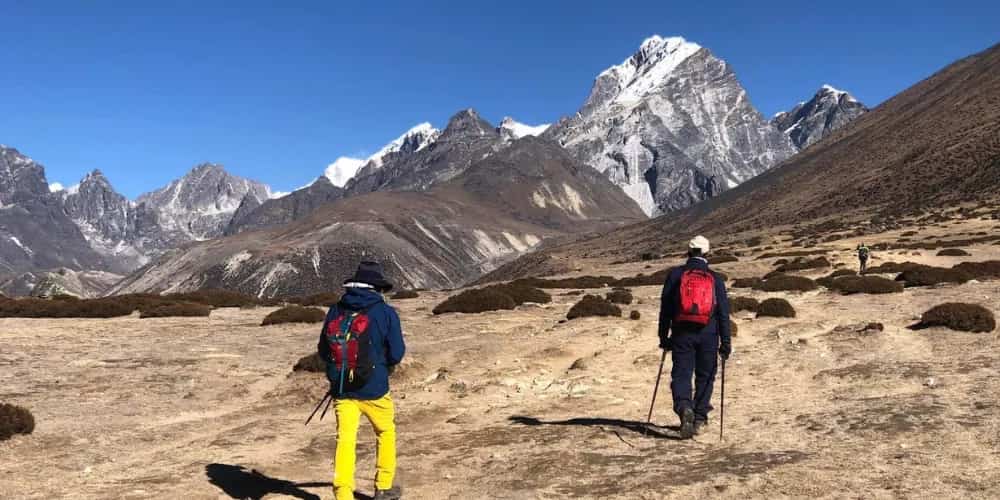
Yes. Much of the classic Everest Base Camp Trek passes through Sagarmatha National Park, the protected Himalayan region surrounding Mount Everest.

Sagarmatha National Park covers 1,148 square kilometres, with an additional 275-square-kilometre buffer zone. Together, the park and buffer zone protect approximately 1,423 square kilometres of the Everest region.

The park was established in 1976 and became a UNESCO World Heritage Site in 1979. Trekkers enter the protected area around Monjo and continue through Namche Bazaar, Tengboche and the upper Khumbu toward Everest Base Camp.

A land-cover classification reproduced in the Sagarmatha National Park Annual Progress Report records approximately 230.67 square kilometres, or 16.21%, of the park and buffer-zone landscape as glacier-covered.

About 933.74 square kilometres, or 65.62%, is classified as bare or open terrain. Grassland covers approximately 97.33 square kilometres, shrubland 84.52 square kilometres, and forest 43.83 square kilometres.

Trekkers can see this change in landscape along the Everest Base Camp route. The lower trail passes through forests and river valleys, while the terrain becomes increasingly open, rocky and glacial around Dingboche, Lobuche, Gorakshep and Everest Base Camp.

Sagarmatha National Park recorded 55,767 visitors during Nepal’s fiscal year 2023/24. This included 44,449 international visitors from countries outside Nepal and SAARC, 4,077 SAARC visitors and 7,241 Nepali visitors.

The busiest recorded period was approximately mid-October to mid-November, when 13,348 visitors entered the park. This overlaps with the main autumn trekking season and is one reason the Everest Base Camp trail is busiest during October and early November.

The quietest recorded period was approximately mid-July to mid-August, when only 288 visitors were recorded. This falls within Nepal’s summer monsoon season, when rainfall, cloud and weather-related flight disruption can make trekking less predictable.

These figures represent visitors to Sagarmatha National Park as a whole, not the number of trekkers who actually reached Everest Base Camp.

The classic Everest Base Camp Trek through Lukla normally requires a Sagarmatha National Park entry permit and the Khumbu Pasang Lhamu Rural Municipality Trek-Card/tourism fee.

The Sagarmatha National Park entry fee is currently NPR 3,000 per person for most foreign nationals, NPR 1,500 for SAARC nationals and NPR 100 for Nepali citizens.

The Khumbu Pasang Lhamu Rural Municipality Trek-Card fee is currently NPR 3,000 for most foreign visitors and NPR 2,000 for SAARC and Chinese visitors.

On the classic Lukla route, Sagarmatha National Park entry formalities are handled around the Monjo-Jorsalle area before trekkers continue toward Namche Bazaar.

Sagarmatha National Park protects a diverse high-altitude ecosystem. Official park records include 37 mammal species and 219 bird species within the national park and its buffer zone.

Recorded mammals include Himalayan tahr, Himalayan marmot, musk deer, red panda, grey wolf and snow leopard. Bird species recorded in the region include the Himalayan monal, blood pheasant, red-billed chough, alpine chough and grandala.

Wildlife sightings depend on altitude, season and habitat. Rare animals such as snow leopards and red pandas are recorded within the wider protected area, but sightings during a normal Everest Base Camp Trek are uncommon and cannot be guaranteed.

Useful trip information

Read travel and preparation advice

Travel Insurance:

For everyone planning their next trek in the Himalayas of Nepal, it is highly recommended that you get a travel insurance that covers added expenses that might result due to various health issues, injuries or accidents (together with air ambulance, helicopter rescue and other treatment cost). Your insurance policy should cover up your entire activities that you are planning to accomplish throughout your stay in Nepal. In addition to this, the policy  should also cover death, misplaced luggage, theft and liability, cancellations, medical treatment (counting hospital charges, cost of the medicine, doctor fees) as well as repatriation cost. Also, most of the trekking trails in Nepal take you above the altitude of 5000m, therefore, you also need to ensure that your insurance policy covers treks that go over 5000m. In short, its client himself/herself has to take the responsibility regarding unforeseen expenses during the trip.

Health, fitness and experience requirements:

Altitudes in the Himalayas of Nepal definitely demand excellent stamina, tough determination, and the best health condition. Some sections of the trek are quite demanding and some days might even require 8-9 hours of walking.

Though trek to the Everest Base Camp is considered moderate and easily attainable, it is highly suggested to seek advice, medications and permission from your doctor before scheduling your trek. It is also recommended to take expert guidance from your local General Practitioner regarding necessary guide walks prior to your trek in Nepal. In the absence of GP, seeking advice from travel clinic is also considered as a very good idea.

Moreover, the good news is that, no technical skill is required to plan your trek or any other exploratory trips in Nepal. However, your prior hiking or camping experience will definitely be considered as a plus point. Also, a few weeks of regular exercise and jogging is recommended before the trip to build up the required stamina.

Note:

We kindly request you to inform us regarding your present health condition, medical situation, preceding illnesses and the medications you are taking. We expect you to be honest regarding these issues, so that we can get prepared for emergencies.

Food and Accommodation:

We always make sure that our customers get the right value for their money. Therefore, we always attempt to make some of the best arrangements for our customers. To ensure a comfortable stay, we book tourist standard hotel in Kathmandu before and after your trek. Normally, the rooms are twin share, where you will have to share your room with another member of your group. However, this totally depends on the size of your group and the availability of rooms in the hotel. On request, triple share can also be arranged. Moreover, if you are looking for a single supplement room, extra charges will be applied. During the trek, your stay is arranged in a local guesthouse or lodges with shared amenities. You can also enjoy a hot shower in these lodges. In the absence of shower few buckets of hot water can also be arranged on request. A full board meal (Breakfast, Lunch, Dinner and tea &coffee) will be provided from the teahouse menu during the entire trek. Usually, porridge, toast or chapattis, oatmeal and local bread are served for breakfast. The food served for lunch and dinner are simply great.

Our attempt while you are on a trek:

Most of our trails take you to the remote Himalayan region of Nepal, where communication facilities are very less. Therefore, Amigo family takes all the responsibility to deliver your message to your family, friend, relatives or the concerned person. Our guides are provided with a cell phone and are contacted on a regular basis. You can use the cell phone provided to our guides to send your message to us which will further be delivered to the respected person.

Also, our guides will make every attempt to follow the planned itinerary; however, it is kindly requested to be flexible in case of changes in the itinerary caused by extreme weather conditions. We can also help you reschedule your international flight
(Extra charge applicable) if you need any additional days to complete your trek. We will make every possible attempt to make your trek a grand success.

Why to Trek with us?

Amigo Treks & Expedition offers a wonderful opportunity to help you visit those areas, culture and tradition of Nepal that have never been explored before. Your trip itineraries are fully customized in order to meet the individualized needs and interest of each traveler. We also partner with local Sherpas and Leaders to help you get maximum out of the trip. We are highly dedicated and offer years of experience to plan an outstanding adventure trip for you. Customer service is our top priority; therefore, we cater to every possible need of yours during your stay in Nepal be it the food, accommodation, varied destinations or your communication needs. Despite all these facilities, our best packages are offered at a very competitive rate.

Our legal documents:

Registered under the government of Nepal, Amigo Travel & Expedition P. Ltd. is a fully licensed and certified company. Therefore, this company holds complete authority to operate treks, tours, expedition, hiking and many other tourism related services in the Nepal, Tibet and Bhutan. In addition to this, we are also a very active member of the following organizations.

Nepal Tourism board (NTB)

Trekking Agents Association of Nepal (TAAN)

Kathmandu Environment Education Project (KEEP)

Ministry of Finance, Department of Taxation

Company Registration Office, Pvt. Ltd.

Ministry of Tourism and Civil Aviation, Department of Tourism Industry

What are the best seasons to plan this trek?

Spring March, April and May are considered as the best months to trek as you can enjoy the warmest weather of the year, fine temperature, clear blue sky and the beautiful rhododendron forest.

Autumn Mid September, January and February are also considered one of the best months to plan your trek to the Everest Base Camp as these offer the best trails, clear blue sky and the best visibility.

Winter December, January and February are also considered as good months to plan your trek to the Everest Base Camp; however, its midwinter and days are very cold. Therefore, a very good preparation has to be made if you are planning your trek at this time of the year.

Summer Mid June, July and August, monsoon in Nepal, is not considered as the best season to plan your trek in Nepal. The trails are slippery and the heavy rain usually affects the visibility.

What should I bring?

Along with warm clothes you will also need other equipment for the sufficient protection of your body. Below are the list of necessary items that you need to pack before commencing your trek.

Head- Hat (with a wide brim), Sunglasses (with UV protection), Sunscreen lotion and Lip balm.

Upper body- T-shirts (2), light and expedition weight thermal tops, Fleece jacket and pullover, Fleece wind-stopper jacket (Optional), waterproof (preferably breathable fabric) shell jacket, down vest/jacket(included)

Hands - Lightweight gloves, heavy-weight gloves/mittens with a waterproof outer shell

Lower body - Underwear (4), hiking shorts (2), lightweight cotton long pants, light and expedition weight thermal bottoms, Fleece or wool pants, waterproof (preferably breathable fabric) shell pants

Feet - Thin, light-wear inner socks (4), thick, warm wool hiking socks (4), hiking boots with spare laces, camp shoes (sneakers and/or sandals), gaiters (only for winter)

Accessories  - Sleeping bag rated to zero degrees F (included), headlamp with spare bulb and batteries, small padlock or combination lock, basic first aid kit, large plastic bags (for keeping items dry inside trek bag), day pack, water bottles (2), hiking pole/walking sticks, small ear plugs

Toiletries - Soap, shampoo, toothbrush, small wash towel

Extras  - Cameras with extra batteries and cards, binoculars, light balaclava or warm fleece hat, reading books, trip map/guide book, journal & pen, iPod & travel games (like cards, chess, backgammon)

Passport and Visa Information:

It is very easy to obtain Nepal visa. You may either apply for a visa at your nearest Nepalese Embassy/Consulate or Mission offices in your own country, or you can buy this upon your arrival at Tribhuvan International Airport in Kathmandu. To apply for a visa, you need 2 passport size photographs, Visa fees in US dollars and your passport that is valid for at least 6 months before the trip. However, nationals of SAARC countries (India, Bhutan, Sri Lanka, Pakistan, Bangladesh, Maldives and Afghanistan) and China do not require any visa to visit Nepal. Transit visa for foreign nationalities is only provided for 3 days. Therefore, visa is required for longer stays. However, for the convenience or foreign nationals, a visa is also provided from the borders listed below:

Tribhuvan International Airport (Kathmandu)

Kakarvitta, Jhapa (Eastern Nepal)

Birgunj, Parsa (Central Nepal)

Kodari, Sindhupalchowk (Northern Border of Nepal)

Belhiya, Bhairahawa (Western Nepal)

Jamuna, Nepalgunj (Mid Western Nepal)

Mohana, Dhangadhi (Far Western Nepal)

Gaddachauki, Mahendranagar (Far Western Nepal)

Tourist Visa Fees:

Transit visa (3 days) Free of cost

Multiple entry (15 days) 25 USD or equivalent convertible currency

Multiple entry (30 days) 40 USD or equivalent convertible currency

Multiple entry (90 days) 100 USD or equivalent convertible currency

(For more information, please contact the Department of Immigration, Kalikasthan, Dillibazar, Kathmandu.

Tel: 00977-1-00977-1 422199 / 4433934 / 4429660 / 4438862 / 4438868.

Related guides for Everest Region Trek

Read our everest region trek guides to compare routes and prepare for your trip.

Get Your Personalized Packing List
NepalUpdated Oct 9, 2026

Everest Base Camp Trek Cost

A standard guided Everest Base Camp trek costs around US$1,250–2,500 per person as a planning range. Amigo's 15-day trek starts at US$1,450 for groups of seven or more, with date and inclusions subjec

Related Trips

Compare these trips with the route you’re viewing.

View Ultimate Luxury Everest Base Camp Trek
Ultimate Luxury Everest Base Camp Trek
Amigo Signature
Nepal

Ultimate Luxury Everest Base Camp Trek

13 Days

From

US$ 9,590

Per person · 2+ travelers

Private dates available

5.0 from 6 reviews

High-Altitude Trek

View Journey

Recently Viewed

Pick up where you left off with your recently visited trips.

Loading your recently viewed trips…