Lower Dolpo Trek is best for travelers who want an active Himalayan route and are comfortable with the walking pace, terrain, and day-to-day movement this trip requires.
Lower Dolpo Trek
Our standard Lower Dolpo trekking package is carefully designed to meet your needs and requirements.
From
US$
3,250
Duration
18 Days
Per person · 2–10 travelers
Choose a departure date year-round
Private trip from US$ 3,250
- Traveling with a group? Ask about group rates
- We’ll help tailor the trek to your budget
Duration
18 Days
Max elevation
4,465m/14,645ft at Phelung Tang
Best season
September to December and March to May
From group price
US$ 3,250
Amigo traveler rating: 4.9/5 across 548 reviews · Google, Tripadvisor, Amigo website
Is this trek right for you?
Physically demanding treks with significant elevation and endurance.
Getting around
Private Car & Flight
 PDF
PDFYour trip planning kit
Lower Dolpo Trek
Trip overview
- Service level
- Amigo Plus
- Comfort profile
- High-Altitude Trek
- Accommodation standard
- Hotel & Lodge
Route highlights
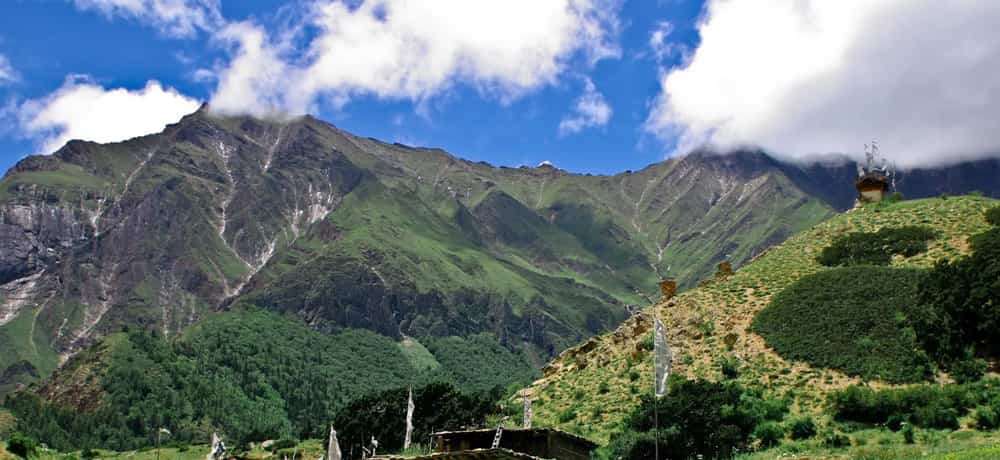
Best recognized as the location of the Oscar-nominated Caravan (Himalaya) film and the home of Thinley, the Dolpa district is a hidden treasure of Nepal. Situated north of Dhaulagiri, in the rain-shadow of the Himalayas, the Lower Dolpa is a remote trekking destination in Nepal. The Shey-Phoksundo Lake- one of the deepest Himalayan lakes inside the Shey-Phoksundo National Park- preserves the Trans-Himalayan ecosystem, blue sheep, wolves, Himalayan black bears, and exclusive snow leopard, and the Tarap Valley- one of the highest human settlement in the world and their Bon PO tradition are some of the major attractions of the Lower Dolpo Trek. Beautiful views of the peaks like Kanjiroba and Dhaulagiri, barren slopes, deep gorges, pristine villages, ancient Buddhist monasteries, and high passes like Numa La and Baga La make the Lower Dolpa trekking experience more enjoyable and thrilling. The area was opened to foreigners only in the year 1990. Since then, the area has become a very popular destination for trekkers, who are interested in exploring the remote lands of Nepal.
We fly from Kathmandu to Nepalgunj and then to Jhupal, which is the starting point of the Lower Dolpa treks. The trail passes through beautiful villages, deep gorges, rocky cliffs, alpine forests, high passes, and a very remote part of the county, before reaching Shey-Phoksundo Lake. We then trek back to Jhupal, using a different route, to board a flight to Nepalgunj. From Nepalgunj, we take another flight to Kathmandu, which ends the 18 Days Lower Dolpa Trek.
Our standard Lower Dolpo trekking package is carefully designed to meet your needs and requirements. This 18-day package ensures a visit to all the must-visit locations in the area, ensuring proper acclimatization and an average of 5-7 hour hike per day. The package covers full board during the trek and bed and breakfast before and after the trek. Accommodation is mostly arranged in a lodge or a tea house; however, in the absence of these, we spend nights in a tented camp. A free map is also provided to help you trace the trail. Moreover, this package designed by Amigo Treks and expedition can be fully customized to your requirements, ensuring flat rates and 100% departure. Bring a group and get a special group discount! We also suggest you plan your trek between September-December and March-May for the best trekking experience.
If you are looking to explore more of this region, we suggest you try our 28 days Upper Dolpo Trek which covers the areas of Upper Dolpa as well as the Lower Dolpa. Enjoy the trek!
Best recognized as the location of the Oscar-nominated Caravan (Himalaya) film and the home of Thinley, the Dolpa district is a hidden treasure of Nepal. Situated north of Dhaulagiri, in the rain-shadow of the Himalayas, the Lower Dolpa is a remote trekking destination in Nepal. The Shey-Phoksundo Lake- one of the deepest Himalayan lakes inside the Shey-Phoksundo National Park- preserves the Trans-Himalayan ecosystem, blue sheep, wolves, Himalayan black bears, and exclusive snow leopard, and the Tarap Valley- one of the highest human settlement in the world and their Bon PO tradition are some of the major attractions of the Lower Dolpo Trek. Beautiful views of the peaks like Kanjiroba and Dhaulagiri, barren slopes, deep gorges, pristine villages, ancient Buddhist monasteries, and high passes like Numa La and Baga La make the Lower Dolpa trekking experience more enjoyable and thrilling. The area was opened to foreigners only in the year 1990. Since then, the area has become a very popular destination for trekkers, who are interested in exploring the remote lands of Nepal.
We fly from Kathmandu to Nepalgunj and then to Jhupal, which is the starting point of the Lower Dolpa treks. The trail passes through beautiful villages, deep gorges, rocky cliffs, alpine forests, high passes, and a very remote part of the county, before reaching Shey-Phoksundo Lake. We then trek back to Jhupal, using a different route, to board a flight to Nepalgunj. From Nepalgunj, we take another flight to Kathmandu, which ends the 18 Days Lower Dolpa Trek.
Read moreRead less
Our standard Lower Dolpo trekking package is carefully designed to meet your needs and requirements. This 18-day package ensures a visit to all the must-visit locations in the area, ensuring proper acclimatization and an average of 5-7 hour hike per day. The package covers full board during the trek and bed and breakfast before and after the trek. Accommodation is mostly arranged in a lodge or a tea house; however, in the absence of these, we spend nights in a tented camp. A free map is also provided to help you trace the trail. Moreover, this package designed by Amigo Treks and expedition can be fully customized to your requirements, ensuring flat rates and 100% departure. Bring a group and get a special group discount! We also suggest you plan your trek between September-December and March-May for the best trekking experience.
If you are looking to explore more of this region, we suggest you try our 28 days Upper Dolpo Trek which covers the areas of Upper Dolpa as well as the Lower Dolpa. Enjoy the trek!
Day-by-day route outline
Review the route day by day, or expand all days to compare the details.
Day 1
Arrival in Kathmandu Altitude: 1,300m/4,264ft
Day details
Welcome to Kathmandu – the capital city of Nepal. Today is your first day with Amigo Treks & Expedition; therefore, we send one of our company representatives to receive you at the Tribhuvan International Airport (TIA), who will further escort you to a tourist standard hotel, booked for you in Kathmandu. If possible, we also schedule a meeting at our office for the briefing regarding the trek followed by an introduction session with other team members (especially Sherpas and guides). Today, we also arrange a welcome dinner in one of the most popular local restaurants, where you can also enjoy the ethnic dance and cultural music along with great Nepali food. If your flight arrives late, both the meeting and the dinner can be scheduled for the following day. Meals included: Dinner (Highlights of the day: Introduction to Nepali food, Cultural music and Ethnic dance.)
Day 2
Kathmandu valley sightseeing tour and trek preparation Altitude: 1,300m/4,264ft
Day details
The capital, Kathmandu valley itself, is a big storehouse of exclusive natural, cultural and historical sites. Therefore, today, we take you on a few hour tours of the major attractions of the Kathmandu valley. After spending few hours observing these wonderful sites, we again meet for a few hours to finalize your clothing and trekking gears (down jacket, trekking boots, sleeping bags etc.), required during the trek. The night will be spent at a hotel in Kathmandu. Meals included: Breakfast (Highlights of the day: World Heritage sites like Kathmandu Durbar Square (a historical structure offering architectural wonders), the Pashupatinath temple (a Hindu shrine dedicated to Lord Shiva- lord possessing the power of destruction), Swyambhunath and Boudhanath – (a Buddhist shrine dedicated to Lord Buddha- Light of Asia). Optional site: Another World Heritage site ‘Patan Durbar Square’ along with other historical masterpieces like Mahabouddha Temple, Krishna Temple, Golden Temple and Kumbeshwor Temple.)
Day 3
Fly from Kathmandu to Nepalgunj Altitude: 150m/492ft Time: 1 hour
Day details
Nepalgunj is the destination set for the day. You will be escorted to the airport to catch a flight to Nepalgunj from Kathmandu. After one hour’s scenic flight, the plane lands the Nepalgunj Airport, from where you will be transferred to the hotel. As this interesting Terai town of Nepal offers a number of sightseeing locations like the mini zoo, Muslim bazaar and interesting Tharu villages, the remaining day will be spent exploring the area. Later in the evening, we make preparations for the next day’s flight to Jhupal. The night will be spent at a hotel in Nepalgunj. Meal included: Breakfast, Lunch, Dinner (Highlights of the day: One hour’s scenic flight from Kathmandu to Nepalgunj; a tour of some of the major attractions of Nepalgunj like the zoo, Muslim Bazaar and some Tharu villages that exhibit the lifestyle, culture and the religion of the people in Nepalgunj.)
Day 4
Fly from Nepalgunj to Jhupal and trek to Dunai Altitude: 2140m/7,021ft Time: 2-3 hour
(Dolpa)
Day details
Dunai, the district headquarter of Dolpa, is the destination set for the day. After breakfast, an early morning flight, over the high mountains, will first take us to Jhupal from Nepalgunj, where we meet the rest of the crew members (especially porters), awaiting our arrival. The luggage will be prepared for the porters, while you enjoy your lunch. Once everything is set, the adventure begins downhill towards the Thuli Bheri River, past a beautiful village and terraced fields. Once we reach the Thuli Bheri river, we continue on a flat trail, along the river, until we reach Dunai. It will only take about 2-3 hour to reach Dunai; therefore, the remaining day can be spent exploring the settlement, lifestyle and the monasteries in Dunai. The night will be spent at a lodge in Dunai. Meals included: Breakfast, Lunch, Dinner (Highlights of the day: Mind-blowing aerial views of the Himalayas, including Annapurna and Dhaulagiri, a beautiful settlement of people that exhibits uniquely built mud and rock houses with Hindu flags flapping on the roof top, terraced fields and lifestyle of people and the perfect settlement of Dunai with nearby monasteries and temples.)
Day 5
Trek from Dunai to Tarakot Altitude: 2,537m/8,323ft Time: 5-6 hour
Day details
Tarakot is the destination set for the day. Initially following the south bank of the Thuli Bheri River, we head east, out of Dunai. The trail gradually ascends upstream to cross the bridge to get to the north bank of the river. We further continue along the deep gorges and remote villages in the shades of pine trees; about seven meters above the river, until we reach Lawan, where we crosses another bridge to get to the south bank of the river again. As we continue, we will be greeted with beautiful terraced fields of Tarakot and the village of Tarakot, standing on the mound located south of the Bheri River. The village was built as a fortress by the local people. The remaining day can be spent exploring the village of Tarakot. The night will be spent at a lodge in Tarakot. Meals included: Breakfast, Lunch, Dinner (Highlights of the day: A pleasant walk through the deep gorges, pine trees, secluded settlement along the roaring Thuli Bheri River and the fortress and the village of Tarakot.)
Day 6
Trek from Tarakot to Laini Altitude: 3,370m/11,056ft Time: 6-7 hour
Day details
Laini is the destination set for the day. Leaving Tarakot, we first cross the bridge over the river and gently climb through the fields of buckwheat. Taking a long, roundabout route, south into the side valley, we head forward to cross another bridge across the Yalankot River. We then climb towards the south bank of the Thulo Bheri River. We head further, crossing cypress trees and a white chorten, towards 120m long high-suspension bridge at Laisicap. Before crossing the bridge, we can also see the confluence of the Bharbun River and the Tarap River. After crossing the bridge, we can spot the village of Kanigaon high above the trail and some white-breasted dippers (only found in the western Nepal) down below the trail, along the river. If time permits, we can also visit Chhedhul Gompa, which is just a 15 minute climb from the main trail. We now continue through the cedar forest and the steepest part of the gorge to finally reach the destination, Laini. The night will be spent in a basic teahouse. Meals included: Breakfast, Lunch, Dinner (Highlights of the day: Amazing view of pink field buckwheat; a beautiful view of Pota Himal; humming rivers like Bharbung and Tarap; a very pleasant chirping sound made by white-breasted dippers; various monasteries including Lam and Chhedhul; cedar forest and cypress trees; the experience of steep gorges and a number of beautiful settlements of people.)
Day 7
Trek from Laini to Nawarpani Altitude: 3,475m/11,400ft Time: 5-6 hour
Day details
Nawarpani is the destination set for the day. After about five minutes of flat trail walk, we make a sharp ascent to the mini pass. We then walk across the steep gorge and descend crossing the waterfall created by the Tilba River. Next, we climb one more ridge and then descend to the Chyangru River, spotting some Eurasian Crag Martin, flying high above us. We now cross the river to get to the east bank, continue following the river, cross a side stream - the Chaya Khola and continue to Thanjam; crossing the bridge across the Tarap Khola one more time. Following the riverside trail, we now walk up to Nawarpani. Overnight at Nawarpani. Meals included: Breakfast, Lunch, Dinner (Highlights of the day: Experience of a deep gorge, a beautiful cascade of Tilba River, opportunity to spot Eurasian Crag Martin and a few wall creepers, some stiff climbs and trail accompanied by beautiful small streams.)
Day 8
Trek from Nawarpani to Dho Tarap Altitude: 3,944m/12,939ft Time: 7-8 hour
Day details
Dho Tarap is the destination set for the day. Starting Nawarpani, we continue on the west bank of the river, crossing the small cave, campsite and the most thrilling section of the trail, up till another bridge over the Tarap River; enjoying the barren canyon walls. We then climb the east bank of the river and through an eroded Trans-Himalayan landscape, we climb the ridge at Serkam that greets us with a chorten. We descend from Serkam and after walking for about a kilometer, we cross the bridge across the Sisaul River. We further walk towards another bridge at Langa to push ourselves to the east of the river. The walk continues on a rocky trail beneath the cliff. Then, climbing gradually alongside the river past mani walls and eroded cliffs, we ascend to a line of ancient chortens. From here, after about 20 minutes walk, we reach the settlement of Dho Tarap, which greets us with beautiful crops in the field and the monastery with colorful praying Buddhist flags. The night will be spent at a lodge in Dho Tarap. Meals included: Breakfast, Lunch, Dinner (Highlights of the day: Experience of thrilling sections of the trail like barren canyon, eroded Trans-Himalayan landscape and the rocky trail beneath the cliff- all accompanied by beautiful campsites, waterfalls, streams, rivers and the ancient Chortens, monasteries and Mani walls.)
Day 9
Acclimatization day at Dho Tarap Altitude: 3,944m/12,939ft
Day details
Dho Tarap is a village of several clusters of closely packed stone houses and corrals surrounded by the fields of barley. The village is inhabited by a few Tibetans, and more Magars, who are both Bon PO and Nyingma followers. The offers a good number of attractions to spend a worthy day. Therefore, the day will be spent exploring the nearby monasteries like Doro and Shipchhong and the settlement of Dho Tarap. The night will be spent at a lodge in Dho Tarap. Meals included: Breakfast, Lunch, Dinner (Highlights of the day: An insight on the lifestyle of Tibetans and Magars as well as the Bonpo and Nyingma traditions in Dho Tarap, ancient gompas like Ribo Bhumpa, Doro and Shipchok exhibiting pure culture, architecture, craftsmanship and the proud history, also the beautiful view of the village from the ridge.)
Day 10
Trek from Dho Tarap to Numa La Base Camp Altitude: 4,440m/14,563ft Time: 6-7 hour
Day details
Numa La Base Camp is the destination set for the day. Although, the distance is comparatively short, we make a lot of detours to visit gompas and villages, before reaching the destination. Leaving Dho Tarap, we head towards the century-old Mekyem Gompa, explore and get back to the main trail and continue uphill till Gakar village and Dorje Phurba Gompa. We continue further on the trail along the river, enjoying the plain valley with yaks and horses grazing the patches of thick green grasses, to cross the bridge across the River. This is the most beautiful part of the entire region. Crossing the bridge, we walk towards another bridge that is also a trail junction, from where we continue following the southern trail heading towards the Numa La base camp. The walk continues until we reach the Numla base camp. The night will be spent in a tented camp beneath Numa-la. Meals included: Breakfast, Lunch, Dinner (Highlights of the day: Large statue of Maitreya Buddha in Mekyem Gompa, settlement of Gakar village, Dorje Phurba Gompa that puts up a red mask of Guru Dragpo-a terrible form of Guru Rinpoche-and a collection of ancient weapons in the chapel, small tea houses, the sight of amazing water driven mill grinding barley flour, and the wonderful sight of a large white building of Sherin and Jhyanlung Gompa on the hill across the valley to the north of Nmala Base Camp.)
Day 11
Cross Numa La and Trek to Phelung Tang Altitude: 4,465m/14,645ft Time: 6-7 hour
(5,238m/17,185ft)
Day details
Today is going to be the toughest day of the entire trek. As we plan to cross Numa La, we start early in the morning. We first climb the ridge on a yak trail up a grassy slope that greets us with a number of Mani walls and a Chorten. We further climb up to the ridge to a grassy mound and a tiny stream, from where a long climb up a moraine will take us to Numa La. The top presents an amazing view of the surrounding mountains and the panoramic view of the barren mountains of Dolpa. We also climb the crest for the best views of the trek. After enjoying the view, we climb down from the pass into a U-shaped, rocky valley. We cross the stream, scree slopes and head towards the point, where the valley meets another valley. We then follow the river downstream past eroded cliffs and gently climb up enjoying the view of river disappearing into the gorge until we reach Phelung Tang. The night will be spent in a tented camp in Phelung Tang. Meals included: Breakfast, Lunch, Dinner (Highlights of the day: Magnificent view of She-Shikhar, Kanjirowa Himal, as well as the tip of Dhaulagiri including other barren mountains and the landscape of Dolpa from Numa La, a number of Mani walls and chortens, and the experience of both grassy and rocky slopes. )
Day 12
Cross Baga La and Trek to Dajok Tang Altitude: 4,080m/13,382ft Time: 6-7 hour
(5,070m/16,630ft)
Day details
Dajok Tang is the destination set for the day. Crossing the stream, we switchback up a slope to a small meadow after which, the trail hitting the snowline climbs a ridge. We then climb up a moraine into a huge bowl that greets us with the chorten of overturned stones. Then a gentle arc around the bowl on a scree slope past several cairn will take us to another high pass of the trek, that is the Baga La. Leaving the pass, a steep descent at first and a gentle one will bring us high above the right bank of the stream. After crossing the two large streams, the trail enters a huge valley from where, a steep descent will take us to Dajok Tang. Overnight at Dajok Tang. Meals included: Breakfast, Lunch, Dinner (Highlights of the day: Beautiful surrounding landscape and the distant view of snow capped peaks of Kanjirowa Himal range from the pass, fine view of Norbu Kang, roaring streams and numerous waterfalls, the experience of snowline area and a few chortens.)
Day 13
Trek form Dajok Tang to Ringmo Altitude: 3,600m/11,808ft Time: 5 hour
Day details
Ringmo is the destination set for the day. Initially, we pass through the vegetations like pines, walnut, and willow oak; however, after walking about an hour, we need to continue through the narrow rocky cliffs for about 2-3 hour to reach Ringmogaon. The remaining day will be spent exploring the village of Ringmo. The night will be spent at a lodge in Ringmo. Meals included: Breakfast, Lunch, Dinner (Highlights of the day: A pleasant walk through the forest of Pine, walnut and willow oak, thrilling, narrow and rocky cliff walking, lifestyle, culture, tradition, agricultural practices and the religion of the people living in Ringmo.)
Day 14
Exploration day at Ringmo and a hike to Phoksundo Altitude: 3,600m/11,808ft
Day details
The areas offer a lot for trekkers to spend a worthy day. Therefore, we take a relaxing walk part way round the lake to explore the lake area. We also visit the nearby temple as well as the Tibetan Buddhist monastery. If time permits, we spend the rest of the day exploring the Ringmo village. The night will be spent at a lodge in Ringmo. Meals included: Breakfast, Lunch, Dinner (Highlights of the day: Truly magnificent oligotrophic lake located at the altitude of 3,611.5m above the sea level in the Shey Phoksundo National Park, a visit to Suva Gompa and other stupas and a deep insight on Buddhism and Bon PO religion that are prevalent in Lower Dolpa.)
Day 15
Trek from Ringmo to Shyanta Altitude: 2,520m/8,265ft Time: 5-6 hour
Day details
Shyanta is the destination set for the day. Leaving Ringmo, following the Phoskundo River we walk towards the bridge across Pugma Khola past Polam (a winter settlement), and Amchi Hospital. An easy walk along the east bank of the Phoksundo river, through the forest, will bring us to Chhepka before climbing to Shyanta. Overnight at Shyanta. Meals included: Breakfast, Lunch, Dinner (Highlights of the day: Beautiful view of the waterfall created by Phoksundo River, the lifestyle of people in Polam village, the Phoksundo River, Amchy Hospital, where the monks collect herbs, grind it and distribute it to the people.)
Day 16
Trek from Shyanta to Jhupal Altitude: 2,475m/8,120ft Time: 4-5 hour
Day details
Jhupal is the destination set for the day. From Shyanta following the river bank, we descend to Sulighat past Raktang. From Sulighat, we cross the bridge across the Thuli Bheri River and head west enjoying the villages until we reach Jhupal. The remaining day can either be spent enjoying the market of Jhupal and surrounding areas or can be spent resting at the lodge relaxing the tired muscles. The night will be spent at a lodge in Jhupal. Meals included: Breakfast, Lunch, Dinner (Highlights of the day: Beautiful birch trees, beautiful views of mountains, the settlement and the busy market of Jhupal.)
Day 17
Fly to Nepalgunj and then to Kathmandu Altitude: 1,300m/4,264ft Time: 45 mins 1 hour
(Nepalgunj) · (Kathmandu)
Day details
Kathmandu is the destination set for the day. It is our last day in Dolpa. Therefore, leaving Dolpa, we board an early morning flight to Nepalgunj. After reaching Nepalgunj Airport, we take the next available flight to Kathmandu. On reaching Kathmandu, you will be transferred to the hotel, where you can rest for some time. In the evening, we again meet for the farewell dinner. The night will be spent at a hotel in Kathmandu. Meals included: Breakfast, Lunch, Dinner (Highlights of the day: Scenic flight from Jhupal to Nepalgunj and Nepalgunj to Kathmandu, and farewell dinner at one of the finest restaurants in Kathmandu.)
Day 18
Departure day Altitude:
(1,300m/4,264ft)
Day details
This day is the last day of your trip in Nepal with Amigo Treks and Expedition. If your flight is scheduled early morning, then one of our company representatives will escort you to the airport as per your flight departure time. But, if the flight is scheduled later in the evening, you can go shopping and collect a few mementos or simply hang around shopping areas in Kathmandu. However, if you are planning to spend some extra days in Nepal, Amigo Treks and Expedition can also make the arrangements for some other top adventurous activities that you can attend while you are in Nepal. Meals included: Breakfast (The usual day for a trek: Every day, our guides will come to wake you up at around 7:00-7:30am. In case of special days that require crossing the high passes. A western breakfast like porridge, oats, toasts, etc. will be served at around 8:00-8:30am. The lunch will be served from a teahouse menu at about 12-1pm. However, the lunch time can also be postponed on request. The dinner will be served at around 8:30-9:00pm. Both breakfast and dinner will be served in the accommodation. Your accommodation is arranged at a lodge, tented camp or also in a tourist standard hotel (subject to availability) where we stop for overnight.
What is included in the trip price
The essentials and support items that are already built into the package.
Trip Includes
Airport pick up and drop by private vehicle
3 Nights twin sharing accommodation in Kathmandu at tourist standard hotel with breakfast
Round air ticket of Nepalgunj
One full day guided city tour by private vehicle
Welcome dinner and farewell dinner at one of the best Nepalese restaurant with traditional ethnic music and dance
Trekking permits and Tims permits
All meals during the trek (Breakfast/Lunch/Dinner)
Gov. licensed and well trained English speaking guide and his entire expenses
A porter (One porter for each 2 members) and his entire expenses
Insurance of Guide and Porter
All required local tax and Gov tax
Down jackets and sleeping bags
Trekking route Map
What to budget for separately
Items travelers usually pay for separately, depending on style, spending habits, and optional upgrades.
Trip Excludes
Nepal arrival visa
Meals in the city except breakfast and above mentioned special dinner
Monument entrance fees
Your personal nature expenses eg. Mineral water, Beer, Coke and entire beverage etc
Travel insurance that covers trip cancelation and Helicopter evacuation
Tips and any other extending trips and accommodation.
(Note: The team leaders provided by the company are strictly ordered to follow the itinerary provided by the company. However, your safety is our prime concern. Therefore, the team leaders also hold every authority to make changes in the given itinerary, under the circumstances that concerns your safety like bad weather condition, unforeseen natural disaster and even a bad health of a group member. In such cases, we request and expect you to remain calm, flexible and cooperative and follow the instructions given by the team leader.)
Group rates by party size
Per-person rates adjust automatically with your party size. Member discounts apply where available.
2-10 travelers
US$ 3,250
per personChoose a date and see the working price
Choose a preferred date within the available travel months. We will confirm all trip services before you book.
Calendar view
Select a date below. Discounted departures are marked with a dot.
Oct 2026
Nov 2026
Questions travelers usually ask before booking
These route questions cover Nepal, remote trek planning, and the logistics travelers usually want clarified before they commit.
7Answers ready
Lower Dolpo Trek is typically best planned for September to December and March to May. Those windows usually offer the most reliable conditions for the route, logistics, and overall travel experience.
18 Days is the standard planning window for Lower Dolpo Trek. The pacing is shaped around the route flow, acclimatization, transport windows, and overnight stops rather than simply covering distance as fast as possible.
Lower Dolpo Trek is planned as a high-altitude trek journey, so the experience is paced around that level of movement and stamina. The route reaches 4,465m/14,645ft at Phelung Tang, which also shapes the overall effort and recovery needed.
Hotel & Lodge. The trip is positioned at the Amigo Plus service level. Final room style and amenities can vary between cities, trail stops, and more remote sections of the route.
Private Car & Flight. We coordinate the moving parts so the route flows cleanly between each segment.
Permit, entry, and route-document requirements depend on the destination, route, and the final version of your trip for Nepal. We confirm exactly what applies before departure rather than asking you to guess from generic lists.
Useful trip information
Read travel and preparation advice
The Federal Democratic Republic of Nepal Area: 1,47,181 sq kms Elevation: 60m to 8,848m above the sea level Natural divisions: Terai region (Plains), Elevated Flatlands and Hills and Mountain region Capital: Kathmandu Population: 27 million (more than 91 ethic groups and 70 different languages) Language: Nepali (native as well as official) and English Currency: Rupees National flower, bird and animal: Rhododendron, Lophophorous (Danphe) and Cow Neighboring countries: Republic of India (east, south, west) and Peoples’ Republic of China (north) Popular tourist destinations: Kathmandu, Patan, Bhaktapur, Pokhara, Lumbini, Chitwan, Janakpur, and Gorkha Destinations listed under UNESCO World Heritage Sites: Pashupatinath, Swayambhunath, Boudhanath, Kathmandu Durbar Square, Bhaktapur Durbar Square, Patan Durbar Square, Lumbini, Chitwan National Park and Sagarmatha National Park. Mountains: 8 out of world’s 10 tallest mountains including Mt. Everest. 240 peaks over 20,000ft Best travel seasons: Spring (March, April, May) and Autumn (September, October, November) are the best seasons; however, Nepal can be travelled any time of the year. Climate: The climate of Nepal varies according to the elevation. The humid, tropical Terai receives the most monsoonal rain and records the country’s highest temperature. The lower hills (900-2,700meters), including Kathmandu Valley are sub-tropical, with hot summer and moderate winters with only the occasional frost. The higher hills (2,700-4,000 meters) are temperate as the hills get plenty of rain, fog and frost. Above 4,000meters, the mountains have cooler, drier alpine climate and daily temperatures vary wildly depending on sunshine, wind and altitude. Flora: 6,000 species of plants (out of which 245 species are only found in Nepal), 118 ecosystems, 75 vegetation, 35 forest types, 319 species of orchid, 50 different species of grasses, 30 species of Rhododendron Fauna: Over 500 species of butterflies, 850 species of birds,185 species of mammals Communication Facilities: Postal, Freight and Cargo Services: The Central Post office is located in Kathmandu near Dharahara Tower. It is open Monday to Friday. The opening and closing time from Monday to Thurday is 10:00 am and 5:00 pm respectively; however, on Friday the office is closed after 3:00 pm. Stamps, aerograms and postcards can be purchased from 7:00 am to 7:00 pm. You can enjoy the services like registration and insurance of mail and packages and IRCs exchange. Large parcels are handled by the Foreign Post Office, which is open Monday to Friday 9:00 am to 5:00 pm. Express Mail Service (EMS) is available at GPO and at Thamel, Bashantapur and airport postal counters. Postal counters are also situated at the airport in Kathmandu. Telephone Services: Both landline and mobile phone services are available in Nepal. Nepal Telecommunication Corporation located at Tripureshwor is a national service provider that provides telephone, fax, telex, STD, ISD and telegraph services. Some private sectors also provide telephone services. Network coverage is good throughout Nepal except in some rural Himalayan places. Almost all the hotels and private communication sectors provide long distance telephone and fax facilities. During your stay in Nepal, you can buy and use a local SIM card, that is prepaid phone cards (requires 2 passport size photos and passport visa copy to purchase the SIM). The country code for Nepal is 00977 and the area code of Kathmandu is 01. For other inquiries regarding the telephone number 197 can be used. Long distance call rates can be quite expensive, therefore, it is best to use the internet phone. Internet phones are easily accessible in the major cities of Nepal. Internet Services: Email and Internet services are very popular in most part of the country these days. All you need to do is find an internet café. Most of the hotels in the major cities of Nepal provide internet service for the convenience of their guests. The rates in the cities are much lesser compared to the rates in the rural areas. Most of these internet cafes also provide fax, photocopy, and scanning services. Medical Facilities: It is very easy to find a hospital or a private clinic in the Kathmandu Valley. In fact, Nepal’s top general hospitals and private clinics are located in Kathmandu. These hospitals and private clinics provide top quality service. Other major cities also have a good number of general hospitals. However, in the rural areas of Nepal, health posts have been set up by the government to provide health and medical facilities for both local and visitors. All kinds of medicines are available in Kathmandu. For the reduction of deaths among trekkers, an association named Himalayan Rescue Association (HRA) was founded in the year 1973. The head office of HRA is located in Lazimpat near the north gate of the Palace Museum. During peak season, it operates aid posts in Pheriche (Khumbu region) and Manang (Annapurna region) managed by expatriate physicians. However, its main job is to provide free advices to trekkers on altitude sickness, equipments and the condition of trekking routes. About Dolpa Situated in western Nepal, Dolpo or Dolpa is the largest (7,889 sq km) and one of the five districts of the Karnali Zone with Dunai as its district headquarter. It covers 5.36% of the total land mass of Nepal and the elevation ranges from 1,525m-7,625m. With Tibet extending throughout the northern border, the district boarders Jumla and Mugu on the west, Myagdi, Jajarkot and Rukum on the south and Mustang on the east. It is another district that lies beyond the Himalayas and is divided into four valleys: Tsharka, Tarap, Panzang and Nangkhong. Kanjiroba, Mukot and Putha Hiunchuli are the major peaks of the area. Shey-Phoksundo National Park, Shey Phoksundo Lake and the centuries old monasteries and the Bon PO religion and tradition are the major attractions of the area. Shey-Phoksundo Lake and the National Park “Shey Phoksundo” the name is derived from the 12th century Shey Monastery and the Phoksundo Lake. The Shey-Phoksundo Lake is an alpine fresh water oligotrophic lake located at an elevation of 3,611.5m above the sea level. The lake is spread around 494 ha in size and the maximum depth of the lake is 145m, which make it the deepest lake in Nepal. The lake has been designated a Ramsar site since the year 2007. The Shey-Phoksundo National Park is the largest and the only trans-Himalayan National Park in Nepal. It covers the area of 3,555 sq km and lies in the districts of Dolpa and Mugu. The elevation of the area ranges from 2,130m to 6,883m. Along with the spectacular landscapes and the scenic mountain peaks the park also presents the diversity in flora and fauna. In terms of flora, the area is famous for Rhododendron, Caragana shrubs, Salix, juniper, white Himalayan birch, silver fir, blue pine, spruce, hemlock, cedar, poplar, and bamboo. It also contains 286 species of ethno-botanical importance. In terms of fauna, the park provides home to endangered species like the snow leopard, gray wolf, musk deer, blue sheep, Goral, Tibetan sheep, Himalayan thar, leopard, jackal, Himalayan black bear, yellow-throated marten. Moreover, the park is a home of 200 species of birds that include Tibetan partridge, wood snipe, white throated tit, wood Accentor and crimson-eared Rosefinch, 6 species of reptiles, 29 species of butterflies including Paralasa nepalaica, which is the highest flying butterflies in the world. The park also contains many religious sites and monasteries, among which the most famous ones are the Shey Gompa built during the 11th century and Thashung Gompa built about 900 years ago. The park also homes about 9,000 people, whose lifestyle is typically Tibetan and follow either Buddhism or Bon PO religion. The Park’s headquarter is in Palam, Dolpa. Travel Insurance: This information is for everyone planning the Lower Dolpo Trek in Nepal. You are required to get a travel insurance that covers all the added expenses that might result due to various health issues, injuries or accidents (together with air ambulance, helicopter rescue and other treatment cost). Also, make sure that your insurance policy covers all extra activities that you are planning to accomplish throughout your stay in Nepal. In addition to this, the policy should also cover death, misplaced luggage, theft and liability, cancellations, medical treatment (counting hospital charges, cost of the medicine, doctor’s fees) as well as repatriation cost. This trek takes you above the altitude of 5000m. Therefore, we kindly request you to ensure that your insurance policy covers the given altitude. In short, its client himself/herself has to take the responsibility regarding the entire unforeseen expenses during the trip. Health, fitness and experience requirements: The altitudes in the Lower Dolpa Trek demand excellent stamina, tough determination and the best health condition. Therefore, every interested trekker is suggested to consult their doctor before planning this trip. Trekkers are also requested to take advice, medications and permission from their doctor prior to planning their climb. Also, it is highly recommended to take expert guidance from local General Practitioner regarding the required guide walks. Travel clinics can offer the best assistance in absence of GP. Some days of the trek require 7-8 hour of walking. Thus, the trek demands excellent stamina, therefore, regular exercise and jogging is recommended to build up the required stamina to successfully complete the trek. It is only suitable for physically fit, healthy and mentally determined trekker. Moreover, the Lower Dolpa Trekking trail takes you to some of the most demanding sections of the Dolpa district. However, no prior experience is required to climb this peak, but if you have some experience in climbing, camping and hiking, then these experiences will be counted as a plus point. Note: Please submit your medical fitness certificate that includes your present health condition, medical situation, the preceding illness and the medication you are taking prior to booking this package. You are also requested to be honest so that, we can prepare ourselves to take quick action in case of emergencies. Accommodation and Food: We always make sure that our customers get the right value for their money. Therefore, we always attempt to make some of the best arrangements for our customers. To ensure a comfortable stay, we book a deluxe hotel in Kathmandu, before and after your trek. Basically, the rooms are twin share, where you will have to share your room with another member of your group. However, this totally depends on the size of your group and the availability of rooms in the hotel. On request, triple share can also be arranged. Moreover, if you are looking for a single supplement room, extra charges will be applied. Your accommodation during this trek is arranged local guest houses, lodges, basic tea house and even in a tented camp, where necessary. Most of the guest houses or lodges offer basic amenities. A full board meal (Breakfast, Lunch, Dinner and tea and coffee) will be provided during the entire trek. Breakfast and Dinner are provided in the accommodation and lunch is ordered from a teahouse menu. Usually, porridge, toast or chapattis, oatmeal and local bread are served for breakfast. Lunch and dinner are both Nepali and Western (subject to availability) and are simply great. Our attempt while you are on a trek: Most part of this trek takes you to the remote trans-Himalayan region of Nepal, where communication facilities are very less. Therefore, Amigo Treks and Expedition takes all the responsibility and makes attempts to deliver your message to your family, friend, relatives or the concerned person. Our guides are provided with a cell phone and are contacted on a regular basis. You can use the cell phone provided to our guides to send your message to us, which will further be delivered to the respected person. Also, our guides will make every possible attempt to follow the planned itinerary; however, it is kindly requested to be flexible in case of changes in the itinerary caused by extreme weather conditions or bad health condition of a group member. Moreover, we can also help you reschedule your international flight (extra charges applicable) if you need any additional days to complete your trek. We will make every possible attempt to make your trek ‘a grand success’. Why to trek with us? Amigo Treks & Expedition offers a wonderful opportunity to help you visit those areas, culture and tradition of Nepal that have never been explored before. Your trip itineraries are fully customized in order to meet the individual needs and interests of the member of your group. We also partner with local people to help you get the maximum out of the trip. We are highly dedicated and offer years of experience to plan an outstanding adventure trip for you. Customer service is our top priority; therefore, we cater to every possible need of yours during your stay in Nepal, be it the food, accommodation, varied destination or your communication needs. Despite all these facilities, our best packages are offered at a very competitive rate. When should I plan this trek? Though Nepal can be visited any time of the year, the best season to plan the Lower Dolpa Trek is spring and autumn. Spring – Mid-March, April and May, perfect months to plan the Lower Dolpa Trek. These months support us with warm weather, clear skies, good temperature and the best visibility. Autumn – Mid September, October and November, perfect months to plan the Lower Dolpa Trek. These months support us with better visibility, clear blue skies and excellent trail. Winter – December, January and February are good months to plan the Lower Dolpa Trek, provided you can stand the extreme cold weather. Summer – Mid June, July and August are also the best months to plan the Lower Dolpa Trek as this area situated in the rain-shadow of the Himalayas and is not affected by the monsoon rain. What should I bring? Along with warm clothes you will also need other equipment for the sufficient protection of your body. Below is the list of necessary items that you need to pack before commencing your trek. Head- Hat (with a wide brim), Sunglasses (with UV protection), Sunscreen lotion and Lip balm Upper body- T-shirts (2), light and expedition weight thermal tops, Fleece jacket and pullover, Fleece wind-stopper jacket (Optional), waterproof (preferably breathable fabric) shell jacket, down vest/jacket (included) Hands - Lightweight gloves, heavy-weight gloves/mittens with a waterproof outer shell Lower body - Underwear (4), hiking shorts (2), lightweight cotton long pants, light and expedition weight thermal bottoms, Fleece or wool pants, waterproof (preferably breathable fabric) shell pants Feet - Thin, light-wear inner socks (4), thick, warm wool hiking socks (4), hiking boots with spare laces, camp shoes (sneakers and/or sandals), gaiters. Accessories - Sleeping bag rated to zero degrees F (included), headlamp with spare bulb and batteries, small padlock or combination lock, basic first aid kit, large plastic bags (for keeping items dry inside trek bag), day pack, water bottles (2), hiking pole/walking sticks, small ear plugs Toiletries – Soap, shampoo, toothbrush, small wash towel Extras - Cameras with extra batteries and cards, binoculars, light balaclava or warm fleece hat, reading books, trip map/guide book, journal & pen, iPod & travel games (like cards, chess, and backgammon) Our legal documents: Registered under the government of Nepal, Amigo Treks & Expedition is a fully licensed and certified company. Therefore, this company holds complete authority to operate treks, tours, expedition, hiking and many other tourism related services in the Nepal, Tibet and Bhutan. In addition to this, we are also a very active member of the following organizations. Nepal Tourism board (NTB) Trekking Agents Association of Nepal (TAAN) Kathmandu Environment Education Project (KEEP) Ministry of Finance, Department of Taxation Company Registration Office, Pvt. Ltd. Ministry of Tourism and Civil Aviation, Department of Tourism Industry Passport and Visa Information: It is very easy to obtain Nepal’s visa. You may either apply for a visa at your nearest Nepalese Embassy/Consulate or Mission offices in your own country or you can buy this upon your arrival at Tribhuvan International Airport in Kathmandu. To apply for a visa, you need 2 passport size photographs, Visa fees in US dollars and your passport that is valid for at least 6 months before the trip. However, nationals of SAARC countries (India, Bhutan, Sri Lanka, Pakistan, Bangladesh, Maldives and Afghanistan) and China do not require any visa to visit Nepal. Transit visa for foreign nationalities is only provided for 3 days. Therefore, visa is required for longer stays. However, for the convenience or foreign nationals, a visa is also provided from the borders listed below: Tribhuvan International Airport (Kathmandu) Kakarvitta, Jhapa (Eastern Nepal) Birgunj, Parsa (Central Nepal) Kodari, Sindhupalchowk (Northern Border of Nepal) Belhiya, Bhairahawa (Western Nepal) Jamuna, Nepalgunj (Mid Western Nepal) Mohana, Dhangadhi (Far Western Nepal) Gaddachauki, Mahendranagar (Far Western Nepal) Tourist Visa Fees: Transit visa (3 days) – Free of cost Multiple entry (15 days) – 25 USD or equivalent convertible currency Multiple entry (30 days) – 40 USD or equivalent convertible currency Multiple entry (90 days) – 100 USD or equivalent convertible currency (For more information, please contact the Department of Immigration, Maitighar, Kathmandu. Tel: 00977-1 4221996/4223590/4222453. You can also download visa form from – www.immi.gov.np)
Related guides for Remote Trek
Use these remote trek guides for route comparison and practical planning before you finalize dates or send an inquiry.
Get Your Personalized Packing ListNepalUpdated Nov 26, 2024
Manaslu Circuit Trek Guide
Manaslu suits experienced walkers who want a quieter restricted-area circuit. Permits, guide requirements, remoteness, and the Larkya La crossing shape the plan.
Related Trips
Similar trips handpicked for route, comfort level, and scenic experience.

Amigo Plus
Nepal
Manaslu Circuit Trek – 15 Days
15 Days
5.0 from 3 reviews
High-Altitude Trek
View Journey

Amigo Plus
Nepal
Api Base Camp Trek
15 Days
From
US$ 2,245
Private dates available
High-Altitude Trek
View Journey

Amigo Plus
Nepal
Tsum Valley Trek
16 Days
From
US$ 1,550
Private dates available
5.0 from 2 reviews
Active Trek
View Journey

Amigo Plus
Nepal
Upper Mustang Trek
16 Days
From
US$ 1,695
Private dates available
5.0 from 3 reviews
Active Trek
View Journey
Recently Viewed
Pick up where you left off with your recently visited trips.
Loading your recently viewed trips…
Recent guest reviews
Short notes from travelers who planned with Amigo.
Verified feedback
4 recent approved reviews.
 JT
JTJack Thompson
Australia
★★★★★
Amazing Nepal Motorbike Tour with a Great Guide and Mechanic
Amazing Nepal Motorbike Tour with a Great Guide and Mechanic
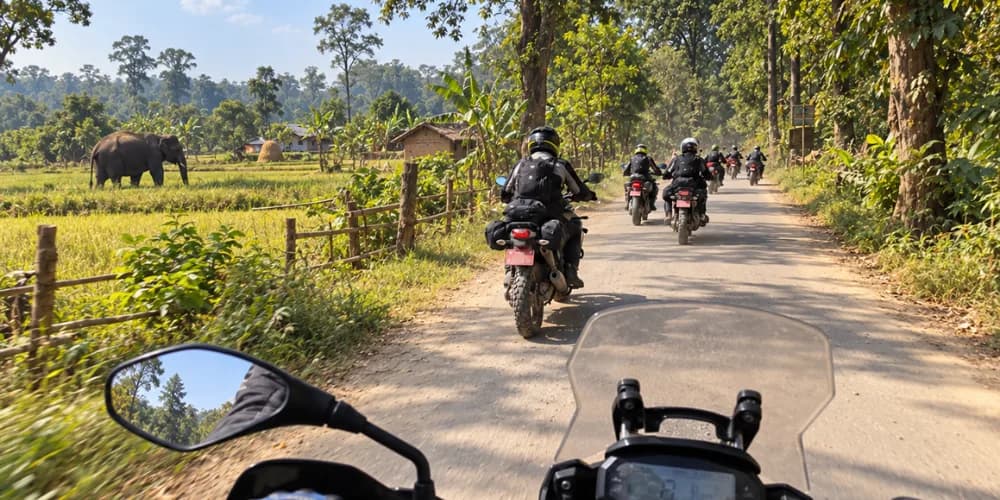
We were a group of 8 riders and joined the Nepal Motorbike Tour with Amigo Treks & Expedition in May 2026. The whole trip was very well organized, and everyone in our group had a great time. The bikes were in excellent condition and performed really well throughout the ride. Having an experienced mechanic with us also gave us a lot of confidence, especially on the mountain roads. Sushil, our mechanic, had very good knowledge of the bikes and was always ready to help whenever needed. Our guide, DJ, was fantastic. He knew the roads well, kept the group together and made the ride enjoyable without rushing us. He also helped us understand the places we were passing through and made sure everyone was comfortable during the journey. The hotels selected for the trip were good, and we were happy with the meals and food choices along the way. After long riding days, having comfortable accommodation and good food made a big difference. Overall, it was a memorable motorcycle trip in Nepal. Good bikes, a knowledgeable guide and mechanic, comfortable hotels and a well-planned route made the experience very enjoyable for all 8 of us. We would happily recommend Amigo Treks & Expedition to anyone planning a motorcycle tour in Nepal.
Read full review -> TS
TST Saavedra
US
★★★★★
Ultimate Luxury Everest Base Camp Trek
After years of exploring various destinations, Everest Base Camp remained on our bucket list as that one intimidating challenge. The logistics alone seemed overwhelming, and we wondered if we could handle such a demanding trek at this stage of our lives. When we discovered Amigo Treks and Expedition's "Ultimate Luxury Everest Base Camp Trek," we were intrigued by the possibility of experiencing this legendary destination without sacrificing comfort. Arriving in Kathmandu: First Impressions Matter The moment we landed in Kathmandu, we knew we had made the right choice. After a lengthy international flight, the last thing anyone wants is confusion at the airport. The Amigo team was waiting with clear signage and immediately took care of our luggage and transportation to a well-appointed hotel in the city center. This attention to detail set the tone for what would become a consistently well-managed experience. Our exploration of Kathmandu Valley unfolded at a comfortable pace in a private vehicle, allowing us to visit the UNESCO World Heritage Sites without the usual tourist rush. The welcome dinner featured authentic Nepali cuisine and traditional cultural performances, providing meaningful context for the adventure ahead. These initial experiences demonstrated the company's understanding that a successful expedition begins long before reaching the mountains. The Journey Begins: Helicopter Transport to Lukla Rather than taking the standard commercial flight to Lukla, we traveled by private helicopter directly from Kathmandu. This decision proved transformative, offering unobstructed views of the Himalayan range and eliminating potential delays from weather-related flight cancellations. The helicopter approach also provided our first comprehensive view of the terrain we would be traversing, creating anticipation rather than anxiety about the challenge ahead. Upon landing in Lukla, our guides and support team were prepared and organized, facilitating a smooth transition from air travel to the beginning of our trek. This seamless coordination became a consistent theme throughout our expedition. Trekking with Professional Support The trek itself exceeded our expectations for both adventure and comfort. Our experienced guides managed all logistical elements, allowing us to focus entirely on the experience rather than worry about daily arrangements. The route through villages like Phakding and Namche Bazaar was carefully planned with appropriate acclimatization stops, demonstrating genuine concern for trekker safety and comfort. The accommodation selections along the route proved exceptional. Properties such as Yeti Mountain Home, Everest View Hotel, and Culture Home provided comfortable lodging with amenities rarely found at such altitudes. Features like heated rooms, quality bedding, and well-prepared meals addressed the practical challenges of high-altitude trekking while maintaining the authentic mountain experience we sought. These accommodations served a crucial function beyond comfort. After demanding days of trekking, proper rest and nutrition became essential for maintaining energy and enjoyment throughout the journey. The thoughtful selection of lodging directly contributed to our ability to complete the trek successfully. Reaching Our Destination: Base Camp and Kala Patthar The approach through Lobuche and Gorakshep built anticipation for the final objectives. Witnessing sunrise from Kala Patthar over Mount Everest provided the emotional highlight of our expedition. The following day's arrival at Everest Base Camp fulfilled a long-held goal and created a lasting sense of personal accomplishment. The consistent support throughout these final stages allowed us to remain present and engaged with the experience. Rather than managing fatigue or logistics concerns, we could appreciate the significance of reaching these iconic destinations and the remarkable landscape surrounding them. Efficient Return Journey The helicopter return to Kathmandu proved as valuable as the initial flight to Lukla. This approach avoided the lengthy trek back through familiar terrain and provided a final aerial perspective of our entire route. The efficiency of this return allowed more time for reflection and recovery before our departure from Nepal. Overall Assessment This expedition with Amigo Treks and Expedition successfully combined adventure with practical comfort. Several elements distinguished this experience from standard trekking packages. The inclusion of buffer days in the itinerary demonstrated realistic planning for mountain weather conditions. The quality of guides and support staff ensured both safety and cultural education throughout the journey. The comprehensive service approach eliminated routine concerns about meals, permits, and transportation. For travelers seeking a challenging adventure without compromising on service quality, this approach to Everest Base Camp proves highly effective. The experience delivered both the personal satisfaction of completing a demanding trek and the comfort level necessary for full enjoyment of this remarkable destination. The investment in professional planning and quality accommodations transformed what could have been an endurance test into a memorable and enriching travel experience. Our journey to Everest Base Camp will remain a highlight of our travel experiences, combining personal achievement with the discovery of Nepal's extraordinary mountain culture.
Read full review -> JM
JMJulien Moreau
FR
★★★★★
Upper Mustang Motorbike Tour
I recently completed the Upper Mustang Motorcycle Tour with Amigo Treks and Expedition, and honestly, I’m still trying to find the words to describe how incredible the experience was. From the moment we kicked off the journey, everything felt smooth, well-organized, and stress-free – thanks to the amazing team at Amigo. The bikes were in great condition and handled the challenging terrain like a dream. Riding through the barren cliffs, ancient villages, and wide open Himalayan landscapes felt surreal, like we were part of something timeless. The route itself was mind-blowing. Every day brought new views, new adventures, and genuine connections with locals. Lo Manthang was a highlight – the walled city felt like stepping into another world. Riding through the Kali Gandaki Gorge, crossing rivers, and passing ancient monasteries made the journey even more spiritual and enriching. But what really made this trip special was the team. Our guide was more than just a guide – he became a friend. Always looking out for us, sharing stories, checking the bikes, and making sure we were safe and having fun. The support vehicle crew were absolute legends too – they had our backs every step of the way. I’ve done a few motorcycle trips in different parts of the world, but this one with Amigo Treks and Expedition stands out by far. The mix of culture, adventure, raw beauty, and the personal touch from the team made this an unforgettable ride. If you’re even thinking about riding to Upper Mustang, stop thinking and go. And do it with Amigo – you won’t regret it.
Read full review -> L
LLuther
AU
★★★★★
Everest Motorcycle Tour
Dinesh and the team at Amigo Treks and Expeditions went above and beyond for us. Allowing us to custom-design our trip and adjust it on the go as required, best to suit our group of 18 riders from Australia. Thanks so much. We will be back!
Read full review ->