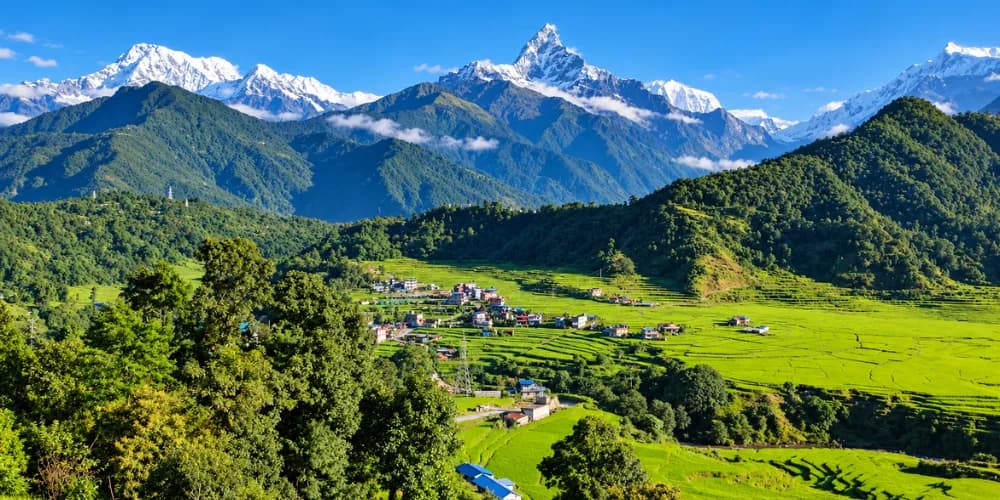
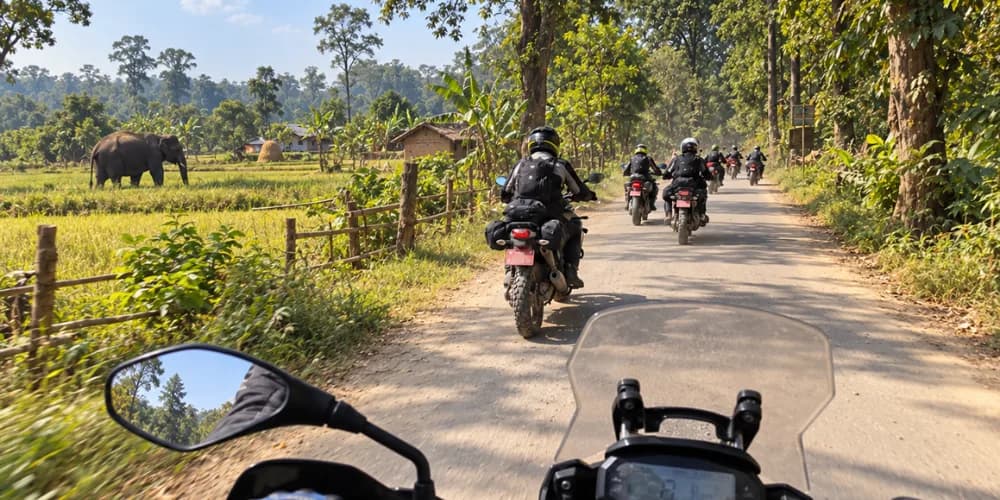
Jungle Safari is best for travelers who want an active Himalayan route and are comfortable with the walking pace, terrain, and day-to-day movement this trip requires.
Jungle Safari
Jungle Safari in Chitwan National Park gives you an opportunity to explore flora and fauna of Nepal and also get chance to get in to the deep forest.
From
US$
450
Duration
3 Days
Per person · 1–10 travelers
Choose a departure date year-round
Private trip from US$ 660
- Traveling with a group? Ask about group rates
- We’ll help tailor the tour to your budget
Duration
3 Days
From group price
US$ 450
Is this trip right for you?
Light activity with short walks and minimal physical demand.
Getting around
Private Car
 PDF
PDFYour trip planning kit
Jungle Safari
Trip overview
- Service level
- Amigo Plus
- Comfort profile
- Soft Adventure
- Accommodation standard
- 3 Star Hotel
Route highlights
Chitwan National Park, Nepal’s first National Park (estd. 1973) and a UNESCO World Heritage Site (since 1984) is an area of 932 square kilometres in the Southern Central Terai of Nepal, rich in wildlife, lush jungle landscapes and vibrant ecosystems. For wildlife enthusiasts, it offers an exciting chance to encounter a rich variety of species, including one of the last populations of single-horned Asiatic rhinoceros, Royal Bengal tigers, Asian elephants, sloth bears, leopards, and both gharial and mugger crocodile in their natural habitat. For a birder, it offers a concentration of over 500 species of birds including hornbills, kingfisher and peacocks and to an ecologist, this national park offers a diverse ecosystems, including dense Sal forests, expansive grasslands, riverine floodplains and major rivers like the Rapti, Narayani and Reu. Thus, Chitwan National Park makes one of the best places in Asia to experience a subtropical jungle safari.
This 2 nights, 3 days Chitwan Jungle Safari includes jeep/elephant safari, boat safari (commonly known as canoe ride in the wetland or river areas) and walking safari (guided hikes in safe zones. Jeep/elephant safari takes you deeper into the jungle providing broader wildlife exposure. In contrast, a boat safari immerses you in the park’s river ecosystem-perfect for birdwatching, spotting aquatic animals up close, and enjoying the serene reflection of the forest and sky on the calm waters. And walking safari, which is a guided jungle walk along the forest trails, riversides and grasslands, offers a more intimate, ground-level view of the park’s diverse, flora, fauna and landscapes allowing you to quietly observe wildlife, track animal footprints and dungs and learn about plants, insects and the entire ecosystem.
Additionally, a visit to the elephant or crocodile breeding center and a bird watching tour are also included in this jungle safari package to enhance your understanding of the park’s conservation efforts and its incredible biodiversity.
Nevertheless, this part of Nepal is not only home to diverse wildlife but also to the unique and vibrant Tharu community- an indigenous ethnic group known for their rich culture, traditional lifestyle and deep connection to the land. Therefore, for a deeper cultural immersion, the tour includes a visit to traditional Tharu village and an evening cultural show featuring authentic Tharu dance and music.
This 3-day Chitwan Jungle Safari starts and ends in Kathmandu with a drive to and from Chitwan respectively. However, if you want to start the trip from any other cities, such as Pokhara, Bhairahawa (Lumbini), Birgunj, or elsewhere, this can be easily arranged upon request.
Note: If you prefer flying to driving, flight arrangements can be made upon request from Kathmandu and Pokhara.
Chitwan National Park, Nepal’s first National Park (estd. 1973) and a UNESCO World Heritage Site (since 1984) is an area of 932 square kilometres in the Southern Central Terai of Nepal, rich in wildlife, lush jungle landscapes and vibrant ecosystems. For wildlife enthusiasts, it offers an exciting chance to encounter a rich variety of species, including one of the last populations of single-horned Asiatic rhinoceros, Royal Bengal tigers, Asian elephants, sloth bears, leopards, and both gharial and mugger crocodile in their natural habitat. For a birder, it offers a concentration of over 500 species of birds including hornbills, kingfisher and peacocks and to an ecologist, this national park offers a diverse ecosystems, including dense Sal forests, expansive grasslands, riverine floodplains and major rivers like the Rapti, Narayani and Reu. Thus, Chitwan National Park makes one of the best places in Asia to experience a subtropical jungle safari.
This 2 nights, 3 days Chitwan Jungle Safari includes jeep/elephant safari, boat safari (commonly known as canoe ride in the wetland or river areas) and walking safari (guided hikes in safe zones. Jeep/elephant safari takes you deeper into the jungle providing broader wildlife exposure. In contrast, a boat safari immerses you in the park’s river ecosystem-perfect for birdwatching, spotting aquatic animals up close, and enjoying the serene reflection of the forest and sky on the calm waters. And walking safari, which is a guided jungle walk along the forest trails, riversides and grasslands, offers a more intimate, ground-level view of the park’s diverse, flora, fauna and landscapes allowing you to quietly observe wildlife, track animal footprints and dungs and learn about plants, insects and the entire ecosystem.
Read moreRead less
Additionally, a visit to the elephant or crocodile breeding center and a bird watching tour are also included in this jungle safari package to enhance your understanding of the park’s conservation efforts and its incredible biodiversity.
Nevertheless, this part of Nepal is not only home to diverse wildlife but also to the unique and vibrant Tharu community- an indigenous ethnic group known for their rich culture, traditional lifestyle and deep connection to the land. Therefore, for a deeper cultural immersion, the tour includes a visit to traditional Tharu village and an evening cultural show featuring authentic Tharu dance and music.
This 3-day Chitwan Jungle Safari starts and ends in Kathmandu with a drive to and from Chitwan respectively. However, if you want to start the trip from any other cities, such as Pokhara, Bhairahawa (Lumbini), Birgunj, or elsewhere, this can be easily arranged upon request.
Note: If you prefer flying to driving, flight arrangements can be made upon request from Kathmandu and Pokhara.
The best time to take this trip in Nepal is from October to March, with April to June also being favorable. However, the months from July to September fall during the peak monsoon season, when heavy rains and flooding may lead to the suspension of many activities, making this period less suitable for travel.
Chitwan Jungle Safari makes a perfect trip for beginner to expert bird watcher, nature photographer, wildlife enthusiasts and families or travelers looking for a calm and enriching activity. This also makes an ideal add-on if you have three extra days in Nepal after your trek, before departing the country.
Day-by-day route outline
Review the route day by day, or expand all days to compare the details.
Day 1
Arrival day
Day details
Welcome to Kathmandu – the capital city of Nepal. Today is your first day with Amigo Treks & Expedition. Therefore, we send one of the company representatives to receive you at the Tribhuvan International Airport. From the airport, you will be transferred to the hotel (tourist standard) booked for you in Kathmandu. If time permits, we conduct a short meeting, at our office, to brief you regarding the tour. At the same meeting, you will also be introduced to your guide and other team members. In the evening, we take you for a welcome dinner in one of the most popular local restaurants, where you can enjoy the ethnic dance and cultural music, along with great Nepali food. If your flight arrives late, both the meeting and the dinner will be scheduled for the following day. The night will be spent at a hotel in Kathmandu. Meals included: Dinner (Highlights of the day: Nepali food, Cultural music and Ethnic dance.)
Day 2
Kathmandu Valley sightseeing and trip briefing
Day details
The capital, Kathmandu Valley itself, is a big storehouse of exclusive natural, cultural and historical sites. Therefore, today, we take you on a few hour tours to the major attractions of the Kathmandu Valley. After spending a few hours observing these wonderful sites, we again meet at our office for the final preparation of the trip. The night will be spent at a hotel in Kathmandu. Meals included: Breakfast (Highlights of the day: UNESCO World Heritage Sites like Kathmandu Durbar Square (a historical structure offering architectural wonders), the Pashupatinath Temple (a Hindu shrine dedicated to the Lord Shiva- lord possessing the power of destruction), Swyambhunath and Boudhanath (a Buddhist shrine dedicated to Lord Buddha – the Light of Asia. Optional site: Another UNESCO World Heritage site ‘Patan Durbar Square’ along with other historical masterpieces like Mahabouddha Temple, Krishan Temple, Golden Temple and Kumbeshwor Temple.)
Day 3
Drive to Chitwan
Day details
The bus to Chitwan leaves exactly at 7:00 in the morning. Therefore, we will transfer you from the hotel to the bus station. Leaving the Kathmandu Valley behind, the bus heads west towards Chitwan. Soon we are on the Prithvi Highway. The Prithvi Highway is one of the most scenic highways in Nepal. Accompanied by huge green hills on one side and the Trisuli River on the other, each turn in the highway offers unbeatable beauty for the passengers to keep them busy with their cameras. The bus will stop once for breakfast and then continue towards Chitwan. After about 5 hours scenic drive, we reach Chitwan. Our company representative will transfer you from the bus stand to the hotel booked for you in Chitwan, where you will be welcomed with a refreshing welcome drink. Then our nature guide will conduct a short trip briefing session, which will be followed by lunch. After lunch will rest for some time and then set out on a short walk to visit the Tharu Village and the museum (ox ride is there as an option). Around the evening time, we enjoy the beautiful sunset view from the bank of the river. Today, we end our day enjoying the cultural show performed by the Tharu people. The night will be spent at a hotel in Chitwan. Meals included: Breakfast, Lunch, Dinner (Highlights of the day: Scenic ride along the unforgettable views of picturesque hamlets, terrace farms, huge green hills, and the roaring Trisuli River from Kathmandu to Chitwan; an insight on the lifestyle of the people running motels, hotels and lodges for survival along the highway and the Tharu people in Chitwan; Tharu cultural show and their museum and the beautiful sunset view from the bank of the river.)
Day 4
Explore day
Day details
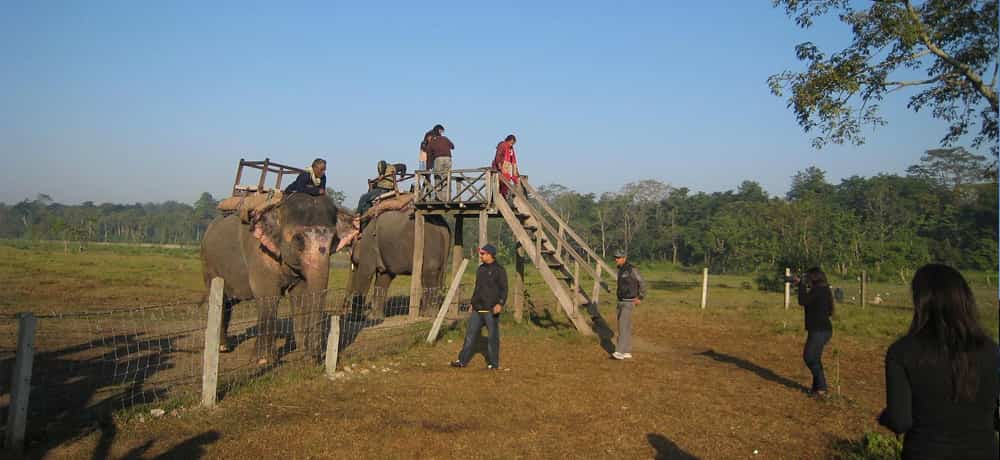
Today, we start our day with an elephant ride. After about a-hour-and-a-half elephant ride in the community forest, we bring you back to the hotel for breakfast. After breakfast, we set out for elephant bath, a dugout canoe trip down the Budhi Rapti River and jungle walk. We then visit the elephant breeding center and elephant camp and if time permits, we also visit the Bis Hajar Taal (lake). If you want to save time, instead of elephant ride we can hire a jeep and enjoy jeep safari. The entire day will be spent spotting the wildlife variety available in Chitwan National Park. The night will be spent at a hotel in Chitwan. Meals included: Breakfast, Lunch, Dinner (Highlights of the day: Elephant ride, jungle safari, dugout canoe ride, and jungle walk that allow us to spot a number of wildlife including monkeys, deer, one horned rhinos, birds, and water birds; a visit to the elephant breeding center and elephant camp and Bis Hajar Taal.)
Day 5
Bird watching trip and drive to Kathmandu
Day details
The day starts with a bird watching trip in the national park. After the birdwatching trip, we will come back to the hotel for breakfast. We will then transfer you to the tourist bus station from the hotel. The bus leaves at around 9:00 in the morning. Using the same highway we return to Kathmandu. After about 5 hours drive, we reach Kathmandu. One of the company representatives will pick you up at the bus station and transfer you to the hotel in Kathmandu. In the evening we again meet for the feedback and discussion regarding the service provided during the entire trip, which will be followed by a farewell dinner in one of the finest restaurants in Kathmandu. The night will be spent at a hotel in Kathmandu. Meals included: Breakfast, Dinner (Highlights of the day: Birdwatching trip, comfortable and scenic drive from Chitwan to Kathmandu and a farewell dinner.)
Day 6
Departure day
Day details
This is the last day of your trip in Nepal with Amigo Treks and Expedition. If your flight is scheduled early morning, then one of the company representatives will escort you to the airport as per your flight departure time. However, if the flight is scheduled later in the evening, you can go shopping and collect a few souvenirs for friends and family or simply hang around the shopping areas in Kathmandu. Moreover, if you are planning to extend your stay in Nepal, Amigo Treks and Expedition can also make the arrangements for some other top adventurous activities that you can attend, while you are in Nepal. Meals included: Breakfast
What is included in the trip price
The essentials and support items that are already built into the package.
Package Includes:
Private vehicle (car, jeep, minivan, coaster or bus-as per group size) transportation Kathmandu to Chitwan and back. (For solo travelers transportation will be luxury tourist bus)
2 Nights twin-sharing accommodation in 3 Star Standard hotel in Chitwan. (Single supplement applicable for single room). Premium Upgrades available at extra cost.
Meals (Breakfast, Lunch and Dinner) in Chitwan
All required National Park and other entrance fees
All activities in Chitwan (as per the itinerary)
Expert, local, English-speaking jungle guide for safaris and activities
What to budget for separately
Items travelers usually pay for separately, depending on style, spending habits, and optional upgrades.
Package Excludes:
Nepal arrival visa
Meals, accommodation and transportation in Kathmandu (can be arranged at extra cost)
Domestic flight: Kathmandu-Bharatpur (Chitwan)- Kathmandu (can be arranged at extra cost)
Meals, snacks or any other personal expenses, such as alcoholic/non-alcoholic beverages, chocolates, tea/coffee etc. on the way to and from Chitwan
Any extended stays or additional activities in Chitwan
Any extra expenses occurred due to natural events or unforeseen circumstances
Travel insurance that covers trip cancellation/interruption
Gratuity (as an appreciation) to the service providers
Group rates by party size
Per-person rates adjust automatically with your party size. Member discounts apply where available.
1-10 travelers
US$ 450
per personChoose a date and see the working price
Choose a preferred date within the available travel months. We will confirm all trip services before you book.
Calendar view
Select a date below. Discounted departures are marked with a dot.
Oct 2026
Nov 2026
Questions travelers usually ask before booking
These route questions cover Nepal, nepal tours planning, and the logistics travelers usually want clarified before they commit.
7Answers ready
The best timing for Jungle Safari depends on route conditions, visibility, transport reliability, and the style of journey. We use the current route plan and season to help you choose the strongest travel window.
3 Days is the standard planning window for Jungle Safari. The pacing is shaped around the route flow, acclimatization, transport windows, and overnight stops rather than simply covering distance as fast as possible.
Jungle Safari is planned as a soft-adventure route journey, so the experience is paced around that level of movement and stamina.
3 Star Hotel. The trip is positioned at the Amigo Plus service level. Final room style and amenities can vary between cities, trail stops, and more remote sections of the route.
Private Car. We coordinate the moving parts so the route flows cleanly between each segment.
Permit, entry, and route-document requirements depend on the destination, route, and the final version of your trip for Nepal. We confirm exactly what applies before departure rather than asking you to guess from generic lists.
Useful trip information
Read travel and preparation advice
The Federal Democratic Republic of Nepal Area: 1,47,181 sq kms Elevation: 60m to 8,848m above the sea level Natural divisions: Terai region (Plains), Elevated Flatlands and Hills and Mountain region Capital: Kathmandu Population: 27 million (more than 91 ethic groups and 70 different languages) Language: Nepali (native as well as official) and English Currency: Rupees National flower, bird and animal: Rhododendron, Lophophorous (Danphe) and Cow respectively Neighboring countries: Republic of India (east, south, west) and Peoples’ Republic of China (north) Popular tourist destinations: Kathmandu, Patan, Bhaktapur, Pokhara, Lumbini, Chitwan, Janakpur, and Gorkha Destinations listed under UNESCO World Heritage Sites: Pashupatinath, Swayambhunath, Boudhanath, Kathmandu Durbar Square, Bhaktapur Durbar Square, Patan Durbar Square, Lumbini, Chitwan National Park and Sagarmatha National Park. Mountains: 8 out of world’s 10 tallest mountains including Mt. Everest. 240 peaks over 20,000ft Best travel seasons: Spring (March, April, May) and Autumn (September, October, November) are the best seasons; however, Nepal can be travelled any time of the year. Climate: The climate of Nepal varies according to the elevation. The humid, tropical Terai receives the most monsoonal rain and records the country’s highest temperature. The lower hills (900-2,700meters), including Kathmandu Valley are sub-tropical, with hot summer and moderate winters with only the occasional frost. The higher hills (2,700-4,000 meters) are temperate as the hills get plenty of rain, fog and frost. Above 4,000meters, the mountains have cooler, drier alpine climate and daily temperatures vary wildly depending on sunshine, wind and altitude. Flora: 6,000 species of plants (out of which 245 species are only found in Nepal), 118 ecosystems, 75 vegetation, 35 forest types, 319 species of orchid, 50 different species of grasses, 30 species of Rhododendron Fauna: Over 500 species of butterflies, 850 species of birds,185 species of mammals Chitwan National Park for Jungle Safari… Chitwan National Park is the first national park in Nepal. It covers an area of 932 km2. This area homes 68 species of mammals, 126 species of fishes and 56 species of herpeto animals. The park is especially famous for the One-Horned Rhinoceros, Royal Bengal Tiger and Gharial Crocodile. From the world’s largest terrestrial mammal (wild elephant) to the small mammal (pygmy shrew), Chitwan National Park exhibits a large variety of mammals. Not just animals, but the park also offers the variety in bird population. A total of 544 species of birds has been recorded so far, out of which 22 fall under globally threatened species. Apart from faunas, one can also spot the variety of vegetation. Sal covers about 70% of the area, while remaining 30% is covered by grassland and riverine forest. The wildlife variety offered by the Chitwan National Park is simply amazing. On top of this a number of fun activities like elephant back ride, dugout canoe ride, jeep safari, jungle walk, elephant bathing make the trip more adventurous. Apart from wildlife, this land also offers a great opportunity to get acquainted with the Tharu people, their lifestyle, culture, tradition and hospitality. Therefore, Chitwan National Park is considered best for Jungle Safari. Communication Facilities: Postal, Freight and Cargo Services: The Central Post office is located in Kathmandu near Dharahara Tower. It is open Monday to Friday. The opening and closing time from Monday to Thurday is 10:00 am and 5:00 pm respectively; however, on Friday the office is closed after 3:00 pm. Stamps, aerograms and postcards can be purchased from 7:00 am to 7:00 pm. You can enjoy the services like registration and insurance of mail and packages and IRCs exchange. Large parcels are handled by the Foreign Post Office, which is open Monday to Friday 9:00 am to 5:00 pm. Express Mail Service (EMS) is available at GPO and at Thamel, Bashantapur and airport postal counters. Postal counters are also situated at the airport in Kathmandu. Telephone Services: Both landline and mobile phone services are available in Nepal. Nepal Telecommunication Corporation located at Tripureshwor is a national service provider that provides telephone, fax, telex, STD, ISD and telegraph services. Some private sectors also provide telephone services. Network coverage is good throughout Nepal except in some rural Himalayan places. Almost all the hotels and private communication sectors provide long distance telephone and fax facilities. During your stay in Nepal, you can buy and use a local SIM card, that is prepaid phone cards (requires 2 passport size photos and passport visa copy to purchase the SIM). The country code for Nepal is 00977 and the area code of Kathmandu is 01. For other inquiries regarding the telephone number 197 can be used. Long distance call rates can be quite expensive, therefore, it is best to use the internet phone. Internet phones are easily accessible in the major cities of Nepal. Internet Services: Email and Internet services are very popular in most part of the country these days. All you need to do is find an internet café. Most of the hotels in the major cities of Nepal provide internet service for the convenience of their guests. The rates in the cities are much lesser compared to the rates in the rural areas. Most of these internet cafes also provide fax, photocopy, and scanning services. Medical Facilities: It is very easy to find a hospital or a private clinic in the Kathmandu Valley. In fact, Nepal’s top general hospitals and private clinics are located in Kathmandu. These hospitals and private clinics provide top quality service. Other major cities also have a good number of general hospitals. However, in the rural areas of Nepal, health posts have been set up by the government to provide health and medical facilities for both local and visitors. All kinds of medicines are available in Kathmandu. For the reduction of deaths among trekkers, an association named Himalayan Rescue Association (HRA) was founded in the year 1973. The head office of HRA is located in Lazimpat near the north gate of the Palace Museum. During peak season, it operates aid posts in Pheriche (Khumbu region) and Manang (Annapurna region) managed by expatriate physicians. However, its main job is to provide free advices to trekkers on altitude sickness, equipments and the condition of trekking routes. Travel Insurance: If you are planning this trip in Nepal, a travel insurance policy that covers all the added expenses that might result due to various health issues, injuries or accidents is required. Moreover, it should also cover death, misplaced luggage, theft and liability, cancellations, medical treatment (including hospital charges, cost of medicine, doctor’s fees) as well as repatriation cost. It is also necessary to ensure that the insurance policy covers all extra activities that you are planning to accomplish throughout your stay in Nepal. Food and Accommodation: We always make sure that our customers get the right value for their money. Therefore, we always attempt to make some of the best arrangements for our customers. To ensure a comfortable stay, we book a tourist standard hotel in Kathmandu, before and after your trip. Normally, the rooms are twin share, where you will have to share your room with another member of your group. However, this totally depends on the size of your group and the availability of rooms in the hotel. On request, triple share can also be arranged. A single supplement can be made available, but at extra cost. Breakfast is provided in the accommodation in Kathmandu. In Chitwan, your accommodation is arranged in a tourist standard hotel. The rooms are twin share with all the basic amenities. Full board meal (Breakfast, Lunch, Dinner, Tea/Coffee) is provided in Chitwan. Usually breakfast and dinner are provided in the accommodation itself and lunch are ordered from local restaurants. Both, typical Nepali and Western food will be served during the trip, depending upon your choice and availablity. Vaccination and Medicines: Although you will be consulting your doctor before planning the trip, we highly recommend you to get few vaccinations like Hepatitis A, Japanese Encephalitis, Polio, Rabies, Tetanus, Typhoid and Malaria before planning your trip to Nepal. Moreover, we also recommend your to carry few medicines like Aspirin or Panadol –for pain and fever; Antihistamine – as a decongestant for cold allergies and to prevent motion sickness; Antibiotics, Kaolin preparation (Pepto-Bismol), Imodium or Lomotil – for upset stomach; Rehydration mixture- for the treatment of severe diarrhea; Antiseptic, Mercurochrome and antibiotic powder or similar dry spray – for cuts and grazes; Calamine lotion for irritation from bites or stings; bandages, band aids, a pair of scissors, tweezers - for minor injuries; insect repellent, sun block lotion, lip balms, water purification tablets, throat lozenges, moleskin, Sulamyd 10% eye drops, and Acetaminophen (Paracetamol, Antacid tablets) in your personal first aid kit. Why choose Amigo Treks and Expedition as your next travel partner? Amigo Treks and Expedition presents a wonderful opportunity to help you visit those areas, culture and tradition of Nepal that have seldom been explored before.The trip itineraries are fully customized to meet each customer’s requirements, needs and interest. We also partner with local people to help you explore more unseen places of the region you choose to travel. We are highly dedicated and offer years of experience to plan an outstanding adventure trip for you. Nevertheless, customer service is our top priority, therefore, we cater to every possible need of yours during your stay in Nepal, be it the food, accommodation, varied destination or your communication needs. We highly believe in responsible tourism and also dedicate our service for the development and betterment of the community. Despite all these facilities, our best packages are offered at very competitive rates with special group discounts. When should I plan this trip? This trip to Nepal can be planned any time of the year. However, the best season to plan this trip is either spring (March-May) or Autumn (September-November). These seasons support us with the best weather, climate, and better visibility. What should I wear? From May through October, lightweight clothing is recommended; however, warm garments are required if you are planning your trip sometime in between October and March. An umbrella or a raincoat is a must during the rainy season (June-August). Your pack list should contain following items: Head: Hat (with a wide brim), Sunglasses with UV protection, Sunscreen lotion, Lip balm Feet: Thin, light wear inner socks, walking shoes (sneakers and/or sandals) Accessories: Headlamp with spare bulbs and batteries, small padlock or combination lock, basic first aid kit, water bottles (2), hiking poles/walking sticks, ear plugs (just in case). Toiletries: Soap, shampoo, toothbrush, small wash towel Extras: Camera with extra batteries and cards/films, Binoculars, Reading bok, Journal & Pen, Travel games. Our legal documents: Registered under the government of Nepal, Amigo Treks & Expedition is a fully licensed and certified company. Therefore, this company holds complete authority to operate treks, tours, expedition, hiking and many other tourism related services in the Nepal, Tibet and Bhutan. In addition to this, we are also a very active member of the following organizations. Nepal Tourism board (NTB) Trekking Agents Association of Nepal (TAAN) Kathmandu Environment Education Project (KEEP) Ministry of Finance, Department of Taxation Company Registration Office, Pvt. Ltd. Ministry of Tourism and Civil Aviation, Department of Tourism Industry Passport and Visa Information: It is very easy to obtain Nepal’s visa. You may either apply for a visa at your nearest Nepalese Embassy/Consulate or Mission offices in your own country or you can buy this upon your arrival at Tribhuvan International Airport in Kathmandu. To apply for a visa, you need 2 passport size photographs, Visa fees in US dollars and your passport that is valid for at least 6 months before the trip. However, nationals of SAARC countries (India, Bhutan, Sri Lanka, Pakistan, Bangladesh, Maldives and Afghanistan) and China do not require any visa to visit Nepal. Transit visa for foreign nationalities is only provided for 3 days. Therefore, visa is required for longer stays. However, for the convenience or foreign nationals, a visa is also provided from the borders listed below: Tribhuvan International Airport (Kathmandu) Kakarvitta, Jhapa (Eastern Nepal) Birgunj, Parsa (Central Nepal) Kodari, Sindhupalchowk (Northern Border of Nepal) Belhiya, Bhairahawa (Western Nepal) Jamuna, Nepalgunj (Mid Western Nepal) Mohana, Dhangadhi (Far Western Nepal) Gaddachauki, Mahendranagar (Far Western Nepal) Tourist Visa Fees: Transit visa (3 days) – Free of cost Multiple entry (15 days) – 30 USD or equivalent convertible currency Multiple entry (30 days) – 50 USD or equivalent convertible currency Multiple entry (90 days) – 100 USD or equivalent convertible currency