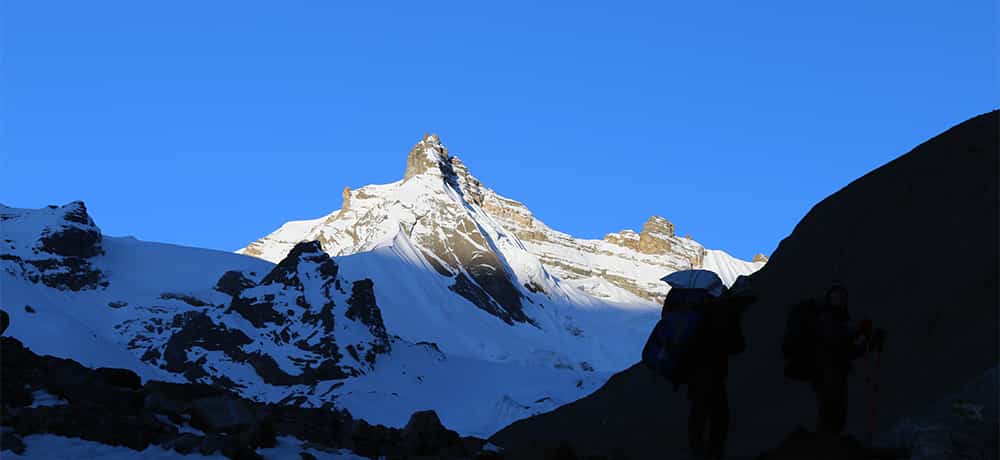
Annapurna Circuit Trek or around the Annapurna trekking, famous for regular and phenomenal changes of scenery, is considered one of the best and the most beautiful walks in the world.
Physically demanding treks with significant elevation and endurance.
Trekking involves altitude, weather, and trail risks. A planned itinerary, acclimatization days, and guide support cannot guarantee safety or reaching the planned destination. Conditions may require changes to the route.
Getting around
Private car/jeep/minivan
PDF
Your trip planning kit
Short Annapurna Circuit Trek
Get a copy of the itinerary, prices, and advice on preparing for your trip.
3 Star Hotel in Kathmandu and Normal Standard Lodges during the trek
Route highlights
Cross the legendary Thorung La Pass at 5,416 m, the highest point of the Annapurna Circuit.
Trek through Manang, Yak Kharka and Muktinath with dramatic changes in landscape and culture.
Save time by driving directly from Kathmandu to Chame and starting the trek higher in the valley.
Experience the Kali Gandaki Valley and Lower Mustang while driving from Jomsom to Pokhara.
The 11-Day Short Annapurna Circuit Trek is a faster way to experience the most rewarding section of Nepal's famous Annapurna Circuit, including Manang, Thorung La Pass, Muktinath and the Kali Gandaki Valley. It is designed for fit trekkers who want the high-altitude Annapurna Circuit experience but do not have enough time for the longer Annapurna Circuit Trek.
Read full trip overviewShow less
Instead of spending several days walking through the lower section of the traditional circuit, we travel by road from Kathmandu directly to Chame at 2,670 meters, the administrative center of Manang District. Starting here saves time while still allowing several trekking days before reaching the highest part of the route.
From Chame, we begin walking through pine forests and the upper Marsyangdi Valley toward Pisang and Manang. The scenery changes quickly as the greener lower valley gives way to the drier, Tibetan-influenced landscape of upper Manang. Along the way, clear weather can bring views of Annapurna II, Annapurna III, Annapurna IV, Gangapurna, Pisang Peak, Tilicho Peak and the Chulu range.
We spend an additional night in Manang at 3,440 meters for acclimatization before moving higher. This is an important part of the itinerary rather than a spare rest day because the route soon climbs above 4,000 meters.
From Manang, the trail continues through Yak Kharka and Thorung Phedi toward High Camp, where the landscape becomes increasingly barren and the effects of altitude become more noticeable.
The main challenge comes with the crossing of Thorung La Pass at 5,416 meters / 17,769 feet, the highest point of the trek. We normally begin before sunrise and climb gradually to the prayer-flag-covered pass before making the long descent toward Muktinath. Weather, snow conditions and the guide's assessment always determine whether the pass is safe to cross on the planned day.
After Thorung La, the scenery changes dramatically as we enter the dry landscape of Lower Mustang. Muktinath, at 3,760 meters, is an important pilgrimage site for both Hindus and Buddhists.
The return journey follows the Kali Gandaki corridor toward Pokhara before continuing back to Kathmandu.
Although this is called a Short Annapurna Circuit Trek, the trekking itself should not be considered easy. You still cross a 5,416-meter mountain pass, sleep several nights above 3,000 meters and complete long days of walking at altitude. Good fitness, previous hiking experience and proper acclimatization are important.
Travelers who have more time and want to continue beyond Jomsom through Tatopani, Ghorepani and Ghandruk can choose our longer Annapurna Circuit Trek.
If Tilicho Lake is one of your priorities, consider the Annapurna Circuit with Tilicho Lake Trek, which adds the side trip toward one of the highest lakes in the Annapurna region.
For travelers looking for upgraded hotels, private services and a higher level of comfort where available, we also offer a Luxury Annapurna Circuit Trek.
You can compare this trip with other routes in our Annapurna Region Trek collection if you are still deciding which Annapurna trek best suits your available time, fitness and interests.
With Amigo Treks & Expedition, the trip is arranged from arrival to departure with experienced local trekking support, required permits, accommodation, meals during the trek and the transportation needed to make this shorter Annapurna Circuit itinerary practical.
Why travelers plan with Amigo
Amigo’s 11-day Short Annapurna Circuit Trek focuses on the best section of the route without cutting out essential acclimatization.
We arrange the drive to Chame, trekking permits, accommodation, meals, local guide support, and return transportation.
The itinerary includes two nights in Manang, a gradual climb through Yak Kharka and High Camp, and the crossing of Thorung La Pass at 5,416 m.
Our guides adjust the pace and daily plan according to weather, trail conditions, and how you are responding to altitude.
Day-by-day route outline
11Days outlined
Review the route day by day, or expand all days to compare the details.
Altitude & distance by day
Published altitudes and walking distances for each day. Road and flight transfers are listed separately in the daily route data.
Altitude (m)
Swipe the chart to see every day.
Dots mark the altitudes listed in the itinerary, and bars show how far you’ll walk each day. If a day has no altitude listed, we keep the line at the last known height. For a distance range like 8–10 km, we show 9 km.
View daily route data
Published itinerary measurements. A dash means the measurement is not published.
Day
Route
Altitude
Published distance
Day 1
Arrival in Kathmandu
—
—
Day 2
Drive to Chame
2,670 m / 8,760 ft
—
Day 3
Trek to Lower Pisang
3,200 m / 10,499 ft
—
Day 4
Trek to Manang via Humde and Braga
3,540 m / 11,614 ft
—
Day 5
Acclimatization Day in Manang
—
—
Day 6
Trek to Yak Kharka
4,050 m / 13,287 ft
—
Day 7
Trek to High Camp via Thorung Phedi
4,833 m / 15,856 ft
—
Day 8
Cross Thorung La Pass and Trek to Muktinath
5,416 m / 17,769
—
Day 9
Drive to Pokhara
—
180KmTransfer
Day 10
Drive from Pokhara to Kathmandu
—
200KmTransfer
Day 11
Departure from Kathmandu
—
—
Day 1
Arrival in Kathmandu
Day details
Welcome to Nepal. An Amigo Treks & Expedition representative will meet you at Tribhuvan International Airport and transfer you to your hotel. After checking in, take some time to rest following your flight.
We will arrange a briefing with your trekking guide to discuss the route, daily walking schedule, accommodation and the Thorung La crossing. Your guide will also check your equipment, including your boots, warm layers, waterproof clothing, sleeping bag and daypack. This is a good time to ask about anything you are unsure of and buy or rent any missing items.
Because we leave for Chame early the following morning, we recommend arriving with enough time for the briefing and equipment check. Pack the things you will need during the drive separately: a warm layer, drinking water, personal medication and other essentials should remain within reach.
If your flight arrives late, we will adjust the briefing arrangements. Any preparation that cannot be completed before departure may require an adjustment to the schedule.
Day 2
Drive to Chame
Altitude:2,670 m / 8,760 ftDuration:8-9H
Meals includedBreakfastLunchDinner
Day details
We leave Kathmandu early in a private jeep. The first part of the journey follows the highway toward Dumre, with river valleys, terraced fields and roadside settlements along the way. At Dumre, we turn toward Besisahar, the gateway to the eastern Annapurna Circuit.
Beyond Besisahar, the journey becomes slower as we enter the Marsyangdi Valley. The mountain road has narrow bends, rough sections and stretches where passing vehicles requires care. We travel through the lower valley toward Dharapani, then continue through villages including Bagarchhap and the Timang area before reaching Chame.
We stop for meals and breaks along the way. Keep drinking water and any travel-sickness medication you normally use in your day bag. Although some journeys are quicker, this should be treated as a full travel day; roadworks, traffic or damaged road sections can extend the drive.
Chame is the administrative centre of Manang District and our starting point for the walking section. On arrival, we check into a lodge, have dinner and rest. If we arrive with daylight to spare, you can take a short walk around the village.
Day 3
Trek to Lower Pisang
Altitude:3,200 m / 10,499 ftDuration:5-6H
Meals includedBreakfastLunchDinner
Day details
After breakfast, we begin walking up the Marsyangdi Valley. The route passes through forest and the Bhratang area before continuing toward Dhukur Pokhari. Some stretches follow established footpaths, while others run close to or along the road. Your guide chooses the practical walking route according to current trail conditions.
One of the day's most striking landmarks is Paungda Danda, the enormous curved rock face rising above the valley. As the valley opens, the surroundings begin to change: the forest becomes less dense, the air feels drier and the mountains occupy more of the skyline.
From Dhukur Pokhari, we continue to Lower Pisang, where we settle into our lodge. When the weather is clear, the area offers impressive views toward Annapurna II and nearby peaks.
If you feel well and there is enough time, your guide may suggest a gentle afternoon walk toward Upper Pisang. Its traditional houses and monastery offer a different view of the valley. This walk is optional; after the previous day's long drive and today's first trek, rest may be the better choice.
Day 4
Trek to Manang via Humde and Braga
Altitude:3,540 m / 11,614 ftDuration:5-6H
Meals includedBreakfastLunchDinner
Day details
Today we follow the lower valley route toward Manang. This itinerary uses the route through Humde rather than the longer, steeper trail through Ghyaru and Ngawal. The upper route can be arranged with a revised walking schedule, but it should not be described as the same five-hour day.
The landscape becomes more open as we enter the drier upper Marsyangdi Valley. We walk past fields, stone houses, mani walls and small settlements, with mountain views whenever the weather allows. Near Humde, we pass the valley's airstrip before continuing toward Braga.
Braga is known for its hillside settlement and monastery. We may stop to look around if time, access and your energy allow. A monastery visit depends on it being open and should be approached respectfully.
A final stretch brings us to Manang, where we will spend two nights. After checking into the lodge, have a relaxed afternoon. A short village walk is enough for today; save the longer exploration for tomorrow.
Tell your guide if you develop a headache, nausea, unusual tiredness or dizziness. These symptoms need attention at this altitude, even if you have managed the walking comfortably.
Day 5
Acclimatization Day in Manang
Meals includedBreakfastLunchDinner
Day details
This acclimatization day is an important part of the itinerary because tomorrow we begin moving above 4,000 meters, followed by High Camp and the crossing of Thorung La at 5,416 meters.
However, an acclimatization day does not mean spending the whole day sleeping.
After breakfast, your guide will normally arrange a moderate hike based on the weather, trail condition and how the group is feeling.
Possible walks around Manang include a hike toward a viewpoint above the village, the Gangapurna area, nearby monasteries or another suitable acclimatization route chosen by your guide.
The basic principle is simple: walk higher during the day and return to Manang to sleep at the same altitude for a second night.
From the hills around Manang, clear weather can provide excellent views of Gangapurna, Annapurna III, Tilicho Peak, the Chulu peaks and the surrounding Manang Valley.
After the hike, we return to the village for lunch and have a relaxed afternoon.
Day 6
Trek to Yak Kharka
Altitude:4,050 m / 13,287 ftDuration:4-5H
Meals includedBreakfastLunchDinner
Day details
Leaving Manang, we climb toward Tanki and continue above the main Marsyangdi Valley. The trail gradually takes us into open grazing country, where trees give way to low shrubs, grasses and rocky slopes.
We pass the Gunsang area and continue toward Yak Kharka. The name refers to yak pasture, and grazing animals may be seen around the settlement. Blue sheep also live in this mountain environment, although sightings depend on the day. In clear weather, there are broad views back toward Gangapurna and the Annapurna range.
Today's walk is shorter than some earlier stages, but the altitude makes even modest climbs feel harder. We take regular breaks and keep a comfortable pace rather than trying to reach the lodge quickly.
On arrival, have lunch and spend the afternoon resting. If you feel well, a short, easy walk nearby may be possible. Yak Kharka has simpler facilities than Manang, so expect a basic mountain lodge and cold conditions outside the dining room.
Day 7
Trek to High Camp via Thorung Phedi
Altitude:4,833 m / 15,856 ftDuration:5-6H
Meals includedBreakfastLunchDinner
Day details
We leave Yak Kharka and continue through Ledar toward Thorung Phedi. The route crosses a river and traverses exposed mountain slopes. Some sections are susceptible to falling stones, so follow your guide's instructions and avoid stopping in exposed places.
At Thorung Phedi, approximately 4,450 metres, we pause for food and assess the next step. The trail to High Camp is a sustained, steep climb. It is considerably more demanding than its distance suggests because of the altitude.
High Camp is the planned overnight stop only if acclimatization and conditions allow. Moving directly from Yak Kharka to High Camp raises sleeping altitude by nearly 800 metres, exceeding the usual recommendation of no more than 500 metres per night above 3,000 metres. We may instead stay at Thorung Phedi or add another night before proceeding.
If we continue to High Camp, the afternoon is reserved for rest and preparation. Facilities are basic, nights are cold and the shared dining room may be busy during the main trekking seasons.
Before dinner, your guide will discuss the following morning's departure, weather, clothing and food arrangements. Prepare your headlamp, warm layers, gloves and water before going to bed.
Day 8
Cross Thorung La Pass and Trek to Muktinath
Altitude:5,416 M / 17,769.03 ft / 17,769Duration:8-10H
Meals includedBreakfastLunchDinner
Day details
This is the longest and most demanding walking day of the trip. We normally start before sunrise, with the exact departure time decided by the guide according to weather, trail conditions and our overnight location. The first section may be walked by headlamp.
From High Camp, the trail climbs through a broad, exposed mountain landscape. Progress is slow at this altitude, and several rises can make the pass feel closer than it is. Keep a steady pace and follow your guide's instructions. Snow or ice may make the crossing more difficult.
Thorung La, at 5,416 metres, is the highest point of the trek. In clear weather, the pass offers extensive views of the surrounding mountains. We take a short break for photographs when conditions permit, then begin the descent; a long stop in the cold and wind is unnecessary.
The descent toward Muktinath is lengthy and can be hard on the knees. Trekking poles are useful, particularly on loose ground. As we lose altitude, the landscape opens into the dry hills of Mustang.
We finish in the Muktinath/Ranipauwa area and settle into our lodge. Depending on our arrival time and how tired everyone feels, the temple visit can take place this afternoon or the following morning.
Day 9
Drive to Pokhara
Duration:5-6HDistance:180 KM / 111.85 mile
Meals includedBreakfastLunch
Day details
After breakfast, we begin the road journey down the Kali Gandaki Valley. The route passes through the Marpha area and continues toward the lower valley through settlements such as Ghasa, Tatopani and Beni before reaching Pokhara.
This is a day of changing scenery. The dry upper valley gradually gives way to greener hills, cultivated land and warmer surroundings. We stop along the way for food and breaks, with sightseeing stops depending on the road conditions and the time available.
Some road sections are rough or narrow, and roadworks can slow progress. Treat the arrival time as an estimate: rainfall, landslides or traffic restrictions may extend the journey.
In Pokhara, we transfer to the hotel. If we arrive early enough, you can take an easy walk around Lakeside or find a restaurant overlooking Phewa Lake. After several nights in mountain lodges, this is a welcome chance to rest before the final drive.
Day 10
Drive from Pokhara to Kathmandu
Duration:5-6HDistance:200 KM / 124.27 mile
Meals includedBreakfastDinner
Day details
We leave Pokhara after breakfast in a private vehicle and follow the Prithvi Highway toward Kathmandu. The journey passes roadside towns, river valleys and cultivated hills, with stops for lunch and comfort breaks.
Although the route is on a major highway, traffic and roadworks can make the journey slow. Congestion approaching Kathmandu may also affect our arrival time, so we keep the day available for travel.
On arrival, we transfer you to your hotel. The remaining time is yours to rest, collect any stored luggage or do some last-minute shopping. We will confirm the following day's airport transfer according to your flight schedule.
Day 11
Departure from Kathmandu
Meals includedBreakfast
Day details
Your Short Annapurna Circuit Trek concludes today. Depending on your flight time, you may have a little time for breakfast or a final walk near the hotel.
An Amigo Treks & Expedition representative will transfer you to Tribhuvan International Airport for your onward flight. We arrange the pickup to allow for traffic and your airline's check-in requirements; for most international departures, plan to reach the airport around three hours before departure.
If you would like to stay longer in Nepal, speak with us before your trip so we can arrange any additional accommodation or activities around your travel plans.
What is included in the trip price
23items
The essentials and support items that are already built into the package.
✓
Package includes:
✓
Airport transfer service upon arrival and departure
✓
2 Nights twin-sharing accommodation with breakfast in Kathmandu (3-star standard hotel).
✓
1 night twin-sharing accommodation with breakfast in Pokhara (3-star standard hotel).
✓
Private jeep transportation from Kathmandu to Chame.
✓
Private transportation from Muktinath to Pokhara. (
✓
Private transportation from Pokhara to Kathmandu. Flight can be arranged at extra cost)
✓
All accommodations (normal standard lodges) on twin-sharing basis (except at Thorung Phedi/High Camp) during the trek.
✓
Attached bathroom with hot shower facility in Chame, Pisang, Manang, Muktinath.
✓
All meals (Breakfast, Lunch and Dinner), during the trek
✓
Seasonal fruits after dinner, every day during the trek
✓
3 cups tea/coffee (served in cups only), during the trek
✓
Unlimited purified drinking water (medicated)
✓
All required trekking permits
✓
One government-licensed, English speaking, knowledgeable and experienced trekking guide and his entire expenses
✓
One porter (for each two trekkers) and his entire expenses
✓
Insurance of guide and porter
✓
All required local and government taxes
✓
Sleeping bag and down jacket (if required)
✓
Duffle bag and trekking route map (souvenir)
✓
Basic First Aid Kit with pulse oximeter
✓
Adventure certificate upon completion of the trek
✓
Farewell dinner
What to budget for separately
9items
Items travelers usually pay for separately, depending on style, spending habits, and optional upgrades.
−
Package excludes:
−
Nepal arrival visa
−
Personal expenses like mineral water, alcoholic/non-alcoholic beverages, snacks, chocolates, hot water for drinking or any other purpose, laundry service, sim card service etc.
−
Any extended trips or accommodations
−
WiFi, Battery charging and extra hot shower service.
−
Flight (Jomsom-Pokhara-Kathmandu) with airport transfer (can be arranged at extra cost)
−
Accommodation and meals in Kathmandu and Pokhara in case of early return from the trek
−
Travel insurance that covers helicopter evacuation over 5000 meters, trip cancellation and the cost of treatment caused by unforeseen disease/illness
−
Tips (as an appreciation) to the service providers
Group rates by party size
Per-person rates adjust automatically with your party size. Member discounts apply where available.
1-1 travelers
US$ 1,390
per person
2-4 travelers
US$ 1,190
per person
5-10 travelers
US$ 1,130
per person
11-20 travelers
US$ 1,090
per person
Choose your dates and check the price
Choose a preferred date within the available travel months. We will confirm all trip services before you book.
Guaranteed departure: Once confirmed, it goes ahead even if you’re the only traveler.
Calendar view
Select a date below. Discounted departures are marked with a dot.
Oct 2026
Excluded
SuMoTuWeThFrSa
Nov 2026
SuMoTuWeThFrSa
Guest feedback from recent departures
Read what guests say about the walking pace, guides, accommodation and support on their trips.
This trip rating
5.0
Review volume
1
published reviews
Guest sentiment
★★★★★
based on published reviews
JANAINA MACIEIRA
BR
★★★★★
just arrived from Annapurna Circuit Trek with amigo. had a great time at the mountains with the help of the guide Kishor and the porter Amit. They were there for me 24 hours a day, helping out and making sure I was okay. Just want to thank them and recommend Amigo company and them. Thanks Tika, Kishor and Amit again !!
These route questions cover Nepal, annapurna region trek planning, and the logistics travelers usually want clarified before they commit.
6Answers ready
Our price depends on the number of travelers booking together:
1 traveler: US$1,390
2–4 travelers: US$1,190 per person
5–10 travelers: US$1,130 per person
11–20 travelers: US$1,090 per person
The package includes airport transfers, the accommodation and ground transport listed in the itinerary, meals during the trek, trekking permits, a licensed guide and one porter for every two trekkers. International flights, your Nepal visa, personal travel insurance, tips and personal expenses are separate.
We drive from Kathmandu to Chame instead of spending several days walking through the lower Marsyangdi Valley. After crossing Thorung La and reaching Muktinath, we return by road through the Kali Gandaki Valley to Pokhara.
The 11 days include arrival and departure from Kathmandu, travel days and an acclimatization day in Manang. This route does not continue on foot through Tatopani, Ghorepani and Ghandruk.
It can suit a first-time Himalayan trekker with good fitness and previous experience of long hill walks. However, “short” refers to the holiday length, not an easier mountain route.
You still reach Thorung La at 5,416 meters, walk on steep and uneven trails, and stay in basic lodges at altitude. Before booking, tell us about your hiking experience and fitness so we can help you decide whether this itinerary gives you enough time.
Yes. We spend two nights in Manang, with an acclimatization day between them. Your guide normally arranges a suitable daytime hike, followed by a return to the same lodge for the second night.
The walk depends on the weather and how you feel. This day helps you adjust before continuing to Yak Kharka, but it does not guarantee that you will avoid altitude sickness.
Allow approximately 8–10 hours for the walk over Thorung La and down to Muktinath. The actual time depends on your overnight starting point, walking pace, snow and trail conditions.
We normally leave before sunrise. The day includes a sustained climb at altitude followed by a long descent, so prepare for cold conditions, an early start and a demanding walk. Trekking poles can help on the descent.
The package includes two hotel nights in Kathmandu and one in Pokhara, in 3-star-standard hotels on a twin-sharing basis. During the trek, we use mountain lodges.
Attached bathrooms and hot-shower facilities are available at Chame, Pisang, Manang and Muktinath. Facilities become simpler higher on the route, particularly at Yak Kharka and Thorung Phedi or High Camp
Useful trip information
Read travel and preparation advice
Travel insurance:
If you are planning Short Annapurna Round Trek or any other trekking in the Annapurna region of Nepal, then you are highly recommended to get a travel insurance that covers all possible additional expenses that might result due to various health issues, injuries or accidents (including air ambulance, helicopter rescue and other treatment cost). Your insurance policy should also cover all extra activities that you are planning to undertake, during your stay in Nepal. Death, misplaced luggage, theft and liability, cancellations, medical treatments (hospital charges, cost of the medicine, doctor’s fee) as well as repatriation cost should also be included in the policy. Short Annapurna Round Trek take you above the elevation of 5000m; therefore, the policy should also cover treks that go over 5000m.
Health, fitness and experience requirements:
The Annapurna Circuit trails definitely demand excellent stamina, tough determination and the best health condition, as some sections of the trek are fairly demanding and some days require 8-9 hours of continuous walking. Therefore, before planning the this trek, we suggest you to seek advice, medication and permission from your doctor. Also, make sure to take expert guidance regarding the necessary guide walks with your local General Practitioner, prior to the Short Annapurna Round Trek in Nepal. However, in the absence of GP, travel clinics can help you with the best advice.
Although challenging, Short Annapurna Round Trek doesn’t demand any technical skills to plan this trek. However, a few hiking or camping experience prior to the trek will definitely make this trek easier and rewarding. Moreover, a few weeks of jogging and exercise is recommended to build up the required stamina, before the trek.
Note: Kindly submit your medical fitness certificate that includes your present health condition, medical situation, the preceding illness and the medications you are taking, prior to booking this package. We also request you to be honest, so that we can prepare ourselves to take prompt action in the case of emergencies.
Food and Accommodation:
In terms of food and accommodation, we make sure that we get the best for you. Your accommodation in Kathmandu will be arranged in a tourist standard hotel and in lodges/guest houses/tea houses, during the trek. The rooms, both during the trek and in Kathmandu are booked on a twin-share basis with shared amenities, which requires you to share your room and amenities with another member of a group. However, triple share and single supplement can also be arranged on request. Single supplements are available at extra cost.
The package guarantees full board meal (Breakfast, Lunch, Dinner, Tea/Coffee), during the trek, but only breakfast in Kathmandu. During the trek, the meals will be provided from the teahouse menu, which will be fresh and healthy. Usually, typical Nepali food is served, however, on request western food can also be served (subject to availability).
Our attempt while you are on a trek:
Most part of this trek takes you to the remote Himalayan region of Nepal, where communication facilities are very less. Therefore, Amigo Treks and Expedition takes all the responsibility to deliver your message to your family, friend, relatives or the concerned person. Our guides are provided with a cell phone and are contacted on a regular basis. You can use the cell phone provided to our guides to send your message to us, which will further be delivered to the respected person.
Also, our guides will make every attempt to follow the planned itinerary; however, it is kindly requested to be flexible in case of changes in the itinerary caused by extreme weather conditions. We can also help you reschedule your international flight (Extra charge applicable) if you need any additional days to complete your trek. We will make every possible attempt to make your trek a ‘grand success’.
Why to Trek with us?
Amigo Treks & Expedition offers a wonderful opportunity to help you visit those areas, culture and tradition of Nepal that have never been explored before. Your trip itineraries are fully customized in order to meet the individualized needs and interest of each traveler. We also partner with local Sherpas and Leaders to help you get maximum out of the trip. We are highly dedicated and offer years of experience to plan an outstanding adventure trip for you. Customer service is our top priority; therefore, we cater to every possible need of yours during your stay in Nepal be it the food, accommodation, varied destinations or your communication needs. Despite all these facilities, our best packages are offered at a very competitive rate.
Our legal documents:
Registered under the government of Nepal, Amigo Treks & Expedition is a fully licensed and certified company. Therefore, this company holds complete authority to operate treks, tours, expedition, hiking and many other tourism related services in the Nepal, Tibet and Bhutan. In addition to this, we are also a very active member of the following organizations.
Nepal Tourism board (NTB)Trekking Agents Association of Nepal (TAAN)
Kathmandu Environment Education Project (KEEP)
Ministry of Finance, Department of Taxation
Company Registration Office, Pvt. Ltd.
Ministry of Tourism and Civil Aviation, Department of Tourism Industry
When should I plan this trek?
Though Nepal can be visited any time of the year, the best season to plan your trek in the Annapurna region of Nepal is spring and autumn.
Spring - March, April and May, are the perfect months to plan Short Annapurna Round Trek for these months support us with the warm weather, clear skies, good temperature and the best visibility.
Autumn – Mid September, October and November, are also the perfect months to plan the Short Annapurna Round Trek, for these months also support us with better visibility, clear blue skies and excellent trail
Winter – December, January and February are good months to plan the Short Annapurna Round Trek, if you can stand the extreme cold weather.
Summer – Mid June, July and August are not the perfect months to plan the Short Annapurna Round Trek as the monsoon rain affects everything that is, trail, weather, temperature as well as the visibility.
What should I bring?
Along with warm clothes you will also need other equipment for the sufficient protection of your body. Below is the list of necessary items that you need to pack before commencing your trek.
Head- Hat (with a wide brim), Sunglasses (with UV protection), Sunscreen lotion and Lip balm
Upper body- T-shirts (2), light and expedition weight thermal tops, Fleece jacket and pullover, Fleece wind-stopper jacket (Optional), waterproof (preferably breathable fabric) shell jacket, down vest/jacket (included)
Hands - Lightweight gloves, heavy-weight gloves/mittens with a waterproof outer shell
Lower body - Underwear (4), hiking shorts (2), lightweight cotton long pants, light and expedition weight thermal bottoms, Fleece or wool pants, waterproof (preferably breathable fabric) shell pants
Feet - Thin, light-wear inner socks (4), thick, warm wool hiking socks (4), hiking boots with spare laces, camp shoes (sneakers and/or sandals), gaiters (only for winter)
Accessories - Sleeping bag rated to zero degrees F (included), headlamp with spare bulb and batteries, small padlock or combination lock, basic first aid kit, large plastic bags (for keeping items dry inside trek bag), day pack, water bottles (2), hiking pole/walking sticks, small ear plugs
Toiletries – Soap, shampoo, toothbrush, small wash towel
Extras - Cameras with extra batteries and cards, binoculars, light balaclava or warm fleece hat, reading books, trip map/guide book, journal & pen, iPod & travel games (like cards, chess, and backgammon)
Passport and Visa Information:
It is very easy to obtain Nepal’s visa. You may either apply for a visa at your nearest Nepalese Embassy/Consulate or Mission offices in your own country or you can buy this upon your arrival at Tribhuvan International Airport in Kathmandu. To apply for a visa, you need 2 passport size photographs, Visa fees in US dollars and your passport that is valid for at least 6 months before the trip. However, nationals of SAARC countries (India, Bhutan, Sri Lanka, Pakistan, Bangladesh, Maldives and Afghanistan) and China do not require any visa to visit Nepal. Transit visa for foreign nationalities is only provided for 3 days. Therefore, visa is required for longer stays. However, for the convenience or foreign nationals, a visa is also provided from the borders listed below:
Tribhuvan International Airport (Kathmandu)
Kakarvitta, Jhapa (Eastern Nepal)
Birgunj, Parsa (Central Nepal)
Kodari, Sindhupalchowk (Northern Border of Nepal)
Belhiya, Bhairahawa (Western Nepal)
Jamuna, Nepalgunj (Mid Western Nepal)
Mohana, Dhangadhi (Far Western Nepal)
Gaddachauki, Mahendranagar (Far Western Nepal)
Tourist Visa Fees:
Transit visa (3 days) – Free of cost
Multiple entry (15 days) – 30 USD or equivalent convertible currency
Multiple entry (30 days) – 50 USD or equivalent convertible currency
Multiple entry (90 days) – 100 USD or equivalent convertible currency
(For more information, please contact the Department of Immigration, Maitighar, Kathmandu.
Tel: 00977-1 4221996/4223590/4222453. You can also download visa form from https://www.immigration.gov.np/)
Related guides for Annapurna Region Trek
Read our annapurna region trek guides to compare routes and prepare for your trip.
Langtang offers a shorter approach from Kathmandu than Everest or the Annapurna Circuit, with teahouse trekking through the valley toward Kyanjin Gompa.
The Annapurna Circuit varies by start point, road use, side trips, and accommodation level. Check how many days the route allows before crossing Thorong La.
Annapurna Base Camp offers a shorter approach than many classic Nepal treks. Compare the available route lengths, seasonal conditions, and lodge comfort before booking.