March marks the start of the main spring trekking season in Nepal. The days begin to lengthen, the villages around Lukla and Namche grow busier, and the mountains can look beautiful under clear morning skies. But March is still a transition out of winter. If you’re heading all the way to Everest Base Camp, you should plan for cold conditions above Dingboche and the possibility of snow or ice, particularly early in the month.
At Amigo Treks & Expedition, we often recommend March to travelers who prefer the beginning of spring rather than the busier middle of the season. It can be a rewarding time to visit the Khumbu, provided you arrive with suitable equipment, have trained for several days of mountain walking and allow enough time to adjust to altitude. Our 15-day Everest Base Camp trek includes acclimatization days at Namche Bazaar and Dingboche.
Quick answer: March is a good month for Everest Base Camp trekking, but it is not uniformly mild or snow-free. Lower valleys gradually become more springlike, while Lobuche, Gorakshep and Kala Patthar can be freezing, windy or snowy. The standard trail reaches Everest Base Camp at approximately 5,364m on Day 10 and Kala Patthar at around 5,550m on Day 11 of Amigo’s 15-day program. Mountain views and Lukla flights always depend on the actual weather.

Everest Base Camp Trek in March: At a Glance
| Planning point | What to expect |
|---|---|
| Season | Early spring, with some lingering winter conditions at higher elevations |
| Mountain views | Clear spells are possible, but wind, cloud or snow can interrupt visibility |
| Lower villages | Cool mornings and nights, often more comfortable walking during sunny afternoons |
| Higher villages | Freezing nights and possible snow or icy patches above Dingboche |
| Trail traffic | Often increasing through the month as the spring trekking season builds |
| Flights | Peak-season Lukla operations may use Manthali/Ramechhap rather than Kathmandu |
| Rhododendrons | Blooms may begin in suitable lower forest areas; timing varies with altitude and weather |
| Main challenge | Consecutive walking days, high altitude and cold exposure |
Why Consider March for the Everest Base Camp Trek?
March has its own appeal. The busier spring season is getting underway, but early departures can feel quieter than the weeks around April. On the lower trail, you may start to notice the change in the forest and villages. Once you reach Namche, the mountain skyline and the walk toward Tengboche become the main attraction. With luck, a clear morning can give excellent views of Ama Dablam, Thamserku and other peaks.
There is a practical side to that early-spring atmosphere. March is not a guarantee of empty lodges, and flight seats may be in demand as the season develops. We would reserve the main arrangements before arriving in Nepal rather than assuming you can secure everything on the day. Nepal Tourism Board lists February to May among the generally favorable months for trekking, but that is seasonal guidance rather than a promise about a particular week.
Travelers who prefer more settled spring conditions might compare March with our Everest Base Camp in April guide. April is typically busier and lower on the route can be warmer, but upper-mountain weather remains changeable.
Early March vs Late March: What Changes?
Early March: more of winter may remain
In the first half of March, the upper Khumbu may still look and feel like winter. Cold early starts, icy shaded ground and occasional snowfall should all be considered. You may enjoy quiet sections of trail, but high-elevation walking needs particular care. Ask your guide whether any traction equipment is appropriate for the actual trail conditions.
Late March: more spring activity
Toward the end of March, daylight increases and lower elevations often feel more comfortable. More trekkers arrive, flights and lodges become busier, and the forests below the tree line may begin to show early rhododendron blooms. Don’t assume that everything above Namche has thawed. Gorakshep is still over 5,100m, and the cold at that elevation is real even in spring.
If you are choosing dates, look at the entire holiday schedule. The availability of acclimatization days, a sensible flight plan and some flexibility around your international flight are more important than trying to pick a perfect March date from a temperature chart.
March Weather and Temperatures Along the Everest Trail
It is easy to find claims online that “Everest Base Camp averages minus 15 degrees in March” or that the temperature stays between two fixed numbers. They are not very helpful without explaining the measuring location, day versus night and observation period. The Khumbu changes with every climb in elevation. A pleasant afternoon near Phakding tells you little about conditions on a cold morning near Gorakshep.
| Location | Approximate elevation | March weather and gear considerations |
|---|---|---|
| Lukla | 2,840m | Cool mornings, sometimes sunny afternoons; cloud and wind can affect aircraft |
| Phakding | 2,610m | Relatively milder river valley, but evenings still cool |
| Namche Bazaar | 3,440m | Cold mornings and evenings with strong sun exposure during clear spells |
| Deboche | 3,820m | Chilly forested section; carry a warm mid-layer |
| Dingboche | 4,410m | Open, exposed valley; wind and cold become more significant |
| Lobuche | 4,910m | High-altitude cold; snow or ice may affect some sections |
| Gorakshep | 5,164m | Basic accommodation, very cold nights possible and little shelter from wind |
| Everest Base Camp | 5,364m | Usually visited in daylight; rocky glacier-side trail and changeable visibility |
| Kala Patthar | About 5,550m | Often attempted early for mountain views; prepare for freezing conditions and wind |
Bring clothing you can adjust rather than relying on one heavy jacket all day. You may be warm while climbing and cold a few minutes after stopping. For monthly comparisons, see our Everest Base Camp weather guide. Before departure, check the Nepal Department of Hydrology and Meteorology and local guidance; historic climate patterns aren’t a real-time forecast.
Will There Be Snow on the EBC Trek in March?
It is possible, particularly around the higher villages and in exposed or shaded sections of the trail. Some years bring long dry spells; others have significant late-winter snowfall. Snow on the mountains does not necessarily mean the established trekking trail is impassable, but fresh snow or ice can affect walking time and safety.
We suggest checking conditions shortly before your Lukla flight and following your guide’s advice. A pair of trekking poles is useful for many people. Microspikes can help on icy ground when recommended, but they are not automatically required for every March departure. Three Passes or Cho La routes are a different matter and can demand more experience and careful weather assessment.
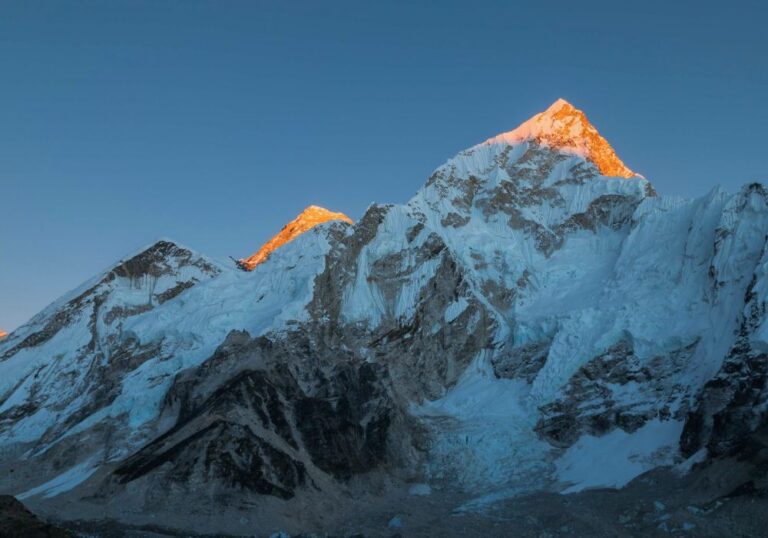
Amigo’s 15-Day Everest Base Camp Route for March
For most first-time Everest trekkers, we recommend the classic trail rather than adding a high pass simply because the calendar says spring. Our published 15-day itinerary includes two acclimatization nights in the same villages and follows the route below. The listed times and distances are estimates; snow, trail conditions and the walking pace can change them.
| Day | Route | Published time or distance |
|---|---|---|
| 1 | Arrival in Kathmandu | Airport pickup and hotel |
| 2 | Preparation; drive to Ramechhap in peak-season operations | About 4–5 hours by road |
| 3 | Fly to Lukla; trek to Phakding (2,610m) | About 8km / 4 hours walking |
| 4 | Phakding to Namche Bazaar (3,440m) | About 10km / 7–8 hours |
| 5 | Acclimatization in Namche | Stay overnight in Namche again |
| 6 | Namche to Deboche (3,820m) | About 12km / 7–8 hours |
| 7 | Deboche to Dingboche (4,410m) | About 11km / 5–6 hours |
| 8 | Acclimatization in Dingboche | Stay overnight in Dingboche again |
| 9 | Dingboche to Lobuche (4,910m) | About 8.5km / 5 hours |
| 10 | Gorakshep; visit Everest Base Camp (5,364m); return to Gorakshep | About 10km / 7–8 hours |
| 11 | Kala Patthar (~5,550m), then descend to Pheriche | About 11km / 7–8 hours |
| 12 | Pheriche to Namche Bazaar | About 18km / 7–8 hours |
| 13 | Namche to Lukla | About 18km / 6 hours |
| 14 | Fly to Ramechhap; drive to Kathmandu | Weather and confirmed flight routing dependent |
| 15 | Departure from Kathmandu | International departure |
The high-elevation days are hard work even for well-prepared hikers. We particularly advise allowing enough time around the Base Camp day and the Kala Patthar viewpoint hike. If weather or health makes a viewpoint visit unsuitable, discuss a safer alternative with your guide rather than feeling obliged to push on.
Will Lukla Flights Operate From Kathmandu or Ramechhap in March?
March is part of the main trekking season, and scheduled fixed-wing flights to Lukla may operate via Manthali Airport in Ramechhap rather than Kathmandu during peak periods. The standard Amigo itinerary includes private road transfers between Kathmandu and Ramechhap, one overnight stay there and the listed round-trip Lukla flight arrangement when that routing applies.
Don’t assume every March date has the same departure airport. Peak-season operations can change as airlines and airports adjust schedules. Your booking confirmation should state the actual airport, transfer arrangements and any early departures. A clear day in Kathmandu does not guarantee suitable visibility or wind at Lukla, and helicopters are not guaranteed alternatives in poor aviation weather.
The Kathmandu to Lukla flight guide explains the route and common delays. Where possible, we recommend leaving some contingency time before the international flight home.
What Should You Pack for Everest Base Camp in March?
March packing needs a little more attention to warmth than some travelers expect from the word “spring.” Bring layers for warmer walking lower down, but have enough insulation for Gorakshep and an early Kala Patthar hike. Your waterproof jacket should still be in the daypack, even if the forecast looks sunny.
- Broken-in hiking boots: comfortable, with reliable grip and enough toe room for long descents.
- Breathable walking clothes: moisture-wicking shirts, trekking trousers and a fleece mid-layer.
- Thermal layers: warm base-layer top and bottoms for nights and early starts.
- Insulated jacket: down or synthetic, especially for villages above 4,000m.
- Wind and waterproof protection: outer shell jacket and trousers, with a waterproof bag liner.
- Hands and head: warm hat, insulated gloves, neck gaiter and sunglasses.
- Sleeping bag: check a real comfort rating appropriate for cold high-altitude teahouses.
- Daypack: headlamp, water, sunscreen, medication, emergency essentials and spare layers.
- Optional traction: trekking poles and microspikes if current trail conditions warrant them.
Amigo’s standard package provides a 70L duffel, with a four-season sleeping bag and down jacket on an included rental basis if needed. Please check equipment sizes and the actual sleeping bag rating, especially for an early-March departure. Our Everest Base Camp packing list covers quantities and what to carry in your personal daypack.
Fitness and Altitude Safety in March
The classic Everest Base Camp route is not technical mountaineering, but you should still be able to walk for several hours on rocky or steep ground on consecutive days. A few good hill walks before Nepal can help, especially if you practise the downhill sections too. For a useful preparation framework, see our EBC training guide and difficulty guide.
March sunshine will not protect you from altitude illness. Neither will drinking a fixed half-litre of water every hour. Drink appropriately for your needs and exertion, but don’t force excessive water. The key safety measures are an appropriate ascent profile, recognizing symptoms early and being willing to change your plan.
According to the CDC Yellow Book, fitness does not predict resistance to altitude illness. Above 3,000m, the broad guidance is to limit sleeping-elevation gain to around 500m per night and add an acclimatization night for each further 1,000m gained; some travelers need a slower schedule. Report headache with nausea, fatigue or dizziness to your guide. Do not ascend to a higher sleeping altitude when altitude illness is suspected. Worsening symptoms require medical assessment and descent.
Before departure, ask about altitude-appropriate travel insurance and helicopter evacuation coverage. Discuss any regular medication, previous altitude illness or important medical conditions with a qualified clinician.
March 2027 Festivals: Shivaratri and Holi
If you are spending a few days in Kathmandu around your trek, you may be able to experience local celebrations. Maha Shivaratri falls on Saturday, 6 March 2027, according to the published Nepal calendar, and Pashupatinath Temple in Kathmandu is an important place of worship during the festival. Busy roads, large crowds and local transport changes should be expected around major celebrations. See the Nepali Patro March 2027 calendar.
Fagu Purnima/Holi also falls around 21–22 March 2027, with published Kathmandu and Terai observance dates differing between calendars. That is why we recommend confirming the final official holiday notice before advertising a particular event date to overseas guests. The colored-powder celebrations are most visible in Kathmandu and other populated areas, not an activity guaranteed along the remote EBC trail. See the Kathmandu March 2027 festival calendar and confirm local announcements before making plans.
These festivals can make a Kathmandu arrival or return more interesting, but they should be treated as optional experiences. A trek itinerary should not promise that travelers will see a specific celebration without matching the actual dates and location.
Other Everest Routes to Consider in March
Not everyone visiting the Everest region needs to go all the way to Base Camp. The best route depends on your fitness, available days and comfort with winter-like conditions. If you want to avoid the highest villages, an easier itinerary may be more suitable than a shorter but rushed Base Camp trip.
- Everest Panorama Trek (10 days) — a shorter option for Khumbu villages and famous mountain views without continuing to Base Camp.
- Classic EBC Trek (15 days) — Amigo’s standard route with Namche and Dingboche acclimatization.
- EBC via Gokyo and Cho La (18 days) — a more demanding option where snow and icy pass conditions need careful assessment.
- Everest Three Passes Trek (19 days) — for experienced high-altitude trekkers; early-season snow can make pass crossings particularly serious.
- EBC with Helicopter Return (12 days) — reduces some of the return walking, although the high-altitude ascent and aviation-weather risks remain.
What Does an Everest Base Camp Trek in March Cost?
March is a popular time for trekking, so we recommend organizing flights, lodging and a guide in advance rather than counting on last-minute space. When comparing quotes, ask exactly which airport transfers, Lukla flights, trekking permits, lodge nights, meals, porter support and equipment are included. A low advertised price can become more expensive after these extras are added.
Amigo’s published standard package starts from US$1,450 per person for qualifying larger groups, and the final rate varies with party size and other arrangements. Personal travel insurance, international flights and various personal expenses are additional. Our Everest Base Camp trek cost guide explains the current group-price tiers and exclusions.
Everest Base Camp in March: Frequently Asked Questions
Is March a good time to trek to Everest Base Camp?
Yes. March is the beginning of the main spring trekking season and often offers appealing mountain conditions. Early March can still be wintry, especially higher up, so bring proper cold-weather clothing.
Is Everest Base Camp very cold in March?
It can be, particularly at Lobuche, Gorakshep and early on Kala Patthar. Conditions at Lukla and Phakding are milder than around 5,000m, so don’t use one temperature number for the whole route.
Does it snow in March on the Everest trail?
Snow and ice are possible, particularly early in March and on exposed higher sections. The extent varies by year; ask your guide about current trail conditions.
Is early March or late March better?
Early March can be quieter but retains more winter conditions. Late March often feels more springlike at lower elevations, though high-altitude cold and snow remain possible.
Are the mountains clearly visible in March?
Often there are clear morning intervals, but wind, cloud or snowfall may obscure views. March does not guarantee a clear Everest panorama.
Is March crowded on the EBC trek?
Traffic generally increases through March as the spring season builds. Some early dates may be quieter than April, but don’t assume flights or lodges will be empty.
Can beginners trek to Everest Base Camp in March?
Well-prepared first-time high-altitude trekkers can sometimes complete the classic route. Good hiking endurance, cold-weather gear, acclimatization and willingness to adapt are important.
Will flights to Lukla operate from Kathmandu in March?
Some services may, but peak-season scheduled flights often use Manthali/Ramechhap. Confirm the actual airport and transfer arrangements for your booking.
How many days does the classic trek take?
Amigo’s standard package takes 15 days including Kathmandu and flight logistics, with Everest Base Camp on Day 10 and Kala Patthar on Day 11.
What should I pack for March?
Bring thermals, fleece, warm insulated jacket, waterproof shell, gloves, headlamp, good boots, appropriate sleeping bag, sun protection and a comfortable daypack.
Do I need microspikes in March?
Not on every departure. They may be helpful if icy conditions develop, but your guide should assess whether traction is appropriate for the route.
Can I see Everest climbers at Base Camp in March?
March can be an early preparation period for the spring climbing season, but major expedition activity may be limited compared with April and May. There is no guarantee of seeing summit teams or their camps.
Can I see rhododendrons in March?
Sometimes in suitable lower forest areas, especially later in the month, depending on the year and elevation. Higher parts of the EBC route are above the tree line.
Does drinking more water prevent altitude sickness?
No. Proper hydration matters, but forcing a fixed amount of water cannot prevent altitude illness. A sensible ascent schedule and quick response to symptoms are more important.
When is Maha Shivaratri in March 2027?
The published Nepali calendar lists Saturday, 6 March 2027. If you are in Kathmandu, expect significant crowds and activity near Pashupatinath.
When is Holi in Nepal in March 2027?
Published calendars place Fagu Purnima/Holi around 21–22 March 2027; observance dates vary by region and calendar. Verify the final official holiday dates before planning an event.
Our Advice for a March Departure
March can be a lovely time to begin an Everest adventure. You may find the lower Khumbu coming into spring while the higher mountains still have a winter feel. Come prepared for both. We recommend comfortable walking days, warm clothing you have actually tested and enough time to acclimatize. We’d rather change a day’s plans because of weather than push the group into difficult conditions simply to follow the printed schedule.
For the complete route and services, visit Amigo’s 15-day Everest Base Camp trek. If you’re comparing months, read our February guide or April guide. Our Kathmandu team can help you match the departure with your walking experience, preferred dates and flight arrangements.