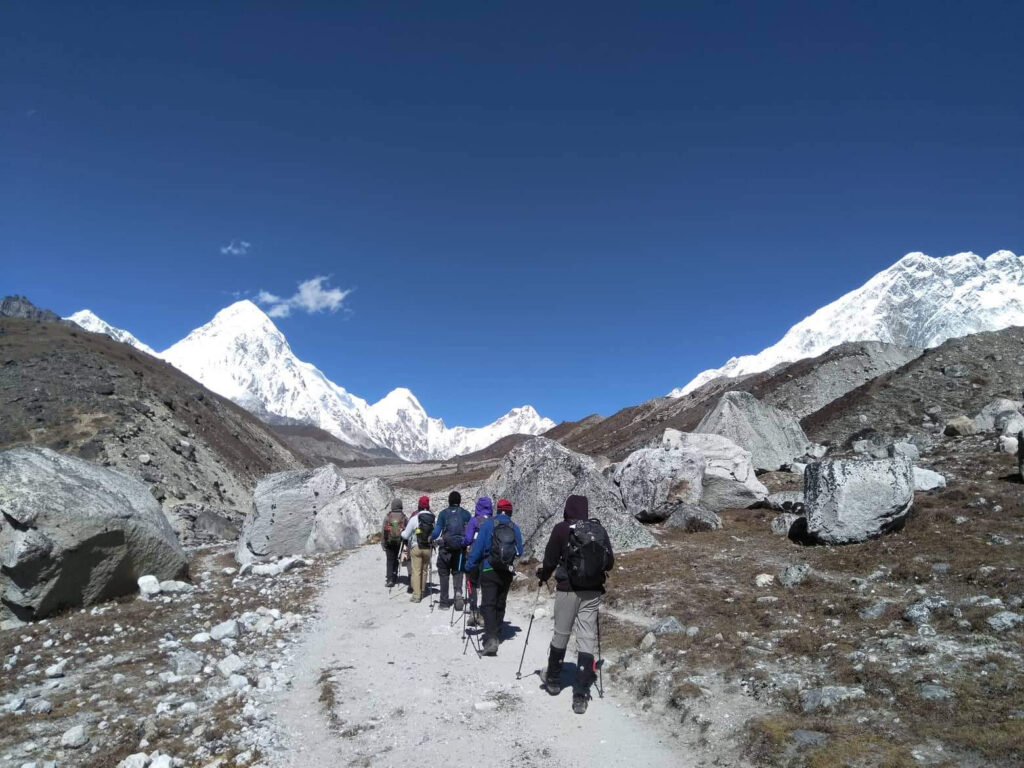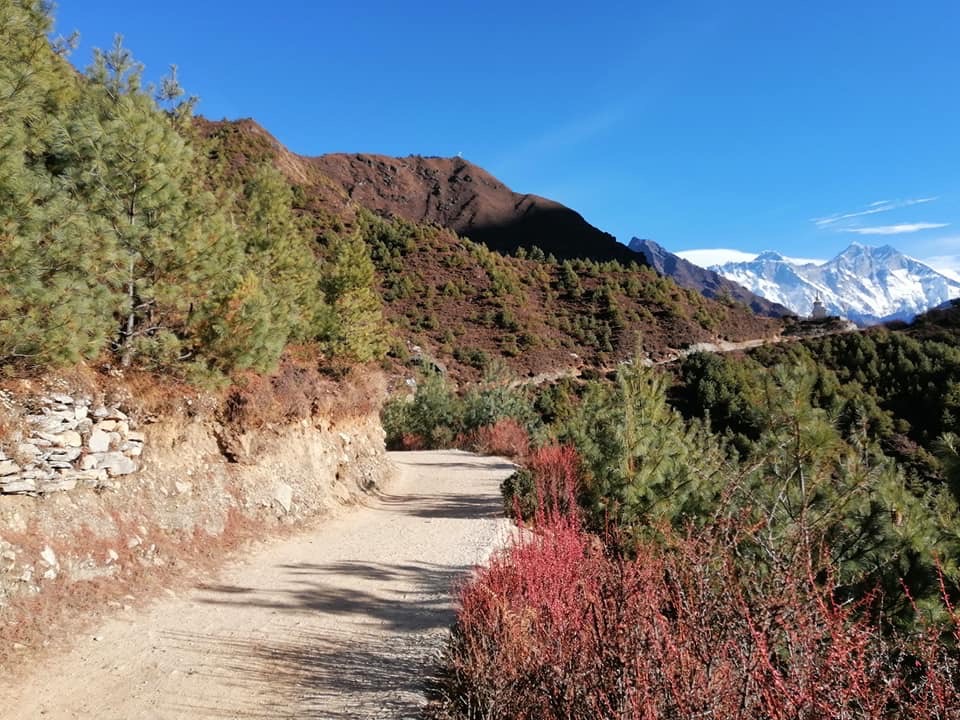
February on the Everest trail has a different feel from the busy weeks of April or October. The lower villages begin to see longer days, and there can be beautiful clear mornings, but winter has not finished in the upper Khumbu. If you’re walking towards Lobuche and Gorakshep, you need to be ready for freezing nights, cold wind and possibly snow or ice on the trail.
We wouldn’t discourage a prepared trekker from visiting Everest Base Camp in February. We would, however, plan the trip differently from a mild-weather holiday. At Amigo Treks & Expedition, our priorities are reliable cold-weather clothing, confirmed lodge and flight arrangements, a steady walking pace and acclimatization time that should not be removed simply to finish the route faster. The classic 15-day Everest Base Camp trek includes acclimatization days in Namche Bazaar and Dingboche.
Quick answer: You can trek to Everest Base Camp in February, but it is a late-winter journey. There are often fewer trekkers than in the main spring and autumn months, with opportunities for clear mountain views. Higher settlements remain cold, some trails can be icy, and services may be reduced in quieter villages. The standard route reaches Everest Base Camp at about 5,364m and Kala Patthar at around 5,550m. Choose February for the experience, not because it is guaranteed to be easy or cheap.
February Everest Base Camp Trek: What to Expect
| Factor | Practical February advice |
|---|---|
| Season | Late winter, with longer days as March approaches |
| Visibility | Clear spells can be excellent; wind, cloud and snow may still obscure mountains |
| Cold | Freezing conditions possible at higher overnight stops, especially Lobuche and Gorakshep |
| Snow and ice | Possible on upper trails and in shaded stretches; actual conditions vary each year |
| Crowds | Often quieter than April, May, October and November; never completely empty |
| Teahouses | Core-route lodges may operate, but services and room choices can be limited in quieter or higher villages |
| Lukla flights | Check the operating airport and airline; winter weather can disrupt services |
| Preparation | Warm sleeping gear, tested boots, flexible travel time and an acclimatization-focused itinerary |
Why Consider Everest Base Camp in February?
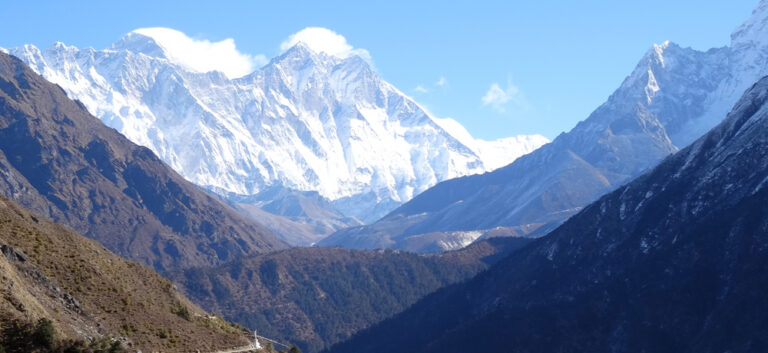
The appeal of February is the winter landscape. When the sky is clear, snowy peaks can look particularly sharp against the blue. There may be fewer groups on the trail, so the walk can feel more relaxed than in the busiest months. Namche is still a working town, not a seasonal resort, and the Sherpa villages along the route continue their daily routines.
The trade-offs deserve equal attention. A quieter season can mean fewer open lodge choices at a particular stop, less flexibility for private room requests and some discomfort during cold mornings. If a snowfall closes a trail section or poor weather delays your flight, fewer trekkers around you won’t make those problems disappear. We always suggest confirming the actual winter lodge arrangements with your operator before you set off.
For a colder winter comparison, read our January Everest Base Camp guide. If your travel dates are flexible, March trekking conditions may be more suitable for travelers who prefer the start of spring, although high-altitude snow is still possible then.
Everest Base Camp Weather in February
There is no single weather figure for the whole Everest route. Lukla is around 2,840m, Namche is 3,440m and Gorakshep is about 5,164m. The temperature, wind and sun exposure can change considerably between these villages. You might feel comfortable walking uphill in the afternoon sun near Phakding, then need several warm layers while sitting in a high-elevation lodge that evening.
The old article quoted an exact February average of −16°C at Base Camp, alongside other conflicting figures, without naming a measurement station. Rather than repeat unsupported numbers, we recommend preparing for freezing temperatures at the higher stops and checking the latest forecast for the week you’re travelling. A seasonal average is not a forecast for your trekking day.
| Place | Elevation | What matters in February |
|---|---|---|
| Lukla / Phakding | 2,840m / 2,610m | Cool mornings, potentially pleasant sunny walking, and weather-sensitive flight operations |
| Namche Bazaar | 3,440m | Cold evenings and shaded paths; bright mountain sun during clear spells |
| Deboche | 3,820m | Chilly forest paths and cold nights; keep a fleece and insulated layer accessible |
| Dingboche | 4,410m | Open, exposed valley where wind and cold become more significant |
| Lobuche | 4,910m | Low temperatures and possible icy or snowy walking |
| Gorakshep | 5,164m | Basic high-altitude lodging; warm sleeping equipment is important |
| Everest Base Camp | 5,364m | Rocky and exposed daytime visit, with possible snow, ice and wind |
| Kala Patthar | About 5,550m | Cold early viewpoint climb; proceed only if conditions and health allow |
Nepal Tourism Board notes that winter can still bring bright sunshine and mountain views, but it also identifies spring and autumn as the main trekking periods. Check the official Nepal climate overview and our year-round Everest weather guide for broader context. Before departure, your guide and the Department of Hydrology and Meteorology are more useful for near-term conditions than an old online temperature chart.
Early February or Late February?
Early February
Early February may still have the feel of deep winter. Cold overnight stops, frost and ice in shaded areas deserve attention, especially if snow has fallen recently. Some groups like the quieter trails, but this is not the time to rush an itinerary or assume that every high lodge will have all its usual services.
Late February
Later in February the daylight period gradually increases, and lower villages may begin to feel a little more springlike. That doesn’t mean the highest settlements are warm. Late-February snowstorms can still affect the trail and flights. As the spring trekking season approaches, demand for guides, flights and accommodation can begin to rise.
We’d choose the dates that suit your walking ability and allow enough flexibility, rather than claim that either half of February guarantees better weather.
Snow, Ice and Wind: The February Challenges
A dry-looking day can still be difficult at altitude. On the way toward Lobuche and Gorakshep, rock, loose ground and any frozen patches make careful footing essential. Wind also makes rest stops colder. The statement in the original article that you don’t need to worry about intense wind isn’t advice we would give winter trekkers.
- Take trekking poles if they help you stay steady on uneven or frozen terrain.
- Ask your guide whether microspikes or other traction are appropriate for the actual conditions; they are not mandatory for every February departure.
- Keep warm gloves, a hat and an insulating layer in your own daypack, not only in the porter duffel.
- Start walking early enough to reach the next lodge in daylight, especially on long days.
- Stay well away from steep icy slopes or areas your guide identifies as unsafe, and change the route if weather makes a section unsuitable.
The classic EBC route is a teahouse trek, not a technical ascent. Routes that cross high passes such as Cho La or Kongma La are more demanding, particularly with winter snow or ice, and should not be chosen just because they look attractive on a map.

Our Recommended Route in February
For most February travelers interested in Base Camp, we would begin with the standard 15-day itinerary and review current conditions before the trek. Its Namche and Dingboche acclimatization days are important, and we wouldn’t remove them to compensate for a travel delay. This is the sequence in Amigo’s published program:
| Trip days | Route | Why it matters in February |
|---|---|---|
| 1–3 | Kathmandu; prepare and reach Lukla; trek to Phakding | Confirm the actual flight departure airport and allow for winter conditions |
| 4–5 | Phakding to Namche; acclimatization in Namche | A steep approach followed by a second night at 3,440m |
| 6–8 | Deboche and Dingboche; acclimatization in Dingboche | Cold nights and a controlled ascent toward 4,410m |
| 9 | Dingboche to Lobuche (4,910m) | Rockier ground and more exposure to cold |
| 10 | Gorakshep; visit Everest Base Camp (5,364m); return to Gorakshep | A long, demanding high-altitude day; approximately 7–8 hours in the published itinerary |
| 11 | Kala Patthar (~5,550m); descend to Pheriche | Viewpoint hike depends on fitness, symptoms, weather and ground conditions |
| 12–13 | Walk back through Namche to Lukla | Long descent days; protect knees and avoid rushing |
| 14–15 | Fly out and return to Kathmandu; international departure | Flight delays can require schedule adjustments |
On Amigo’s 15-day itinerary, Base Camp is reached on Day 10 and Kala Patthar on Day 11. The exact airline routing, hotel nights or hiking sequence may be adjusted to the confirmed departure and conditions. Spending an additional night acclimatizing may be safer for some travelers; ask before booking if a slower schedule would better suit you.
Are Kathmandu–Lukla Flights Available in February?
Lukla flight schedules depend on the season, airline, demand and airport arrangements. In the main spring and autumn periods, flights are often routed through Manthali/Ramechhap. February can have different operating patterns, including direct Kathmandu services when scheduled. We do not recommend assuming either airport without checking your actual ticket.
Amigo’s currently published 15-day package includes the Ramechhap transport and flight arrangements described in that itinerary. If your February service instead operates directly from Kathmandu, the team should confirm the revised logistics in writing. In winter, cloud, visibility, wind and snowfall can still delay aviation. A helicopter is not automatically able to fly when a plane cannot.
Read our Kathmandu to Lukla flight guide for an explanation of routing, transfers and weather delays. We recommend keeping time in reserve before an international flight home whenever possible.
What to Pack for Everest Base Camp in February
For February, a suitable sleeping bag and warm clothing are not optional extras. Even if you generate plenty of body heat while walking uphill, you will cool down quickly when you stop. We would choose reliable, tested equipment over trying to save weight by leaving an insulating layer behind.
- Boots and traction: well-fitting, broken-in hiking boots with good grip; ask about microspikes if the route is icy.
- Warm base layers: thermal top and bottoms, plus moisture-wicking walking shirts.
- Mid-layer: fleece or similar insulation you can wear during rest stops.
- Warm jacket: substantial down or synthetic jacket for higher villages and cold starts.
- Outer shell: windproof and waterproof jacket and trousers to protect against snow or rain.
- Head and hands: warm beanie, neck gaiter, gloves and insulated mittens if conditions warrant.
- Sleeping system: a sleeping bag with a genuine comfort rating suited to the coldest lodge nights; add a suitable liner if needed.
- Sun and daily essentials: sunglasses, sunscreen, lip balm, headlamp, personal medication, water and snacks.
- Daypack: keep warm layers and essentials handy even when a porter carries the main duffel.
Amigo’s standard package includes a 70L duffel and rental of a four-season down jacket and sleeping bag when required. For a winter trip, check the actual comfort rating and fit of the equipment, rather than assuming the words “four season” will meet every traveler’s needs. Our Everest Base Camp packing list offers a more complete checklist.
What Are Teahouses and Meals Like in February?
On the classic route, tea houses provide meals and basic rooms, but facilities change with elevation and the time of year. Some lodges may be closed or operating with fewer staff in quieter weeks. At high stops, bedrooms are often unheated; the main dining room may be warmed in the evening. That’s why the sleeping bag matters, even when the forecast suggests sunny days.
Amigo’s standard trek includes basic mountain accommodation, three meals a day during the walk and guide and porter support, but certain hot showers, extra charging and personal drinks have separate charges or are not available at every stop. Ask the team to confirm the February lodge plan, including any changes to overnight villages caused by weather or closure. We would not claim that all February lodging is cheaper; prices and availability depend on the service and operator.
Altitude Sickness Is Still a Risk in Cold Weather
A common mistake is to treat altitude illness as something that only happens to unfit trekkers. It can affect experienced hikers too. Everest Base Camp is at about 5,364m, and the Kala Patthar viewpoint on our route reaches roughly 5,550m. Cold weather adds to the demands of the trek, but altitude illness is primarily related to ascent and individual acclimatization.
The CDC Yellow Book recommends a gradual increase in sleeping elevation once above 3,000m and additional acclimatization nights. It also makes clear that physical fitness does not prevent altitude sickness. If a trekker has headache with nausea, dizziness or unusual fatigue after ascending, tell the guide promptly; do not ascend to sleep higher when altitude illness is suspected. Severe or worsening symptoms may require urgent descent and medical attention.
Eat enough to support the daily effort and drink according to your needs, but neither a particular diet nor forced water intake can replace acclimatization. If you have medical concerns, consult a travel-medicine clinician before travelling and confirm that your Everest trekking insurance covers the planned altitude and medically necessary evacuation.
What About February Festivals in the Khumbu?
Losar, the Tibetan New Year, is culturally relevant to Sherpa and Tibetan Buddhist communities. It is a family and religious occasion, not a guaranteed public performance for visitors. The dates are set by lunar traditions, and local observances can differ. For example, the Ka-Nying Shedrub Ling monastery calendar lists Tibetan New Year on 7 February 2027, while some Nepal public-holiday calendars use a different date for Gyalpo Losar. Confirm the local monastery and community schedule before suggesting a date to guests.
The older article also treats Shivaratri and Holi as though they usually take place in February. Both follow changing calendars and, for 2027, are observed in March. If you want to include a Kathmandu celebration before or after the trek, ask the Amigo office for year-specific arrangements rather than building a February trek around a guessed festival date.
Should You Choose the Classic Trek or a Shorter Everest Route?
For travelers without much cold-weather trekking experience, the full Base Camp trip is not always the best introduction to the Everest region in February. The Everest Panorama Trek visits villages and viewpoints at lower elevations and may be a more comfortable choice for someone who does not want to spend nights above 4,000m. You still need to prepare for winter weather and some altitude exposure.
If Base Camp is your main goal, start with the classic 15-day trek, not a compressed high-altitude schedule. More demanding alternatives such as the Everest Three Passes route may involve significant snow and ice and require experienced assessment of the passes. A helicopter-return itinerary reduces some return walking but does not remove the challenge of trekking uphill, and the flight itself depends on conditions.
Does the February Everest Trek Cost Less?
Some people expect a February trek to be cheaper because it is quieter. It can be, in some arrangements, but there is no universal winter discount. Aircraft, guide, porter and lodge costs can still be significant, and weather changes may result in additional hotel nights or transport expense. We suggest comparing a complete written quote rather than relying on an advertised seasonal bargain.
Amigo’s standard 15-day package currently starts from US$1,450 per person for qualifying group sizes, with final pricing depending on your group, dates and confirmed services. International flights, insurance and personal extras are separate. Our Everest Base Camp trek cost guide explains how to compare package inclusions and additional spending.
Everest Base Camp in February: Frequently Asked Questions
Can you trek to Everest Base Camp in February?
Yes, if you are properly prepared for winter conditions and have a sensible acclimatization itinerary. Confirm current trail, lodging and flight arrangements before departure.
Is February a good time for Everest Base Camp?
It can be attractive for travelers who like quieter paths and winter scenery. But the high route is colder than in the main spring and autumn periods and may have snow or ice.
Is February colder than March?
Typically, February is the colder of the two months, particularly at high elevations. Actual conditions can vary; a cold spell or snowfall may also occur in March.
How cold is Everest Base Camp in February?
Freezing conditions and cold winds are possible near Base Camp and in the higher villages. One average temperature cannot describe every day or overnight stop; pack using a suitable sleeping-bag comfort rating.
Does it snow on the EBC route in February?
Yes, snowfall can occur, and some sections may remain icy. Ask your guide about current trail conditions and whether traction equipment is appropriate.
Is Everest Base Camp crowded in February?
It is generally quieter than April, May, October or November, but not empty. Some services and room choices may also be more limited than in peak months.
Are teahouses open in February?
Some lodges continue to operate along the classic route, while individual businesses may close or reduce services. Confirm overnight accommodation with your trekking operator.
Do Lukla flights operate in February?
Flights can operate when scheduled and when visibility, wind and other conditions permit. The Kathmandu-versus-Ramechhap routing must be confirmed for your specific dates.
Can beginners trek to EBC in February?
Some fit and well-prepared beginners may complete it, but winter conditions add challenges. A lower-altitude Everest Panorama itinerary may be more suitable for some first-time trekkers.
What should I pack for an EBC trek in February?
Bring broken-in boots, thermals, fleece, insulated jacket, windproof/waterproof shell, warm gloves, hat, sunglasses, headlamp and a sleeping bag rated for cold high-elevation nights.
Do I need microspikes or crampons?
Technical mountaineering equipment is not normally required for the standard route. Microspikes may help with ice if your guide recommends them; serious snow or ice can require itinerary changes.
Does good fitness protect against altitude sickness?
No. Fit trekkers can develop altitude illness. Acclimatization, early reporting of symptoms and willingness to descend are essential.
How many days does Amigo’s route take?
The standard itinerary takes 15 days including arrival, departure and flight logistics. Everest Base Camp is on Day 10 and Kala Patthar on Day 11.
Does February have a guaranteed Losar festival date?
No. Lunar-calendar and local observance schedules can differ. Ask for confirmation from the relevant Sherpa community or monastery for your year and travel dates.
Our Advice Before Booking a February Departure
February can be a rewarding time in the Khumbu, but it is a month for people who understand the cold and are willing to be flexible. We recommend checking the weather close to departure, arranging winter-appropriate equipment and confirming which lodges are operating. Once you’re on the trail, the priority is your group’s health and safe progress, not following a timetable at any cost.
Take a look at Amigo’s 15-day Everest Base Camp itinerary and tell the Kathmandu team your dates, trekking experience and room preferences. We can help compare the classic route with a shorter Everest Panorama trek if you’d prefer to stay at lower elevations in winter.