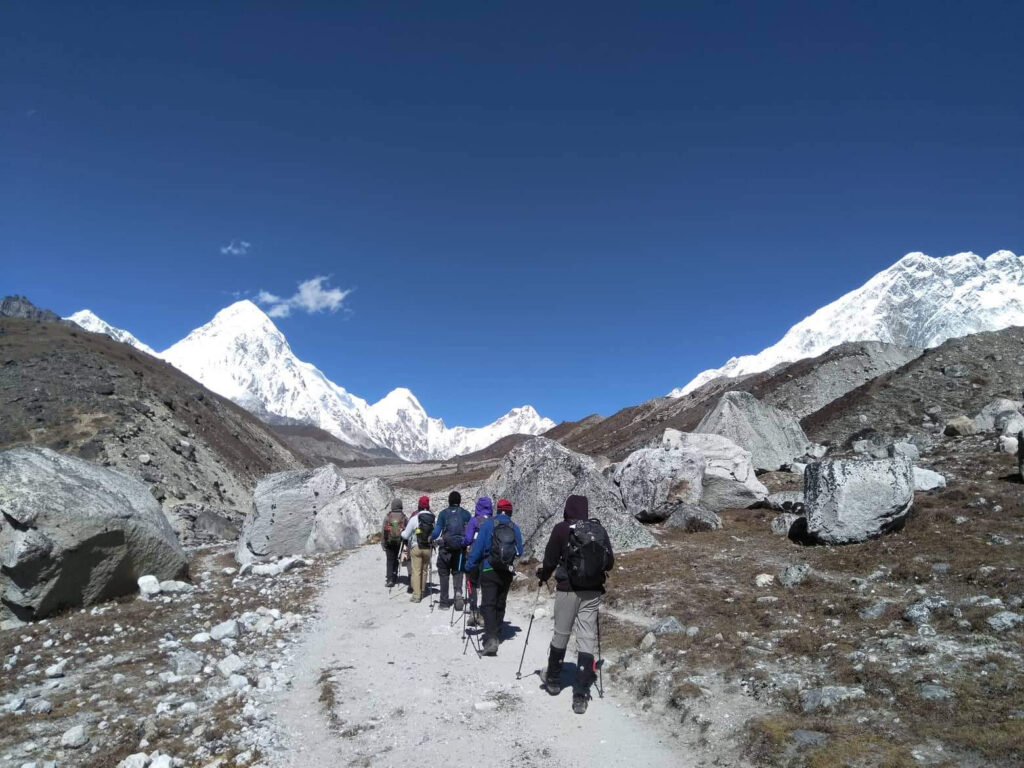
January is one of the quietest times to walk in the Everest region, and it can be a memorable one. On clear mornings, the mountains sometimes stand out sharply against the winter sky. You may meet far fewer trekking groups than in October or April. But the quiet comes with a trade-off: the higher you go, the colder the journey becomes, and snow or ice can change the day’s walking plan.
At Amigo Treks & Expedition, we wouldn’t rule out Everest Base Camp in January for a well-prepared traveler. We would, however, make sure they understand what a winter trek involves before accepting the booking. Warm equipment, confirmed lodges and flights, realistic walking hours and proper acclimatization matter far more than choosing a month because an article promises blue skies.
Quick answer: You can trek to Everest Base Camp in January if conditions and your preparation allow. It is a cold winter month with fewer trekkers, possible snow or ice and limited services at some high-altitude lodges. Base Camp stands at roughly 5,364m, and the optional Kala Patthar viewpoint on Amigo’s standard route reaches about 5,550m. Allow time for altitude adjustment, confirm your flight arrangements and prepare for cold nights above 4,000m.

What Is Everest Base Camp Like in January?
| What matters | What to expect |
|---|---|
| Season | Midwinter, with cold higher villages and comparatively short days |
| Mountain views | Clear winter spells can be excellent; snow, cloud and wind can still spoil visibility |
| Typical trail atmosphere | Generally fewer trekking groups than spring and autumn, though not an empty trail |
| Snow and ice | Possible on higher or shaded sections; amount varies from year to year |
| Lodges | Some may open with basic services; availability and room facilities should be confirmed |
| Lukla flights | Subject to winter visibility, wind, airport conditions and actual airline schedules |
| Walking challenge | Cold exposure, long descents, rugged sections and altitude above 5,000m |
| Best suited to | Prepared trekkers who value quieter trails and can accept changes if conditions deteriorate |
Is January a Good Month to Trek to Everest Base Camp?
It can be, for the right traveler. If you enjoy quieter villages and don’t mind winter mornings, January has a special appeal. The view of Ama Dablam above the trail, the walk through Sherpa settlements and the approach toward the high valleys can all be rewarding when conditions are clear. You don’t have to share every viewpoint with the crowds of a peak-season departure.
But we would not call it the cheapest or easiest month. A quieter lodge doesn’t automatically offer a discount, and there may be fewer room choices. The high sections may require extra time if snow or ice develops. Even when the trail is clear, the cold can affect sleep, energy and how comfortable you feel during breaks. If you’ve never walked in freezing weather, a lower-altitude route may be a more enjoyable first experience.
To compare winter months, read our Everest Base Camp in February guide. February may have longer days and a gradual move toward spring at lower elevations, but neither month is guaranteed to be snow-free.
January Weather: Why Lukla and Gorakshep Feel So Different
The Everest trek spans a large range of elevations. Lukla is about 2,840m and Phakding about 2,610m. After Namche Bazaar at 3,440m, you move steadily into colder country. Dingboche is 4,410m, Lobuche around 4,910m and Gorakshep about 5,164m. You should plan for a sunny lower-valley walk and freezing upper-village conditions on the same trip.
You’ll sometimes read that the “average January temperature at Everest Base Camp” is exactly −17°C. The original version of this article quoted that number without a weather-station source or an explanation of whether it referred to the day, night or a monthly average. Rather than repeat a misleading figure, we advise looking at elevation-specific forecasts and packing conservatively for cold, exposed sections.
| Location | Approximate altitude | What a January trekker should prepare for |
|---|---|---|
| Lukla and Phakding | 2,840m / 2,610m | Cool or cold mornings, sunny spells, occasional precipitation and flight-sensitive weather |
| Namche Bazaar | 3,440m | Cold evenings and shaded paths; warmer walking when the sun is out |
| Deboche | 3,820m | Cold forested stretches and lower temperatures at night |
| Dingboche | 4,410m | Open valley with increased wind exposure and freezing conditions possible |
| Lobuche | 4,910m | Cold, rocky ground; snow or ice may affect some sections |
| Gorakshep | 5,164m | Very cold overnight conditions in basic high-altitude teahouses |
| Everest Base Camp | 5,364m | Normally a daytime visit; an exposed, uneven approach with possible snow or wind |
| Kala Patthar | Approximately 5,550m | A demanding, often early-morning viewpoint hike; attempt only when conditions and health permit |
For broader seasonal context, our Everest Base Camp weather guide compares the twelve months. Before leaving Kathmandu, check Nepal’s Department of Hydrology and Meteorology and ask your guide about actual high-trail conditions. A long-range weather app is not a reliable substitute for a local assessment.
How Much Snow or Ice Should You Expect?
There is no honest way to promise a particular snow depth in January. Some departures encounter mostly clear paths with icy patches in shaded areas. Others may be affected by fresh snowfall, blocked sections or poor visibility. Wind can also make the walk feel considerably colder than the air temperature alone.
A well-maintained pair of hiking boots, trekking poles and warm gloves are a sensible starting point. Your guide can recommend microspikes if trail ice makes them useful; they aren’t something every January trekker must automatically carry. If conditions make the route unsafe, the correct decision may be to delay, turn around or choose a different section, not to press on to Base Camp.
The Everest Three Passes route, including Kongma La, Cho La and Renjo La, is a different undertaking from the normal EBC trail. Winter conditions can make high passes significantly more serious. Don’t add them to a January itinerary simply because they’re nearby.
Shorter Winter Days: Why Starting Times Matter
January has fewer daylight hours than the main spring season, and mountainsides can remain shaded even after the sun rises. That doesn’t mean there are only five hours of daylight, as some old articles suggest. It means you should plan the walking day carefully, allow for slower progress on icy or rocky ground and reach your lodge before dark where possible.
Your guide will set the practical departure time according to the route and weather. A headlamp belongs in your daypack, and you shouldn’t separate from the group to chase a viewpoint at dusk. Early starts can be colder, so keep your hat and gloves ready before leaving the lodge.
Are Teahouses Open in January? What About Heating?
Many lodges on the main Everest trail operate in winter, but not every property offers the same services year-round. Some guesthouses close for part of the season; others may be open with a smaller staff or a reduced choice of rooms. We advise confirming each high-altitude overnight stop before departure instead of assuming accommodation can always be found on arrival.
At higher elevations, a warm dining area does not mean your bedroom will be heated. Private bathrooms, hot showers and charging may be limited or available for an extra charge, and some facilities can be unavailable when water pipes freeze. A suitable sleeping bag makes a real difference. Keep dry socks for the evening, look after your boots and carry a small amount of spending money for personal extras.
Amigo’s standard published package includes teahouse accommodation and breakfast, lunch and dinner during the trek, guide and porter services, and specified equipment. Winter lodge availability still needs to be checked for the exact departure. We would rather confirm suitable places to stay than promise every guest an upgraded room at 5,000m.
Recommended Everest Base Camp Route for January
The standard 15-day Everest Base Camp itinerary is our reference route. We use it as a starting point for winter planning, not as a promise that every January group can follow the timetable without adjustment. It includes acclimatization in Namche and Dingboche, followed by a visit to Base Camp and the Kala Patthar viewpoint if conditions allow.
| Day | Route | What to consider in winter |
|---|---|---|
| 1 | Arrive in Kathmandu | Check equipment and travel plans with the Amigo team |
| 2 | Trek preparation and Ramechhap transfer when required | The operating flight route must be reconfirmed for January |
| 3 | Flight to Lukla; trek to Phakding (2,610m) | About 8km / 4 hours walking on the published plan |
| 4 | Phakding to Namche Bazaar (3,440m) | About 10km / 7–8 hours; steep approach |
| 5 | Acclimatization in Namche | A second night at the same sleeping elevation |
| 6 | Namche to Deboche (3,820m) | About 12km / 7–8 hours; forested and shaded sections |
| 7 | Deboche to Dingboche (4,410m) | About 11km / 5–6 hours; more exposure |
| 8 | Acclimatization in Dingboche | Important time to adjust before going higher |
| 9 | Dingboche to Lobuche (4,910m) | About 8.5km / 5 hours; colder and rockier |
| 10 | Gorakshep; Everest Base Camp (5,364m); return to Gorakshep | About 10km / 7–8 hours; high-altitude, uneven terrain |
| 11 | Kala Patthar (~5,550m); descend to Pheriche | About 11km / 7–8 hours; optional viewpoint depending on health and conditions |
| 12 | Pheriche to Namche Bazaar | About 18km / 7–8 hours; a long downhill day |
| 13 | Namche to Lukla | About 18km / 6 hours; continue carefully on descents |
| 14 | Flight out of Lukla; transfer to Kathmandu if needed | Allow for potential weather delays |
| 15 | Departure from Kathmandu | Leave extra international travel flexibility where possible |
The regular Amigo itinerary places Everest Base Camp on Day 10 and Kala Patthar on Day 11. In January, we would discuss whether additional buffer or acclimatization days are appropriate. The published schedule is useful for planning, but a guide must be free to recommend changes for snow, health or flight conditions.
Do Lukla Flights Operate in January?
Flights to Lukla can operate in January when scheduled and when the conditions are suitable. The usual peak-season switch to Manthali/Ramechhap does not apply on exactly the same dates every year. Depending on the airline and seasonal arrangements, your flight may operate from Kathmandu or require a Ramechhap transfer. Please confirm the actual airport and ticket details with Amigo before booking international travel around them.
A clear sky in Kathmandu doesn’t guarantee the same conditions at Lukla. Wind, cloud and visibility can cause cancellations; helicopters also have operational limits and are not guaranteed to fly when scheduled aircraft cannot. Ask about the plan if the flight is delayed, and allow some flexibility for your return journey.
For practical information, our Kathmandu to Lukla flight guide explains how flight routing and weather delays affect an Everest itinerary.
What to Pack for a January Everest Base Camp Trek
January is the month when we would be particularly careful about your sleeping bag, gloves and boots. It’s tempting to pack light because a porter carries your main duffel, but your own daypack still needs the clothes that keep you warm when you stop for lunch or a viewpoint. Dress in layers so you don’t become too hot while climbing and too cold when resting.
- Warm base layers: thermal top and bottoms, plus moisture-wicking walking shirts.
- Mid-layer and jacket: fleece and substantial down or synthetic insulated jacket.
- Waterproof and windproof shell: jacket and trousers for snow, wind or unexpected precipitation.
- Gloves and hats: lighter walking gloves, insulated gloves or mittens, a beanie and neck gaiter.
- Boots and socks: broken-in footwear with good grip, dry hiking socks and a warm pair for lodge evenings.
- Sleeping bag: check the actual comfort rating and whether it suits your expected overnight conditions; add a liner when useful.
- Headlamp and power: reliable headlamp, spare power and protection for batteries from the cold.
- Sun and hydration: sunglasses, sunscreen, lip balm and bottles that can be protected from freezing.
- Walking essentials: trekking poles, personal medication, water treatment when required and a comfortable daypack.
On the current Amigo standard trek, a 70L duffel is supplied and rental of a four-season down jacket and sleeping bag is included if required. For January, please check the actual bag’s comfort rating and your jacket size before depending on rental equipment. See our Everest Base Camp packing list for gear quantities and how to organize your daypack.
Does January Weather Make the Trek More Difficult?
Usually, yes: winter adds cold exposure and may add icy or snowy ground to a route that is already demanding because of its length and altitude. You don’t need technical mountaineering experience for the standard trail in normal conditions, but walking comfortably for several hours on consecutive days is essential. Hills, stairs and controlled downhill walks are useful preparation. Our Everest Base Camp training guide offers a practical preparation framework.
Cold air and physical effort can be uncomfortable, but neither strong fitness nor a special diet prevents altitude sickness. Everest Base Camp stands above 5,300m, and the Kala Patthar viewpoint is higher. The acclimatization days in Namche and Dingboche are important regardless of season. The CDC Yellow Book emphasizes gradual ascent and notes that standard Everest itineraries can still be too fast for some travelers.
Report headache with nausea, dizziness or unusual fatigue to your guide promptly. Don’t ascend to sleep at a higher elevation when altitude illness is suspected; worsening symptoms can require urgent descent and medical assistance. Travel insurance should clearly cover high-altitude trekking, emergency medical care and medically necessary helicopter evacuation. See our Everest Base Camp insurance guide before selecting a policy.
Maghe Sankranti in January 2027
If you are spending time in Kathmandu before or after your trek, Maghe Sankranti may be relevant to your visit. It marks the first day of Magh in the Nepali calendar and is also important to communities including Tharu and Magar people, who have their own traditions around the period. In 2027, Maghe Sankranti falls on Friday, 15 January, according to the Nepali Patro calendar.
We don’t advertise Maghe Sankranti as a festival you will automatically experience on the Everest trail. Celebrations vary by region and community, and your trekking dates may not coincide with local events. If you want a cultural experience in Kathmandu, ask us which places and arrangements are appropriate for your schedule.
Would a Lower-Altitude Everest Trek Be Better in January?
For some visitors, yes. If the idea of nights at Gorakshep in midwinter doesn’t sound appealing, the 10-day Everest Panorama Trek lets you explore part of the Khumbu and enjoy mountain views without going to Base Camp. It is still a mountain trek, but it avoids the highest overnight villages on the EBC route.
If Base Camp is your main goal, choose the full itinerary and prepare for the conditions. The Everest Three Passes Trek is substantially more demanding and is not something we would recommend casually in midwinter. Likewise, a helicopter-return itinerary removes some return walking but still requires the high-altitude ascent, and any flight depends on safe flying conditions.
Is Everest Base Camp Cheaper in January?
A January trek is not automatically a discounted trek. There may be fewer guests in the lodges, but fixed costs such as flights, guides, porters, equipment and transport remain. Some winter arrangements also require more flexibility. We would compare the total inclusions before assuming the price will be lower than in April or October.
Amigo’s published standard 15-day package currently starts at US$1,450 per person for qualifying larger groups, with the actual rate dependent on party size and the confirmed itinerary. International flights, insurance, tips and personal expenses are additional. See the Everest Base Camp trek cost guide for the group rates and inclusions.
Everest Base Camp in January: Frequently Asked Questions
Can I trek to Everest Base Camp in January?
Yes, if conditions allow and you are well prepared for cold weather, possible snow or ice and high altitude. Arrange a suitable route with a licensed local guide and confirm lodging and flights before departure.
Is January the coldest month for EBC trekking?
January is typically among the coldest months in the upper Khumbu. Actual conditions vary by elevation and weather pattern, so don’t rely on a single average for the whole route.
How cold does Everest Base Camp get in January?
It can be very cold, with freezing conditions and wind at the highest parts of the route. Daytime conditions at Base Camp differ from nights at Gorakshep, where trekkers usually sleep. Choose equipment for the coldest expected overnight stop.
Does it snow on the trail in January?
It can. Some trips encounter mostly clear trails with isolated icy sections, while others experience fresh snow and route changes. Check conditions close to departure.
Will I need crampons or microspikes?
The classic route normally doesn’t require technical climbing equipment, but microspikes may be useful if the trail is icy. Let your guide assess the current conditions and whether you need additional traction.
Is Everest Base Camp crowded in January?
It is usually much quieter than the main spring and autumn trekking months, but not empty. Some lodges or services may be limited in the quiet period.
Are teahouses open in January?
Some continue operating on the main route, while others may close or offer reduced services. Confirm accommodation in advance, particularly above Dingboche.
Are bedrooms heated at Lobuche and Gorakshep?
Don’t assume they are. Shared dining rooms may be warmed, but bedrooms at high elevations are commonly unheated. Carry a suitable sleeping bag and warm clothing.
Do flights to Lukla operate in January?
Flights can operate when scheduled and the weather permits. Direct Kathmandu and Ramechhap routings depend on airline operations, so verify the departure airport for your dates.
Is January suitable for first-time trekkers?
Some well-prepared first-time Himalayan trekkers may succeed, but winter adds cold and trail hazards. A lower-altitude Everest Panorama itinerary may be more comfortable for someone without cold-weather hiking experience.
How many days does the standard EBC trek take?
Amigo’s current itinerary lasts 15 days including arrival, departure and flight logistics. Base Camp is on Day 10 and Kala Patthar on Day 11, if conditions allow.
Is it possible to see Everest from Base Camp?
Everest’s summit is largely hidden from the Base Camp trekking area by intervening terrain. Kala Patthar is usually the better nearby viewpoint on a clear day.
Does drinking more water or eating extra food prevent altitude sickness?
No. Eat and drink appropriately for trekking, but neither a special diet nor forced hydration replaces gradual ascent and acclimatization.
Do I need travel insurance in January?
Yes, Amigo’s standard trip requires travel insurance covering high-altitude trekking, medical treatment and emergency evacuation. Check the conditions and altitude limit with your insurer.
When is Maghe Sankranti in January 2027?
Nepali Patro lists Maghe Sankranti for Friday, 15 January 2027. Local celebrations and transport arrangements vary by region and community.
Is January cheaper than October or April?
Not necessarily. Lower demand doesn’t guarantee cheaper Lukla flights, guides or lodge services. Compare the final package quote and what it includes.
Our Advice Before Choosing a January Departure
January can be a beautiful, quiet time in the Everest region, but it asks more of a trekker than a routine spring departure. We recommend taking the cold seriously, confirming accommodation and flight arrangements and staying flexible when weather or health requires a change. If you haven’t trekked in winter conditions before, talk with our team about what the highest villages will actually feel like.
Start with Amigo’s 15-day Everest Base Camp itinerary, and let us know your January dates, group size and trekking experience. We can discuss whether the full route, additional acclimatization time or a lower-altitude Everest Panorama trek is better suited to your holiday.