May is a good month to be on the Everest trail, particularly if you’d like to see the mountain during the spring climbing season. The villages below Namche are generally warmer than in March, and there’s often a lot happening around Everest Base Camp as expedition teams prepare for or attempt their summits. But we would not promise sunshine from start to finish. By late May, afternoon clouds and pre-monsoon showers can become more noticeable, especially lower down.
Our advice at Amigo Treks & Expedition is to choose a route with enough time to acclimatize, confirm the Lukla flight arrangements and pack for two very different environments: the relatively mild lower valley and the cold, exposed trail around Gorakshep. Our 15-day Everest Base Camp trek includes acclimatization days in Namche Bazaar and Dingboche before visiting Base Camp.
Quick answer: May is among Nepal’s popular spring trekking months. Early May often gives you a better chance of settled pre-monsoon mornings, while later May may bring more cloud and rain. The upper Khumbu stays cold throughout the month. On Amigo’s standard itinerary, Everest Base Camp (5,364m) is visited on Day 10 and Kala Patthar (about 5,550m) on Day 11. Both require preparation; good weather does not remove the risks of altitude.

Everest Base Camp in May at a Glance
| Planning point | What to expect |
|---|---|
| Season | Late spring, before Nepal’s main summer monsoon |
| Mountain views | Often clearer in the morning; afternoon cloud and precipitation remain possible |
| Lower valley | Generally milder than in early spring, with wetter conditions possible late in May |
| High villages | Cold nights, exposed terrain and possible snowfall around Lobuche and Gorakshep |
| Expedition activity | Everest climbing teams may be active around Base Camp; permitted trekking areas remain separate |
| Lukla flights | Peak-season operations may use Manthali/Ramechhap instead of Kathmandu |
| Trekking demand | Still a busy spring month; reserve flight and lodge arrangements early |
| Main preparation | Steady walking fitness, a gradual route, warm layers and waterproof protection |
Why Choose May for the Everest Base Camp Trek?
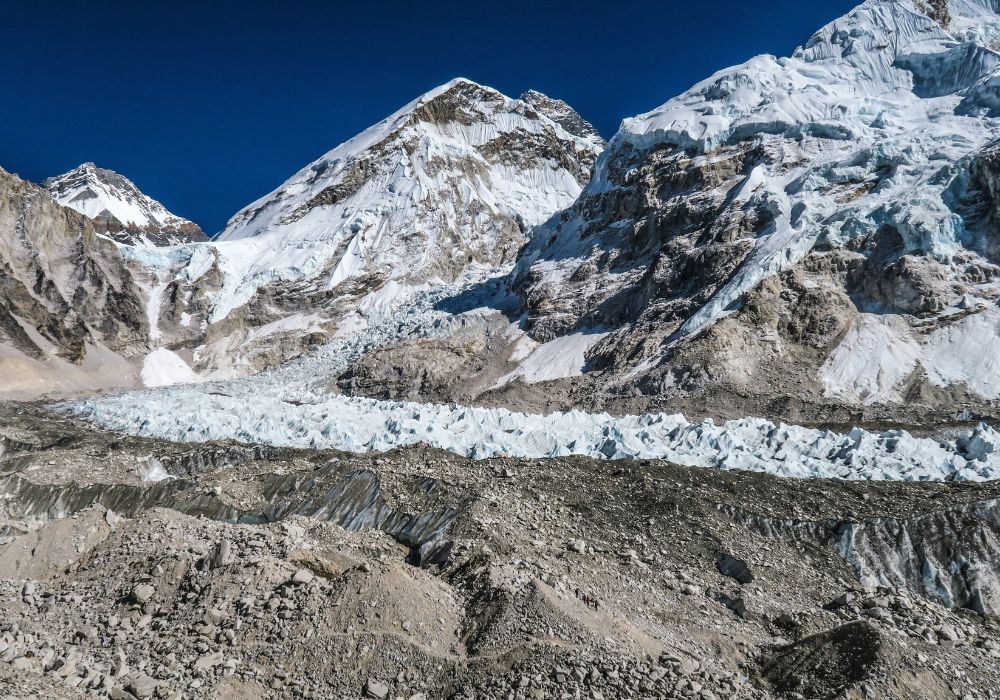
There is something different about visiting Base Camp while Everest expeditions are operating. During the spring season, teams bring in supplies, set up tents and make acclimatization rotations before attempting the summit when a suitable weather window arrives. What you actually see will depend on the date, weather, route access and expedition activity. You may see busy camp areas from the permitted visitor route, but you should not expect to meet summit climbers or enter private expedition camps.
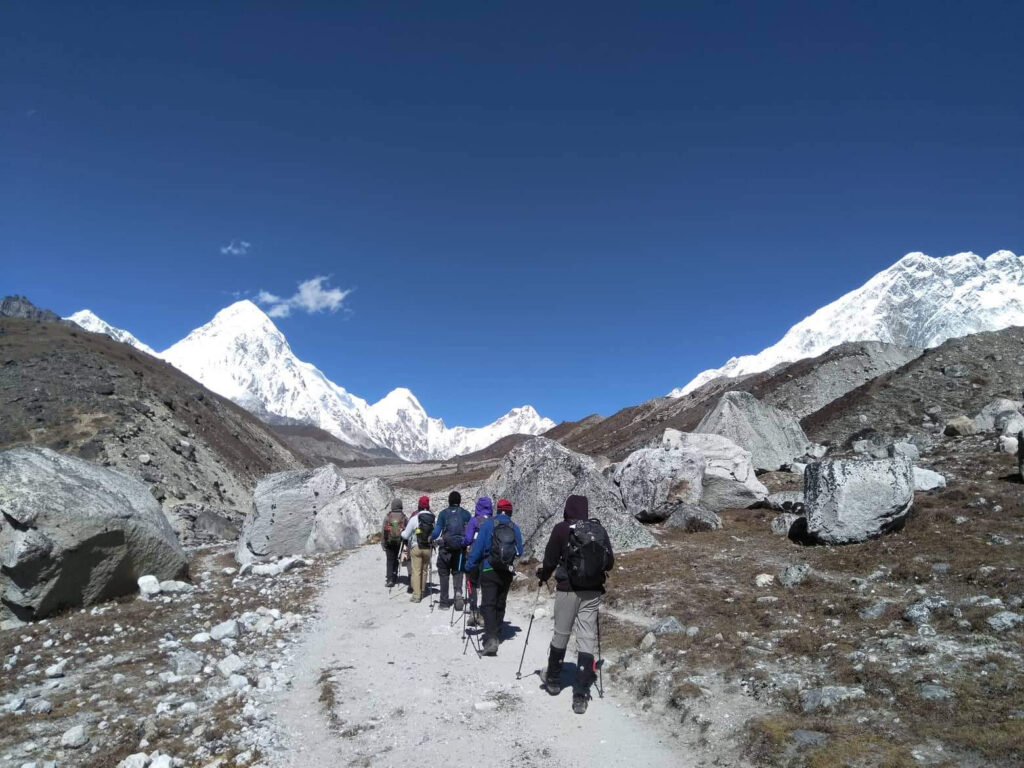
Lower on the trek, May is often noticeably greener. Rhododendrons may still be flowering in suitable forest sections, but the best timing varies by species, altitude and the year’s weather. Don’t expect flowers along the rocky upper trail. On clear days you’ll also have views of Ama Dablam, Thamserku and other mountains long before you reach Base Camp.
For many trekkers, the most important advantage is that May remains part of Nepal’s established spring trekking season. Nepal Tourism Board lists the period from February through May among the generally favorable months for mountain walking. That is seasonal guidance, not a forecast for every May departure. See the Nepal Tourism Board climate overview for context.
Early May vs Late May: Which Is Better?
Early May
Early May can be a very pleasant time to walk, with generally springlike lower-valley conditions and activity in the expedition camps. The popular sections of the trail may still be busy. There can also be rain, snow or cloud even at the beginning of the month, so don’t leave waterproofs at home.
Mid to late May
As May moves toward June, warmer and more humid air may increase cloud cover and the chance of afternoon showers on the lower route. This is a tendency, not a guaranteed switch from dry to wet on a particular date. Higher up, snow and cold winds remain possible. Mountain flight delays can happen at either end of the month.
If you can choose between two May departure weeks, compare the full itinerary and its buffer time rather than choosing solely on an internet weather chart. The difference between a well-paced trip and a rushed one matters more than a few degrees on a forecast.
How Cold Is Everest Base Camp in May?
There isn’t one temperature that describes the entire trek. The plane arrives at Lukla (around 2,840m), and you gradually walk toward Namche (3,440m), Dingboche (4,410m), Lobuche (4,910m) and Gorakshep (about 5,164m). Base Camp itself is around 5,364m. A sunny day at Phakding can feel relatively warm, while a windy stop above 5,000m can feel bitterly cold.
| Place | Approximate elevation | May packing and weather considerations |
|---|---|---|
| Lukla / Phakding | 2,840m / 2,610m | Milder hiking hours; expect possible rain or cloud, especially later in the month |
| Namche Bazaar | 3,440m | Warmth in the sun, cooler evenings and strong UV exposure |
| Deboche | 3,820m | Cool shaded forest stretches and cold lodge evenings |
| Dingboche | 4,410m | More exposed, with noticeable wind and cold mornings |
| Lobuche | 4,910m | Insulated clothing needed at rest; snow or ice remains possible |
| Gorakshep | 5,164m | Cold and basic overnight conditions; check your sleeping bag’s comfort rating |
| Everest Base Camp | 5,364m | Rocky, exposed terrain; usually a daytime visit on the standard trek |
| Kala Patthar | About 5,550m | Early starts can be very cold and windy despite the spring season |
Older blogs sometimes quote an “average May temperature at Everest Base Camp” without showing where or when it was measured. We prefer not to give an exact figure that could be mistaken for your overnight conditions. For reliable travel decisions, check Nepal’s Department of Hydrology and Meteorology, ask about local conditions before departure, and use our Everest Base Camp weather guide to compare the whole year.
The 15-Day Everest Base Camp Itinerary We Recommend in May
Our standard 15-day program follows the classic trail. The two acclimatization days are included because altitude is a bigger challenge than the calendar month. The following is Amigo’s current published route, with indicative walking times rather than promises about how quickly every group will move.
| Day | Route | Walking or travel notes |
|---|---|---|
| 1 | Arrive in Kathmandu | Airport pickup and hotel check-in |
| 2 | Preparation and drive to Ramechhap | Typically 4–5 hours by private vehicle during relevant peak-season arrangements |
| 3 | Fly to Lukla; trek to Phakding (2,610m) | Around 8km, approximately 4 hours walking |
| 4 | Phakding to Namche Bazaar (3,440m) | Around 10km, approximately 7–8 hours |
| 5 | Acclimatization at Namche | Stay another night at Namche |
| 6 | Namche to Deboche (3,820m) | Around 12km, approximately 7–8 hours |
| 7 | Deboche to Dingboche (4,410m) | Around 11km, approximately 5–6 hours |
| 8 | Acclimatization at Dingboche | A second night before walking higher |
| 9 | Dingboche to Lobuche (4,910m) | Around 8.5km, approximately 5 hours |
| 10 | Gorakshep; Everest Base Camp (5,364m); return to Gorakshep | Around 10km, approximately 7–8 hours |
| 11 | Kala Patthar (around 5,550m); descend to Pheriche | Around 11km, approximately 7–8 hours |
| 12 | Pheriche to Namche Bazaar | Around 18km, approximately 7–8 hours |
| 13 | Namche to Lukla | Around 18km, approximately 6 hours |
| 14 | Lukla flight and return to Kathmandu via Ramechhap | Route depends on actual flight operations and weather |
| 15 | Departure from Kathmandu | International flight |
The Day 10 visit to Base Camp is a long day on increasingly rocky ground. The following morning’s Kala Patthar hike is optional in practice if conditions or your health make it unsuitable. Your guide should assess the weather and how the group is acclimatizing. A standard teahouse trek does not involve staying overnight in the climbing expedition camp.
What Can Trekkers See During Everest’s May Climbing Season?
The pre-monsoon season is an important period for Everest summit attempts. However, expedition schedules depend on weather, route preparation and individual team decisions. One year a team may be preparing to move higher; in another, a storm or an unsafe route can mean climbers are waiting. In April 2026, for example, Reuters reported a Khumbu Icefall route delay that affected expedition preparation. That illustrates why the climbing schedule cannot be promised to trekkers.
From the normal trekking route, you may see colorful tents and the wider Base Camp activity. But this is a workplace for guides, Sherpas, support staff and climbing teams. Please follow your trekking guide’s instructions, stay out of restricted or active work areas and ask before photographing people or equipment. There is no reason for trekkers to enter the Khumbu Icefall.
Lukla Flights in May: Will You Travel Through Ramechhap?
During busy trekking periods, scheduled flights to Lukla commonly operate from Manthali Airport in Ramechhap. This involves a road transfer from Kathmandu and sometimes an overnight stay. The current standard Amigo package includes private transfers to and from Ramechhap, an overnight stay there and the published round-trip flight arrangement.
Actual flight routing can change with the season and airline. Always check the departure airport for your booking. Rain or cloud at Lukla can delay flights even when the sun is out in Kathmandu, and helicopter alternatives are also subject to weather, aircraft availability, weight limits and aviation safety rules.
Our Kathmandu to Lukla flight guide explains common transfers and delays. If possible, keep some flexibility between your return from Lukla and your international departure.
What to Pack for Everest Base Camp in May
Think in layers rather than bringing clothes for only one kind of weather. You may be comfortable in a light top while climbing toward Namche, but you’ll want warm insulation as soon as you stop in the higher villages. Keep your rain gear accessible even if the forecast is mostly sunny.
- Walking clothes: two to four breathable technical tops, quick-drying trekking trousers and a fleece.
- Thermals: base-layer top and leggings for chilly starts and high-elevation lodges.
- Warm jacket: a substantial down or synthetic jacket for evenings and days above 4,000m.
- Waterproofs: rain jacket, waterproof trousers and a liner or dry bag for spare clothing.
- Boots and socks: comfortable broken-in boots and several dry pairs of hiking socks.
- Sun protection: high-SPF sunscreen, sunglasses, lip balm and a sun hat.
- Warm accessories: insulated gloves, light gloves, warm hat and neck gaiter.
- Sleeping bag: appropriate comfort rating for the coldest nights at Gorakshep and other higher lodges.
- Daily essentials: 30–35L daypack, water bottles, trekking poles, headlamp, personal medication and travel documents.
Amigo’s standard package includes a 70L duffel, with a down jacket and four-season sleeping bag available on an included rental basis if required. The bag’s actual comfort rating and the jacket’s fit should be checked before the trek. Our Everest Base Camp packing list gives recommended quantities and tells you what to keep in your own daypack.
Is Everest Base Camp Easier in May?
May can make lower-altitude walking more comfortable than deep winter, but it doesn’t shorten the route or reduce the elevation. You still need to handle several long walking days, uneven trails and steep descents. The classic trek isn’t a technical climb, so previous mountaineering experience is not required, but regular hiking practice helps considerably.
We suggest preparing with hills, stairs, long walks and some practice walking downhill. If you don’t hike regularly, start training well before your departure rather than trying to catch up in the last two weeks. Our EBC training guide includes a practical 12-week framework and the difficulty guide explains the harder days.
Altitude Sickness: What May Weather Cannot Protect You From
We want to correct something you’ll find in older trekking advice: drinking a fixed amount of water every hour does not prevent altitude sickness. Hydrate normally for your activity and conditions, but don’t force excessive water. Similarly, good physical fitness, pleasant weather and positive thinking do not make you immune to altitude illness.
Acclimatization days at Namche and Dingboche are part of the route for a reason. The CDC Yellow Book guidance emphasizes gradual gains in sleeping altitude and says fitness does not affect the risk of developing altitude illness. Report new headache, nausea, loss of appetite, dizziness or unusual fatigue to your guide. Do not move up to sleep at a higher altitude while altitude illness is suspected; worsening symptoms require descent and medical help.
Speak with a travel-medicine clinician before departure if you have medical concerns or wish to discuss prescription altitude medication. Choose high-altitude trekking insurance that explicitly covers your itinerary and medically necessary evacuation.
Festivals and Events in May: Buddha Jayanti and Everest Day
Buddha Jayanti: The festival follows a lunar calendar, so it doesn’t always fall on the same Gregorian date. For 2027, published calendars currently list Thursday, 20 May; confirm the date against the official Nepal calendar nearer your trip. In Kathmandu, visitors may see religious activity at Boudhanath or Swayambhunath, but ceremonies and access rules vary. See the Nepal Buddha Jayanti calendar for the listed date.
International Everest Day: Nepal marks the first confirmed ascent of Everest by Tenzing Norgay Sherpa and Sir Edmund Hillary on 29 May 1953. The anniversary falls on 29 May each year, although individual events may be organized at different locations and times. Nepal Tourism Board has documented the Everest anniversary celebrations. We would not promise a particular ceremony as part of a standard trekking package.
Which Everest Trek Should You Choose in May?
For a first visit to Base Camp, the classic 15-day route is our starting recommendation. You can then look at the alternatives based on walking experience, available time and whether you want additional passes, more comfortable lodging or fewer return trekking days.
- Everest Panorama Trek (10 days): for villages and mountain views without reaching Base Camp.
- EBC with Gokyo Lake and Cho La (18 days): a longer, more demanding route including a high-pass crossing.
- Everest Three Passes Trek (19 days): for experienced trekkers prepared for extended high-altitude terrain and possible snow or ice.
- EBC with Helicopter Return (12 days): fewer walking days on the return, but helicopter operation remains subject to safe flying conditions.
Crossing high passes is a different undertaking from the standard EBC trail. Discuss May snow and route conditions with Amigo before choosing an itinerary based solely on the number of days.
Cost and Booking Tips for a May Departure
May is still a popular season, so flights and lodging in busy villages deserve advance planning. Price comparisons are only meaningful when you know what is included. Check the Kathmandu and Ramechhap nights, Lukla flights, permits, guide and porter support, full-board meals and any equipment rental. Also ask what the operator covers if flight changes require extra accommodation or transport.
Amigo’s standard 15-day package currently starts from US$1,450 per person for qualifying group sizes, but departure-specific terms and actual group size determine the quote. International flights, travel insurance and personal extras are separate. Our Everest Base Camp trek cost guide explains those differences in more detail.
Everest Base Camp Trek in May: Frequently Asked Questions
Is May a good month to trek to Everest Base Camp?
Yes. May is a popular spring trekking month, and many Everest climbing expeditions are active during this period. Prepare for possible afternoon cloud or rain, especially as the monsoon approaches.
Is early May better than late May?
Early May may offer more settled spring mornings, while later May tends to be warmer and can become cloudier or wetter. Neither period guarantees clear skies or an uninterrupted Lukla flight.
How cold is Everest Base Camp in May?
The higher sections remain cold even in May. Gorakshep can be freezing overnight and the Kala Patthar hike may be cold and windy. One temperature figure cannot represent the whole trail.
Does it rain in May on the EBC route?
It can. Pre-monsoon showers and afternoon clouds may occur, especially lower down and toward the end of the month. Carry waterproof clothing and a dry bag.
Can I see Everest expeditions at Base Camp in May?
Often, yes, from the permitted trekking areas. Base Camp may be busy with mountaineering preparations or summit attempts, but actual activity depends on weather and conditions. Trekkers should not enter working camps without permission.
Will I see climbers summiting Everest?
Not reliably. The summit is not clearly visible from the Base Camp trekking area, and a team’s summit schedule depends on conditions far above the trail.
Is Everest Base Camp crowded in May?
May is a popular spring trekking month, particularly early and mid-month, so popular flights and teahouses may be busy. Crowding varies by day and route.
Do Lukla flights depart from Kathmandu in May?
Often, peak-season scheduled flights use Manthali/Ramechhap instead. Confirm the airport and transfer plan for your actual departure rather than assuming a direct Kathmandu flight.
Do I need a down jacket in May?
Yes. Bring suitable insulation for Lobuche, Gorakshep and early starts. Amigo’s standard package includes jacket rental if required, subject to confirming fit and suitability.
Is the EBC trek suitable for beginners in May?
Some well-prepared first-time high-altitude trekkers can complete the classic route, but it remains a challenging trek. Training and acclimatization are important regardless of the weather.
Can drinking more water prevent altitude sickness?
No. Staying appropriately hydrated matters for health, but drinking excess water cannot prevent acute mountain sickness. Acclimatization and early response to symptoms are more important.
How many days do I need for Everest Base Camp in May?
Amigo’s published standard itinerary is 15 days from arrival to departure, including flight logistics, the Lukla trek, Namche and Dingboche acclimatization days and the return.
When is Buddha Jayanti in May 2027?
Published calendars currently list Thursday, 20 May 2027. Dates and holiday arrangements should be checked against Nepal’s official calendar nearer the trip.
When is International Everest Day?
International Everest Day is observed on 29 May, commemorating the first successful ascent of Everest on 29 May 1953.
Should I choose May or October for EBC?
May offers the spring climbing-season atmosphere and generally milder lower elevations, while October often brings clearer post-monsoon skies. Both are popular and still require warm gear and acclimatization.
Our Advice for a May Trek
May can be an excellent choice if seeing the Everest region during the climbing season appeals to you. Come prepared for cold nights, possible cloud in the afternoons and the usual challenges of trekking above 5,000m. We would rather adjust the daily plan when conditions call for it than push a group to stick to a timetable at the expense of safety.
Start with Amigo’s 15-day Everest Base Camp itinerary, check the spring departure dates and tell us your preferred travel month and group size. Our Kathmandu team can confirm which flight routing and trip services apply to your actual booking. If you would like higher-standard accommodation where available, also compare the luxury Everest Base Camp trek—it changes the level of comfort, not the altitude.