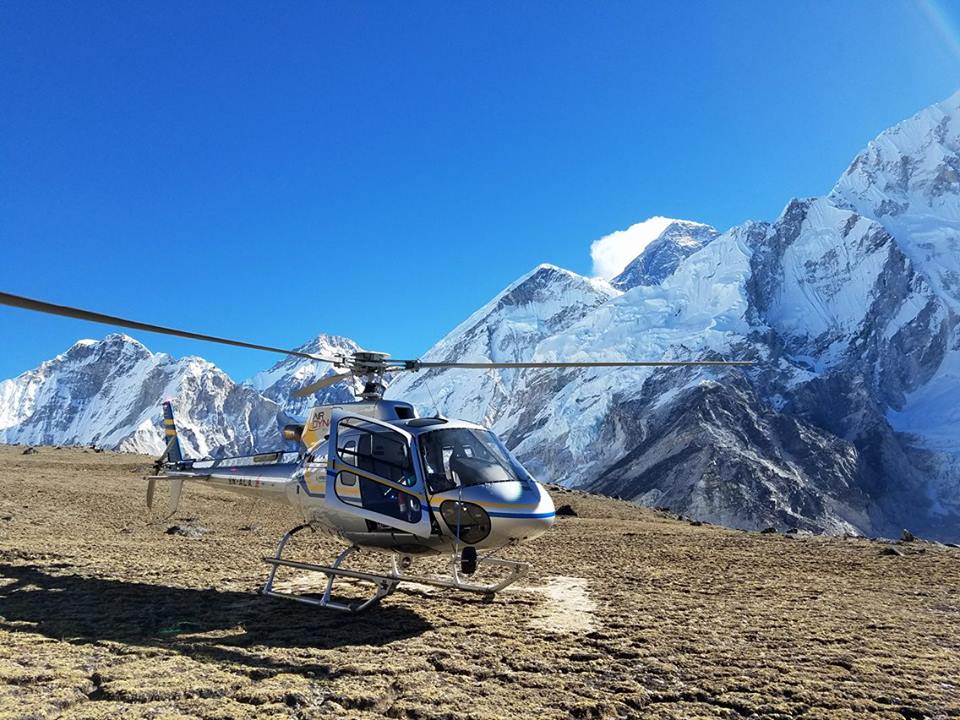
Reaching Everest Base Camp is only half of a normal trek. From the high valleys of the Khumbu, most walkers still need several days to descend through Pheriche, Namche and Lukla. The Everest Base Camp trek with helicopter return lets you experience the uphill route on foot and, subject to safe operating conditions, return by helicopter instead of retracing the entire trail.
Amigo Treks & Expedition currently operates a published 12-day helicopter-return itinerary. This isn’t a one-day helicopter sightseeing trip or an easy shortcut to the summit. You still need to trek for days at high altitude, including two acclimatization stops, before reaching Everest Base Camp and the planned upper-Khumbu helicopter pickup.
Quick answer: Amigo’s current package starts at US$2,550 per person for qualifying bookings. Everest Base Camp (5,364m) is on Day 10, and Kala Patthar (about 5,550m) plus the planned shared helicopter return are on Day 11. The return is described as a Gorakshep-area pickup, but the precise landing site, permissions, aircraft load and weather must be confirmed for each trip.

Why Choose a Helicopter Return?
The attraction is simple. You walk through the villages on the way up, cross suspension bridges, visit Namche Bazaar, enjoy the Tengboche monastery area, acclimatize in Dingboche and see the Khumbu Glacier. A helicopter return can remove several repeat walking days and give you an aerial perspective on the region. For someone with limited time, that can make the journey more appealing.
It is not necessarily easier on the way up. The climb into Namche, the exposed trails above Dingboche, the walk toward Lobuche and the long day to Everest Base Camp still require physical preparation. If you want to walk the whole way back, see our classic 15-day Everest Base Camp trek.
The Actual 12-Day Everest Base Camp Heli Return Itinerary
The older 2023 blog showed a different sample itinerary and could confuse readers about the final trekking days. Amigo’s updated package places Base Camp on Day 10 and the Kala Patthar hike and planned helicopter return together on Day 11. Here is the current sequence; route timings remain approximate and can change with weather, health and flight arrangements.
| Day | Route | Practical notes |
|---|---|---|
| 1 | Arrival in Kathmandu | Airport pickup and hotel |
| 2 | Preparation and transfer to Ramechhap | Private vehicle and resort night when scheduled |
| 3 | Flight to Lukla, trek to Phakding (2,610m) | Approximately 8km, four hours |
| 4 | Phakding to Namche Bazaar (3,440m) | Approximately 10km, seven to eight hours |
| 5 | Acclimatization day at Namche | Second night at Namche |
| 6 | Namche to Deboche (3,820m) | Approximately 12km, seven to eight hours |
| 7 | Deboche to Dingboche (4,410m) | Approximately 11km, five to six hours |
| 8 | Acclimatization in Dingboche | Second night at Dingboche |
| 9 | Dingboche to Lobuche (4,910m) | Approximately 8.5km, five hours |
| 10 | Gorakshep, Everest Base Camp (5,364m), Gorakshep | Long day, approximately seven to eight hours |
| 11 | Kala Patthar (~5,550m), planned helicopter return | Return to Gorakshep, then conditional shared flight toward Kathmandu |
| 12 | International departure | Transfer to Kathmandu airport |
The two acclimatization days, in Namche Bazaar and Dingboche, are important. We would not advise a trekker to remove them just to fit a shorter holiday or make a helicopter connection. Some guests benefit from an extra acclimatization day beyond the published plan. The EBC difficulty guide explains the more demanding walking stages.
Where Does the Helicopter Collect Trekkers?
Amigo’s currently published itinerary describes a shared helicopter return from the Gorakshep area, about 5,164m. On Day 10 you visit Base Camp on foot and sleep at Gorakshep. On Day 11 you may hike to Kala Patthar and return before the planned flight. A helicopter trip that flies over Everest Base Camp isn’t permission to land inside the active expedition camp.
The actual collection point must be confirmed by the licensed helicopter operator. Thin air, landing-site suitability, wind, fuel and combined passenger weight can reduce capacity. An operator may require smaller passenger shuttles to a lower approved site, or may be unable to offer the planned high pickup on a particular date. The words “helicopter return” should not be read as a guaranteed landing at Gorakshep regardless of conditions.
Our Gorakshep helicopter flight guide covers the high-altitude landing, payload and route questions in greater detail.
What Changed in the 2026 Everest Helicopter Rules?
Commercial helicopter operations above Lukla were contested after restrictions announced in 2024 and 2025. Those announcements should not be described as an unchanged blanket ban in 2026. Some operators now report renewed sightseeing activity at selected higher landing sites, including shared Kala Patthar flights with small passenger shuttles. But a sightseeing landing and a Gorakshep trekking pickup aren’t automatically the same authorization.
Before confirming the return, Amigo should check the licensed operator’s current landing arrangements, permitted flight type, route and payload. For the background and the difference between national aviation requirements and local concerns, read our Everest helicopter rules update.
How Much Does the 12-Day Heli Return Trek Cost?
Amigo’s current public package lists a starting price of US$2,550 per person. This is not a guaranteed price for every group size or future 2027 departure, and the return helicopter is a shared service. A private helicopter charter or additional aircraft shuttle can have very different commercial terms. Ask for a written quote specifying the complete return sector and how any required intermediate landing is handled.
- Included: the listed Kathmandu three-star-standard hotel nights, Ramechhap transfer and resort when scheduled, planned Lukla flight, trekking teahouses, three meals daily while trekking, licensed guide, porter support and required permits.
- Helicopter: the published shared return toward Kathmandu, with the exact pickup and possible stops to be confirmed.
- Equipment: the stated duffel, map and rental down jacket and sleeping bag when required.
- Usually extra: international flights, visa where applicable, travel insurance, extra drinks, snacks, charging, Wi-Fi, tips and some shower services.
- Possible disruption costs: additional accommodation, meals, transport or flight changes if weather or operating arrangements affect the scheduled return.
For more detailed spending decisions, use our Everest Base Camp cost guide. Don’t compare only the starting price with the 15-day trekking package without considering hotel nights, meals and aircraft arrangements.
Flying to Lukla at the Start of the Trip
Even though this itinerary includes a helicopter return, the outward journey normally uses a scheduled fixed-wing flight to Lukla. During busy trekking periods, many Lukla flights leave from Manthali in Ramechhap rather than Kathmandu. Amigo’s published route includes the Day 2 drive to Ramechhap and the Day 3 flight to Lukla. The actual departure airport must be confirmed for your season and airline.
Flight changes remain possible in every season. Our Kathmandu to Lukla flight guide explains the routing, baggage limits and why the airline may have to delay a departure.
Helicopter Weather and Amigo’s Lukla Observations
A helicopter isn’t a guaranteed bad-weather alternative to a small airplane. The pilot must consider cloud, wind and visibility along the route as well as conditions at the proposed high-altitude landing site. It might be clear at Lukla while Gorakshep is unsuitable for landing, and vice versa. No travel agency can override a pilot’s safety decision.
Amigo’s flight-planning discussions have used reports such as VNLK TWR OBS 0050Z NE/03KTS 10KM SKC VFR. This illustrative observation indicates Lukla conditions at 00:50 UTC (06:35 Nepal time): northeast wind at three knots, 10km visibility and clear-sky/VFR notation. It isn’t a live observation and doesn’t prove any airplane or helicopter flew. We would need actual aircraft movement records matched to observation timestamps to calculate reliable cancellation statistics.
Altitude Sickness and the Helicopter Return
The helicopter can shorten the descent, but it doesn’t prevent altitude sickness on the ascent. The CDC Yellow Book recommends gradual sleeping-elevation gains and says fitness doesn’t prevent altitude illness. Report new headache with nausea, dizziness, poor appetite or unusual fatigue to the guide. If altitude illness is suspected, do not continue sleeping higher; severe symptoms can require urgent care and descent.
A paid helicopter return is not an emergency medical evacuation. Your insurance should cover trekking above 5,000m, including the planned maximum at Kala Patthar, emergency medical treatment and necessary evacuation. Weather-related travel delay and an optional tourist helicopter often have separate insurance terms. See our Everest Base Camp insurance guide.
Packing and the Best Months
Pack for a normal high-altitude trek, not for a brief helicopter ride. Good boots, thermals, insulated jacket, waterproof shell, gloves, sunglasses, headlamp and a suitably warm sleeping bag are important. The highest teahouse rooms can be basic and unheated. Keep essential layers, medication and water in your own daypack, and confirm the aircraft’s passenger and baggage weight limits. The Everest Base Camp packing checklist covers quantities.
March to May and October to November are the main trekking periods, but no month guarantees flyable weather for a high-altitude pickup. The Everest weather guide helps you compare conditions across the year.
What if the Return Helicopter Cannot Fly?
The group may need to wait, descend to a different approved pickup, continue walking the normal trail or change the itinerary. Each choice takes time and may introduce extra expenses. Before booking, ask which costs are included if weather prevents the helicopter return, what happens to an unused flight and whether extra Kathmandu nights will be your responsibility. We recommend a buffer before a non-refundable international flight.
Compare Amigo’s Everest Base Camp Options
The 15-day classic EBC trek starts at US$1,450 per person for qualifying groups and uses the normal walk back to Lukla. The 12-day helicopter return package starts at US$2,550, and the 12-day deluxe helicopter trek starts at US$2,950. These are current catalog starting prices, not live quotes for every date. The deluxe version offers different accommodation and services, so compare what’s actually included.
Everest Base Camp Helicopter Return: FAQs
How many days does Amigo’s helicopter-return trek take?
12 days, including Kathmandu arrival, the Ramechhap arrangement when required, the uphill trek, the planned shared helicopter return and departure.
Which day do we reach Everest Base Camp?
Day 10. You walk through Gorakshep to Base Camp and return to Gorakshep for the night.
Is Kala Patthar on Day 10 or Day 11?
Day 11 on the current package, before the planned helicopter departure.
Does the helicopter collect us from Base Camp itself?
The itinerary describes a Gorakshep-area pickup, not a guaranteed landing inside Everest Base Camp. The actual landing site must be confirmed.
How much does the 12-day heli return cost?
The current catalog starting price is US$2,550 per person. Final pricing depends on the departure and confirmed services.
Is the helicopter private?
The published return helicopter is shared. Private charter arrangements require a separate quotation.
Can five people leave Gorakshep together?
Not necessarily. At high altitude aircraft payload may be limited, and smaller shuttles may be required.
Are higher helicopter landings operating in 2026?
Some operators reported renewed upper-Khumbu sightseeing activity, but the arrangements for an individual Gorakshep pickup need confirmation.
What if weather cancels the helicopter?
Guests may need to wait, descend to a lower approved site, walk out or adjust the itinerary; extra costs depend on the booking terms.
Does the helicopter eliminate altitude sickness?
No. The challenging ascent and overnight elevations remain. Follow acclimatization guidance and report symptoms promptly.
Does the price include trekking meals and a guide?
The published package includes three meals per trekking day, licensed guide, porter, permits and the specified hotels and transport.
Are helicopter operations guaranteed when fixed-wing flights stop?
No. Helicopters also have visibility, wind, landing and performance requirements.
What should I pack?
Use the same cold-weather clothing and trekking equipment as for the classic EBC trail; confirm aircraft baggage limits in advance.
Should I buy trekking insurance if a helicopter return is included?
Yes. Medical evacuation, the optional helicopter return and weather-related travel delays have different coverage conditions.
Our Advice Before You Book
This route is appealing when you want to experience Everest Base Camp on foot but avoid several days of return walking. The important questions concern the actual helicopter pickup, aircraft capacity, altitude safety, weather alternatives and the final quote. Ask Amigo to confirm those details for your party rather than relying on an itinerary that promises a flight in all conditions.
Review Amigo’s 12-day Everest Base Camp trek with helicopter return and send your dates and group size. Our Kathmandu team can explain the departure airport, accommodation, trekking services and helicopter arrangements that can be confirmed for your trip.