Many Everest helicopter articles still say “flights are banned above Lukla.” Others now advertise Kala Patthar landings. Travelers are understandably confused, because the restrictions announced in December 2024 did not remain a simple, unchanging rule throughout 2025 and 2026. If you’re booking an Everest trip today, you need to know what kind of helicopter flight is actually available—not just what an old headline says.
From the Amigo Treks & Expedition office in Kathmandu, we separate four services when answering these questions: transport to Lukla, Everest sightseeing overflights, high-altitude landings or trekking pickups, and medical rescue. Each has different operational arrangements. The licensed operator must confirm where it will fly and land, how many passengers it can carry, and which conditions apply to the booking.
Current position, reviewed 9 October 2026: The January 2025 restrictions were real, but it would be misleading to describe them as an unchanged blanket ban in 2026. Helicopters have been transporting passengers to and from Lukla, and several operators report that certain shared Kala Patthar sightseeing landings resumed during 2026. We have not found one current official public document approving every high-altitude landing site. Treat operator reports as evidence that services are being marketed and operated, not universal landing permission.
What Helicopter Flights Are Available in the Everest Region?
| Flight type | Practical 2026/27 position |
|---|---|
| Kathmandu → Lukla transfer | Helicopter transport to the trekking gateway is an established service; actual seats and weather must be confirmed |
| Everest Base Camp overflight | A sightseeing helicopter can fly over the Base Camp area when authorized and safe; flying over is not landing |
| Hotel Everest View or lower Khumbu stop | A possible part of a tour, conditional on the precise itinerary and landing arrangements |
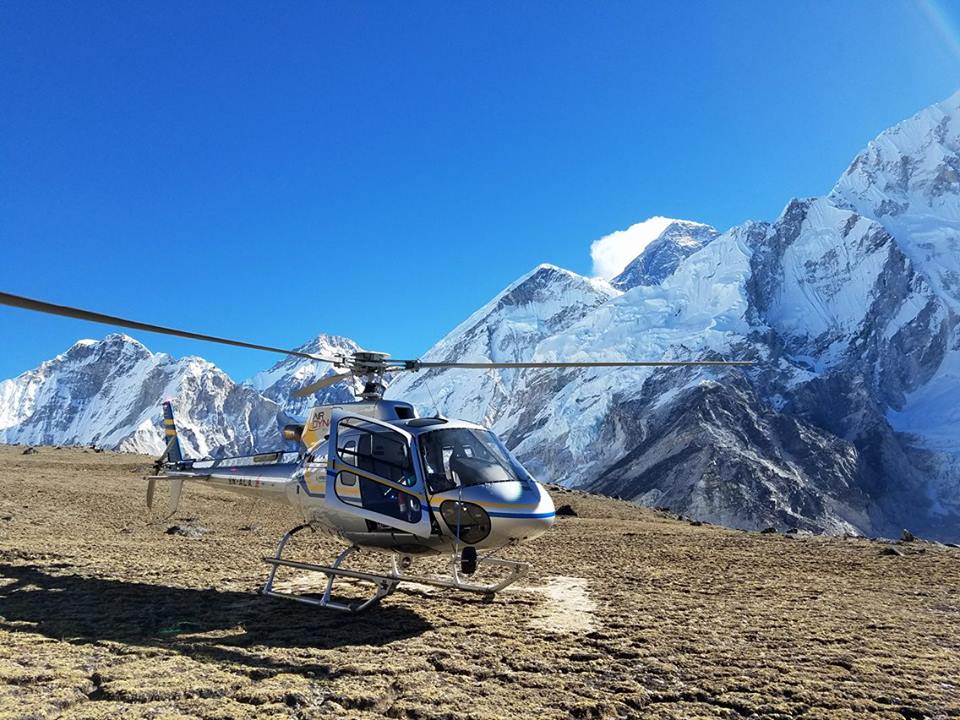
| Kala Patthar landing | Some operators report renewed shared landings in 2026 using smaller passenger shuttles, often via Pheriche |
| Gorakshep trek-return pickup | May be discussed with the licensed operator; must verify the actual pickup site and aircraft load |
| Emergency medical evacuation | Separate medical and aviation arrangements, not a standard sightseeing booking |
| Cargo or expedition transport | Another category with its own permissions and operational conditions |
Timeline: Why the Helicopter Rules Changed
December 2024: Restrictions announced for January
Sagarmatha National Park, Khumbu Pasang Lhamu Rural Municipality and other local stakeholders raised concerns about aircraft noise, wildlife, community disturbance and enforcement of park fees. Commercial helicopter restrictions were announced for 1 January 2025. The original Amigo article was published during that period and described the planned restrictions as though they would be permanent. The park retains a December 2024 helicopter-operation notice in its official archive.
January 2025: The park’s position changed
The situation changed quickly. Kathmandu Post reported in January 2025 that Sagarmatha National Park reversed its initial broad position and allowed flights subject to park permission, fees and environmental safeguards. Local representatives objected, and aviation operators disagreed with the claimed scope of local restrictions. There was no single view accepted by everyone.
February–April 2025: Disagreement continued
Helicopter companies and tourism organizations said services were disrupted, while local stakeholders maintained restrictions. In April 2025, the municipality announced another commercial helicopter restriction, reported by Kantipur. These news reports tell us what different bodies said then. They shouldn’t be copied into a 2026 travel page as if nothing had subsequently changed.
2026: Helicopter movements and reported high landings
During weather disruption in September 2026, reporting described helicopters carrying passengers into and out of Lukla when fixed-wing services were affected. Kathmandu Post’s September 26 report is evidence that helicopter operations in the wider Khumbu had not stopped altogether.
Separately, a September 2026 operator update says shared sightseeing groups are again being offered some Kala Patthar landings, using two-passenger shuttle movements from Pheriche. This is useful current operator information, but it is not an official CAAN list of approved helipads and doesn’t establish permission for every landing on every date. Confirm exact arrangements before selling a specific tour.
Who Controls Helicopter Operations in the Khumbu?
The Civil Aviation Authority of Nepal (CAAN) identifies approval of charter, non-scheduled and rescue flights among the functions of its Air Transport Department. CAAN also sets aviation safety and helicopter operating requirements. Sagarmatha National Park manages conservation responsibilities within its protected area, while the municipality and community bodies have taken positions on noise and commercial operations.
The disagreement between these bodies explains much of the 2025 news. An advertisement for a helicopter tour is not proof that a particular high landing has been approved. Similarly, a local statement from early 2025 cannot be used alone to claim that every 2026 flight is banned. Amigo should obtain confirmation of the proposed landing place and current operational arrangements from the licensed helicopter company.
Kathmandu to Lukla Flights Are a Different Service
A helicopter from Kathmandu to Lukla is a way of reaching the start of a standard Everest Base Camp trek. It is not a flight to Base Camp. During busy trekking periods, fixed-wing airlines commonly route flights through Manthali in Ramechhap; a direct Kathmandu helicopter transfer can avoid that road journey if a flight is available and the conditions permit.
See our Kathmandu to Lukla helicopter guide for the different shared-seat and private-charter options, luggage weight and the need for an actual quote. A helicopter isn’t a guaranteed way around a weather cancellation, and not all aircraft can carry five passengers plus full trekking luggage.
Everest Sightseeing: Overfly Base Camp or Land Near Kala Patthar?
A Mount Everest helicopter sightseeing tour is different from transport to Lukla. Sightseeing programs may pass above Everest Base Camp and stop near Hotel Everest View or at an approved higher landing site. The Everest Base Camp area is an active expedition zone on the Khumbu Glacier; ordinary sightseeing tours should not advertise an assured landing inside that camp.
The reported 2026 return of selected Kala Patthar landings needs careful wording. Operators describe smaller shuttles from Pheriche, with strict passenger limits at altitude. Those reports do not mean every shared tour includes a high landing. Amigo should identify whether a guest is buying a Base Camp overflight, a lower-valley stop, or a confirmed Kala Patthar landing option, and what happens if weather or operating instructions change the itinerary.
Helicopter Return From Gorakshep After Trekking
Trekkers may ask for a helicopter from Gorakshep, at about 5,164m, after their Everest Base Camp visit. This is not equivalent to flying from Lukla. Aircraft performance at that elevation, landing-site access and current arrangements can significantly limit payload. A staged movement through a lower approved location may be needed even when a flight is available.
Our Gorakshep to Lukla or Kathmandu helicopter article discusses these uncertainties and distinguishes archived prices from current confirmed quotes. The Everest Base Camp helicopter-return trek is a separate itinerary that still requires a workable, legally and operationally confirmed return flight.
A Resumed Service Still Has Aviation Safety Limits
Safe flying depends on the aircraft, pilot, altitude, terrain, visibility, wind, temperature, fuel and passenger weight. The national regulator issues safety requirements regardless of the commercial discussions. For example, CAAN’s 2026 monsoon safety measures reported in June included added weather, alternate-landing and crew precautions for applicable monsoon flights. These were seasonal measures and shouldn’t be presented as identical year-round rules.
A helicopter with five passenger seats may need to fly with only one or two passengers on a high landing. The pilot makes the performance decision. We also never recommend telling guests that a helicopter will operate whenever fixed-wing Lukla flights are cancelled: bad mountain visibility or wind can affect both kinds of aircraft.
Emergency Helicopter Rescue Is Not a Tourist Flight
A medical rescue is arranged around the patient’s condition and safe access to treatment. It is not an optional sightseeing flight and cannot be used to avoid commercial restrictions. Severe altitude symptoms may require prompt descent and medical attention; do not wait in place for a guaranteed helicopter. The CDC’s altitude guidance explains when descent and urgent care are necessary.
The old Amigo article said trekkers must first be tested at a hospital in Lukla before a helicopter rescue could be dispatched. That should not be given as a universal instruction, especially for an ill person higher on the trail. The emergency coordinator, local health services, licensed helicopter operator and insurer determine the correct process based on the current situation. Check the altitude and rescue coverage in your Everest trekking insurance policy before travel.
How Lukla Tower Observations Help—and Their Limits
Some Amigo flight discussions include reports such as VNLK TWR OBS 0050Z NE/03KTS 10KM SKC VFR. This example describes conditions at Lukla at 00:50 UTC (06:35 Nepal time): northeast wind at three knots, reported 10km visibility and clear-sky/visual-flight notation. It is not a current report or evidence that an aircraft actually operated.
Weather at Lukla isn’t the same as weather at Gorakshep or Kala Patthar. An observation cannot prove the route is clear, that a high landing is permitted or that the pilot accepted the flight. To calculate historical operation rates, weather messages need to be matched with actual scheduled flights, completed movements, cancellations and diversions. We haven’t verified the underlying observation archive, so this article includes no invented flight-reliability statistics.
Conservation and the Communities of the Khumbu
The concerns that prompted the original restrictions deserve attention even though operations have evolved. Helicopter noise near Sherpa villages, disruption to wildlife and the environmental impact of avoidable flights remain relevant. The Khumbu also relies on trekking, guiding, portering and local lodges. A responsible tour operator needs to respect residents, authorized landing areas and the park’s environmental safeguards.
Amigo encourages travelers to spend time on the trail when their schedule and health allow, while recognizing that helicopters also provide useful transport, expedition logistics and urgent medical services. Our advice is to be accurate about the service—not to promise every landing and not to tell guests that all flights are still prohibited.
What to Confirm Before Paying for a Helicopter
- Flight category: transport to Lukla, sightseeing overflight, Kala Patthar landing, Gorakshep pickup or emergency rescue?
- Actual landing point: what exact location is included, and what alternative applies if it cannot be used?
- Operator arrangements: has the licensed company confirmed the sector and any required approval?
- Passenger and luggage weight: how many guests can travel on each leg at the planned altitude?
- Price and charges: shared or private, positioning, shuttles, airport costs and refunds?
- Weather: what happens if the flight is delayed, diverted or cancelled?
- Time buffer: have you allowed flexibility before your international departure?
Everest Helicopter Regulations 2026/27: Frequently Asked Questions
Are helicopter flights banned in the Everest region in 2026?
No single ban describes all services. The 2025 restrictions were disputed and changed; Lukla helicopter transport operates and some operators report high-altitude sightseeing landings in 2026. Confirm the particular flight.
What happened to the January 2025 helicopter ban?
Sagarmatha National Park and local authorities announced restrictions. The national park subsequently adjusted its position, while local and aviation stakeholders continued to disagree. Those historical notices cannot be applied unchanged to 2026.
Can I book a direct Kathmandu to Lukla helicopter?
Yes, this transport service may be arranged with licensed operators subject to aircraft availability, weather and passenger-loading conditions.
Have Kala Patthar helicopter landings resumed?
Several companies report offering some shared landings again in 2026 using small shuttles, often through Pheriche. This does not guarantee a landing for every itinerary or date.
Can a sightseeing helicopter land inside Everest Base Camp?
Ordinary sightseeing tours generally overfly the expedition camp, not land inside it. Expedition supply and rescue operations are separate.
Are Gorakshep pickups available?
A Gorakshep pickup may be discussed but needs confirmation of the precise landing location, load, current operating arrangements and weather.
Who grants helicopter flight permissions?
CAAN issues permissions for domestic charters and rescues; park and other applicable operating or landing conditions can also matter. The licensed helicopter operator should confirm the arrangements.
Are tourist flights and emergency rescues covered by the same rules?
No. A medical evacuation is an emergency service arranged for the patient, while a sightseeing or optional trek-return flight has its own commercial conditions.
Can five trekkers fly from Gorakshep in one aircraft?
Not necessarily. Performance at very high elevation can severely limit passenger and baggage payload, even on a helicopter with five seats.
Can a helicopter fly if the Lukla airplane is cancelled?
It may sometimes operate in a different suitable window, but poor mountain weather can prevent either service. There is no guaranteed helicopter backup.
Does a clear Lukla tower report guarantee a Kala Patthar flight?
No. It describes reported conditions at Lukla at one moment, not the weather at Kala Patthar, the pilot’s decision or actual aircraft movements.
Does travel insurance pay for a helicopter return?
An optional return flight normally differs from medically necessary evacuation. Check your policy’s medical, altitude, travel-delay and cancellation terms.
Are the reported 2026 landing arrangements guaranteed for 2027?
No. Operating arrangements may change. Ask the licensed company to reconfirm the precise flight and landing close to departure.
Is the 2025 Amigo regulation article still accurate?
As historical reporting, it describes the original announcement. It is not accurate as a stand-alone statement that all commercial services remain banned in 2026.
Our Advice for Guests Planning an Everest Helicopter Trip
The question isn’t simply whether helicopters are “allowed” in the Everest region. Ask where the helicopter will land, what sort of flight you have booked and whether the operator can perform that route under current conditions. We can then explain the cost and suitable backup options without overpromising high-altitude landings.
For transport to the trek, begin with our Kathmandu–Lukla helicopter information. For an upper-Khumbu pickup, read the Gorakshep return flight guide. If you want a one-day mountain sightseeing experience, see our Everest helicopter tour. We’ll confirm the actual permitted flight, passenger limit and cancellation policy for your travel date.