

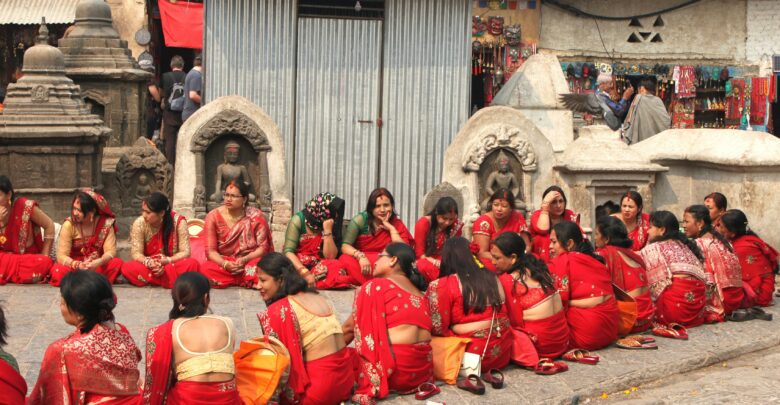
26th August 2025, Shukla Tritiya Bhadrapada
What is Teej?
Teej is a traditional Hindu festival celebrated primarily by women in Nepal as well as some parts of India. It marks the union of Lord Shiva and Goddess Parvati, and is centered around themes of love, marriage, devotion and fasting.
Historical or mythical significance of Teej Festival:
The history/roots of the Teej festival in Nepal and India lie deep in Hindu mythology and cultural traditions and agrarian society.
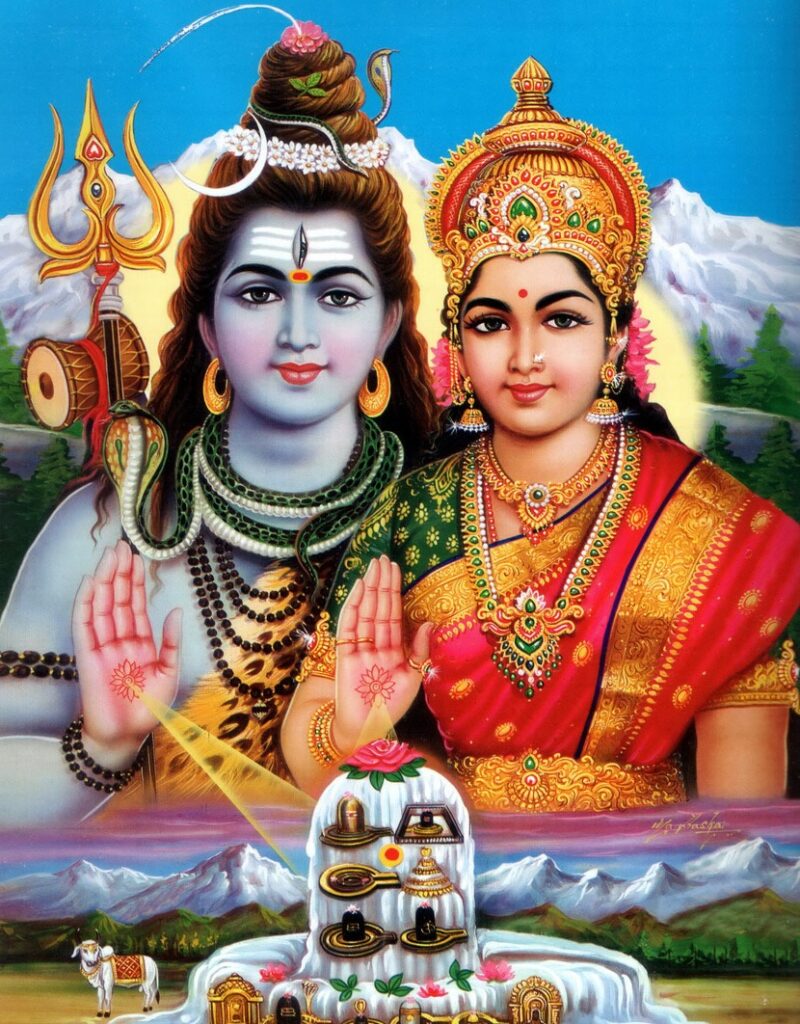
As per the Hindu mythology, Teej is primarily associated with Goddess Parvati and Lord Shiva. According to the legend, Goddess Parvati performed intense penance and took 108 births before Lord Shiva accepted her as his wife. Therefore, the festival commemorates the day when Lord Shiva and Goddess Parvati were reunited, symbolizing eternal lov, devotion and the power of a woman’s determination. Hence, women observe fasts and perform rituals during Teej in honor of Parvati’s devotion and to see blessing for a happy, long and conjugal marriage.
Social and feminine significance of Teej Festival:
This festival has also long served as a social and spiritual space for women, where they could gather, share life stories and grief, dress beautifully and strengthen female solidarity. It celebrates womanhood, marital devotion and female empowerment within the cultural framework of Hindu society.
Hence, in short, the roots of Teej are a rich blend of spiritual devotion and cultural expression, that especially honors female strength and marital love.
What does Teej mean?
The word “Teej” literally means “third”. This refers to the third day after the new moon or full moon, depending on the lunar calendar. Therefore, Teej as festivals always fall on the third day of the bright half (Shukla paksha) or dark half (Krishna Paksha) of the lunar month.
Teej, how many are there according to Hindu tradition?
As per the Hindu tradition, there are multiple Teej, each occurring on a different third day in the lunar cycle. However the most important ones are Hariyali Teej, Kajari Teej and Hartalika Teej.
- Hariyali Teej, is a Teej festival that falls on the third day or Tritiya Tithi of Shukla Paksha in the month of Shrawan and is celebrated mainly in North India by Hindu married women. Lord Shiva and Goddess Parvati are the main deities worshipped on this day. The devotees, Hindu married women, dress traditionally (especially in green colored attire), apply henna on their hands and feet, adorn themselves with gold jewelry and wear ‘Solah Shringar’ – a combination of sixteen auspicious marriage symbols/embellishments, and fast strictly- refraining from eating or drinking anything from dawn to dusk, for their husband’s longevity and well being. The puja rituals include taking a sacred bath, cleaning the house, preparing satvik food and bhog prasad, placing the idol of Shiva Parvati or his family on a wooden plank, offering vermillion and shringar items to Maa Parvati, lightning diya in front of the idol and adorning them with garland. Additionally, the ritual also includes reciting Hariyali Teej story and offering bhog prasad to the idol of Lord Shiva and Maa Parvati. After performing puja at home, they also visit Shiva temple and sing bhajans associated with Hariyali Teej. In the evening, around sunset time, they break their fast and seek blessings from their husbands touching their feet. They also conduct Rudrabhishekam and perform Gathbandhan and pray to these deities to seek blessings for happiness, prosperity, happy married life and good fortune. This day symbolizes the monsoon season, with everything green and beautiful around.
What is included in Solah Shringar?
Bindi, necklace, earrings, flowers in the hair, finger rings, bangles, armlets, waistbands,
ankle-bells, kajal, toe-rings, henna, perfume, sandalwood paste and the upper and the
lower garments.
When is Hariyali Teej 2025?
Hariyali Teej in 2025 is celebrated on 27th July. The Tithi-date and time, will be as follows:
Tritiya Tithi Begins – 26th July 2025 at 10: 41 PM
Tritiya Tithi Ends – 27th July 2025 at 10:41 PM
- Kajari Teej festival, also popular as Badi Teej, Kajali Teej and Satudi Teej, is a monsoon festival for women celebrated mostly in the northern Indian states of Uttar Pradesh, Rajasthan, Madhya Pradesh and Bihar by both married and unmarried women. Celebrated during the lunar month, Bhadrapada, this Teej is celebrated on the 3rd day of the Krishna Paksha or dark fortnight. Goddess Parvati is the central deity of this Teej.
Like other Teej festivals, this Teej is centered around the sacred bond of marriage, where married women observe a fast to pray for their husband’s long life and marital happiness.
This Teej is celebrated differently in different regions of India. However, the festival starts with married daughters receiving gifts (outfits, jewelry, bangles, henna and other items related to Suhaag) from their parents. The puja rituals are similar to that of Harayali Teej: taking bath, cleaning homes, putting on new clothes, preparing different bhog prasad and sweets for Goddess Parvati, worshipping Goddess Parvati, fasting (Nirjala – without even drinking water) until evening (sunrise to moonrise) and offering prayers. Additionally, women take turns swinging on beautifully decorated swings hung from trees, spending the day singing traditional folk songs that express themes of longing and separation. In the evening, they offer prayers and listen to or recite the story of Kajari Teej, worship the Neem tree, offer water to the moon and break their fast by eating Sattvik food. This festival is celebrated by both married and unmarried women. While married women offer prayer to Goddess Parvati for the longevity and good health of their husband, unmarried women offer prayer in order to grant the husband they want.
Sattvik food is a food category that is light, but high-energy foods that is fresh, wholesome, plant-based, such as fruits, vegetables, whole grains, honey, nuts, seeds, legumes and dairy products that are believed to promote physical health, spiritual balance and mental stability bringing calmness and happiness. These foods are light, easily digestible and cooked using mild spices and herbs and with love, pureness and awareness.
When is Kajari Teej 2025?
In 2025, Kajari Teej is celebrated on 12th of August. The Tithi – date and time, is as follows:
Tritiya Tithi Begins – 11th August 2025 at 10: 33 AM
Tritiya Tithi Ends – 12th August 2025 at 08:40 AM
- Hartalika Teej is a festival celebrated by Hindu women mostly in Nepal and India. This Teej is observed on Tritiys Tithi of Shukla Paksha during the month of Bhadrapada. Maha Gauri Mata, who represents the holy aspect of Goddess Parvati and possesses exceptional grace, wisdom and kindheartedness is the central deity of this Teej. Like the other two Teejs, this Hartalika Teej is centered around the worship of Maha Gauri Mata to seek blessing for the longevity and well-being of their husband. On this day, Hindu married women take a sacred bath, decorate puja rooms, offer prayer, perform puja rituals dedicated to Mata Gauri, observe rigorous fasting, offer bhog prasad and also visit Shiva Temple. Similar to other two Teejs, married women fast for the well being, prosperity and longevity of their husband and unmarried women fast with a belief to be granted with a husband of their choice.
When is Hartalika Teej in 2025 ?
In 2025, Hartalika Teej is celebrated on 26th of August. The Tithi – date and time, is as follows:
Tritiya Tithi Begins – 25th August 2025 at 12:34 PM
Tritiya Tithi Ends – 26th August 2025 at 01:54 PM
Thus, despite being celebrated at different times of the year, these Teej festivals share common themes of devotion, feminine energy and the celebration of marital bliss.
Which Teej is celebrated in Nepal and when is it celebrated?
Out of the three Teej festivals celebrated by Hindu women, Nepal celebrates Hartalika Teej. It is celebrated on Shukla Tritiya (the third day of the bright lunar fortnight) of the Hindu month of Bhadrapada. In 2025, this tithi starts at 12:34 PM on 25th August and ends on 26th August 1:54 PM. Therefore, Teej festival 2025 is celebrated on 26th August.
Who celebrates Teej?
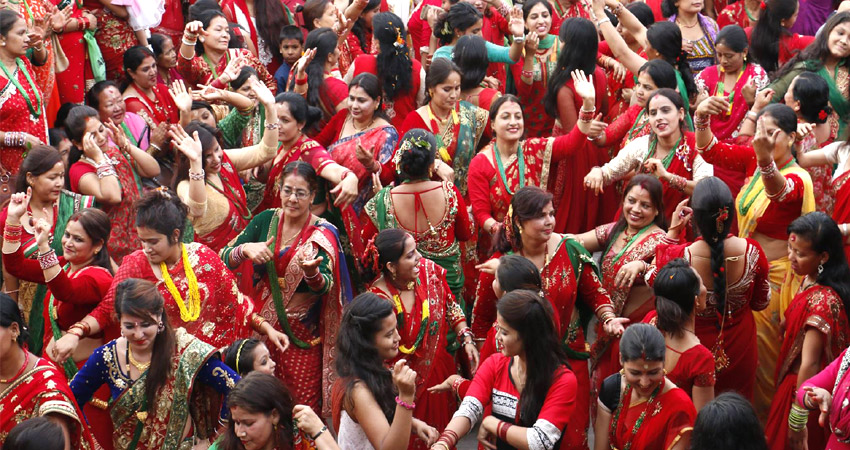
In Nepal, Teej is primarily celebrated by Hindu women, but the festival has cultural, social and religious significance that transcends caste and ethnic boundaries in many parts of the country.
In Nepal, Teej is celebrated by Khas Arya (Brahmin and Chhetri) community women with full religious observance. For them, this festival is a deeply spiritual occasion dedicated to Goddess Parvati and Lord Shiva, focused on marital devotion, fasting and worship.
This festival is also celebrated by women from Madhesi and Tharu communities, but with different local customs and songs. Their celebration focuses more on dance, music and social gathering. However, the spiritual elements are still present.
Young unmarried girls also take part in the Teej festival. They fast and pray to Goddess Parvati and Lord Shiva to seek blessings to find a good husband and the husband of their choice.
These days even women from not belonging to Brahmin and Chhetri communities (such as Newar, Magar, Gurung etc.) or less observant backgrounds sometimes join in for the music and dance celebration.
Nepali diaspora communities (especially in the Middle East, Europe, USA, and Australia) also celebrate Teej with gatherings, cultural programs and rituals.
The men in the community, even if they do not fast, support the celebration by organizing feasts (Dar), encouraging women’s participation, and sometimes performing the role of hosta or helpers during the events.
Therefore, although Teej in Nepal started as a festival of Hindu women belonging to the Brahmin and Chhetri communities, it has now grown into a nationwide cultural celebration of womanhood, devotion and community.
How is the Teej festival celebrated in Nepal?
The Teej festival in Nepal is celebrated mainly for three days by Hindu women belonging to Brahmin and Chhetri communities.
The first day of the festival is known as ‘Dar Khane Din’ which means ‘feast day’. This day is one day before the fasting day. On this day, especially married women, gather at their maternal home and enjoy a lavish feast called ‘Dar’. Dar is not any special food item, but a feast that includes rich and heavy foods like sel roti, sweets, yogurt, curry, pickle, fruits, latte as well as rice pudding. Women both married and unmarried adorned in vibrant traditional attire (red or green or the shades of red and green), bangles and henna sing traditional Teej songs, dance and celebrate sisterhood and womanhood. This continues till 12:00 PM, as after 12:00PM, the second day of the Teej festival in Nepal begins. In 2025, this day of the Teej festival is on 25th August.
On the second day, they start the ritual by taking a sacred bath early in the morning. They then clean the house and dress in traditional attire (red saree, green bangles, gold ornaments, bead necklaces, as well as decorate their hands with henna. On this day married women observe a strict fast, often without water (nirjala vrat) and pray to seek blessing for the longevity, prosperity and well being of their husband and male members of the family. Unmarried women also fast on this day with a belief to be granted a good future husband who would love her like Lord Shiva.
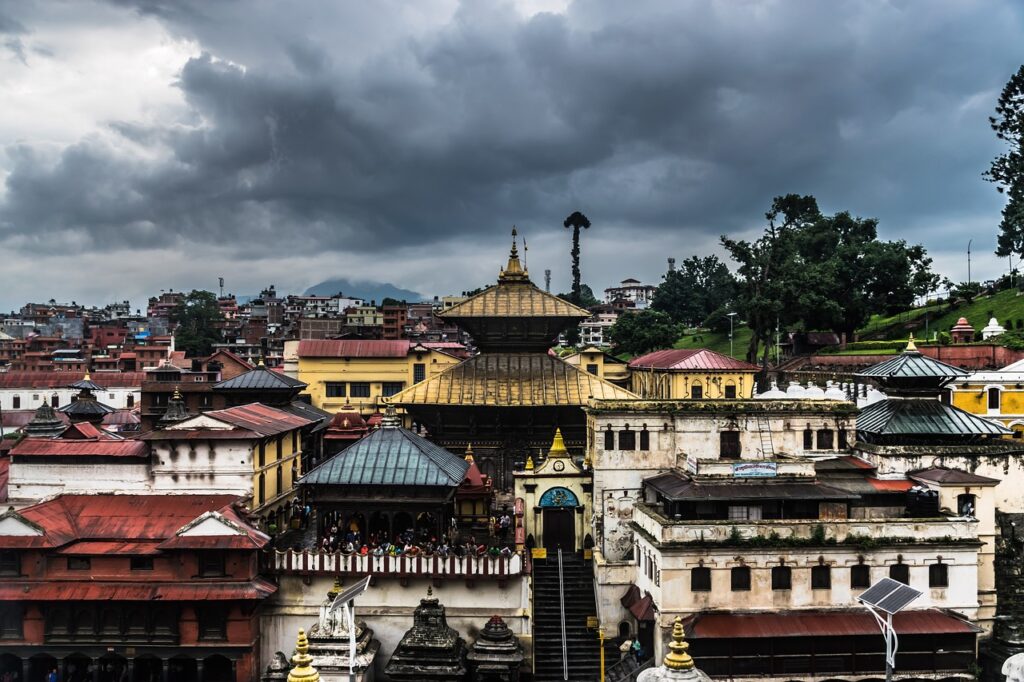
loves Mata Parvati. These women then visit temples dedicated to Lord Shiva and Goddess Parvati. In Kathmandu, most devotees visit Pashupatinath, as it is one of the most important temples dedicated to Lord Shiva in Nepal. Whether at home or at the temple, women perform puja, single devotional songs and take part in ritual dances. In the evening, around sunset, they break their fast by performing ritual offerings to god and their husbands. In 2025, the day of the Teej Festival is on 26th August.
The third celebration day of this festival is called Rishi Panchami, which usually falls on the fifth day (Panchami) of the Shukla Paksha of the Bhadrapada month in the Hindu calendar – second day after the fasting day and the next day after Ganesh Chaturthi. This day is a ritual purification day, performed to seek forgiveness for any mistakes or impurities (especially relating to menstrual practices) and to pay homage to the seven great sages (Saptarishi- Kashyapa, Atri, Bharadvaja, Vishvamitra, Gautama, Maharishi, Jamadagni and Vasishtha). On this day women bathe with holy herbs, fast and perform puja and a cleansing ritual after the Teej fasts. It marks the end of Hartalika Teej. In 2025, this day of the Hartalika Teej festival is on 28th August.
Moreover, between the fasting day and the Rishi Panchami Nepal also celebrates Ganesh Chaturthi, the birth of Lord Ganesha (son of Lord Shiva and Goddess Parvati), the elephant-headed god of wisdom, prosperity and remover of obstacles. Ganesh Chaturthi falls on the fourth day of the Shukla Paksha in the month of Bhadrapada (usually August or September in the Gregorian calendar). In 2025, Ganesh Chaturthi is celebrated on 27th August, 2025.
Amigo Treks and Expedition wishes Happy Teej 2025 to all women celebrating this festival. May this Lord Shiva and Goddess Parvati fulfill your wishes and bring a rainbow of happiness in your life.