For full list of entrance fees in Nepal for foreigners and locals 2025 A budget guide to entrance fees in Nepal, for heritage site, national parks,...
Guide type
Nepal planning guide
Best next move
Compare a live itinerary
Updated
April 13, 2026
How to use this guide
Read for clarity first, then move into the right trip format
Read the planning context
Use this page to understand the main tradeoffs, pace, and planning questions around Nepal.
Compare live options
Once the practical question is clear, compare real itineraries with better context.
Ask for route-specific help
Use the planning desk when you need help choosing dates, pacing, private options, or the right final itinerary.
For full list of entrance fees in Nepal for foreigners and locals 2025
A budget guide to entrance fees in Nepal, for heritage site, national parks, conservation areas and hunting reserve and the cost of cable car ride in Nepal.
Nepal is home to a wealth of cultural, natural and historical sites. These sites range from national parks to ancient temples and royal palaces to UNESCO World Heritage sites. These sites attract visitors from all over the world. However, the longevity of these sites depends on timely maintenance, protection and preservation. To support this, these sites collect a certain amount as entrance fees from the visitors, which varies depending on the location, the nationality of the visitors as well as the age of the visitors. The revenue generated from these visits directly fund conservation efforts, site management and local community development, ensuring that Nepal’s rich heritage remains protected for future generations.
If you are visiting Nepal and planning to explore its cultural, historical and natural sites, knowing the Nepal tourist attractions entrance fees in advance can help you manage your travel budget more effectively. So, how much are the entrance fees in Nepal tourist sites?
Since most of the Nepal tour begins with your arrival in Kathmandu, which is a home to 7 UNESCO World Heritage Sites, follow the table below for Kathmandu heritage site entry fees, Nepal temple entrance fees, Nepal monastery entrance fees and plan your budget for Kathmandu tour.
Entrance Fees for the sites in Kathmandu is in Nepalese Rupees (NPR)-unless stated otherwise. The list below includes the entrance fees for UNESCO World Heritage Sites in Kathmandu and the cost of visiting temples and monasteries in Nepal
| Sites | Foreign Nationals |
SAARC Nationals |
Chinese | Nepalese | Remark |
| Kathmandu Durbar Square entrance fee with Tribhuvan Museum |
1000 | 500 (BIMSTEC) |
1000 | Free | Below 10 years free |
| Patan Durbar Square entrance fee |
1000 | 250 (BIMSTEC) |
1000 | 30 Applicable only for Patan Museum |
Students with letter from school: 10 Student Card Discount: 15 |
| National Museum Chauni, Kathmandu | 150 Camera:100 Video Camera: 200 |
50 Camera:75 Video Camera: 150 |
150 Camera:100 Video Camera:200 |
25 Camera: 50 Video Camera: 100 |
Student: 10 Closed on Tuesday and Public Holidays. Open half day on Mondays (10:30AM to 2:00PM) |
| Golden Temple (Patan) |
100 | 50 | 100 | Free | Closed on Buddha Jayanti |
| Bhaktapur Durbar Square entrance fee |
2000 | 500 | 500 | Free | Below 10 years free. For groups from 11-20, one tour leader can enter free of cost. |
| National Art Museum, Bhaktapur |
150 Camera:100 Video Camera: 200 |
50 Camera:50 Video Camera:200 |
150 Camera:100 Video Camera:200 |
Student: 10 Others: 25 Camera: 50 Video Camera: 100 |
The fee includes wood carving and brass and bronze museum in Dattatraya Square. Closed on Tuesdays. |
| Swayambhunath entrance fee | 200 | 50 | 200 | Free | Below 10 years free. |
| Boudhanath entrance fee | 400 | 100 | 400 | Free | Below 10 years free. |
| Pashupatinath entrance fee | 1000 | 1000 | 1000 | Free | Free for Indian Nationals. |
| Changunarayan Temple | 300 | 100 | 300 | Free | |
| Ethnographic Museum, NTB |
200 | 100 | 50 | Student: 25 Others: 30 |
|
| Garden of Dreams (Kathmandu) |
400 | 400 | 400 | 150 | Below 5 years fee. 5-11 years Rs 50. 25% discount on 10 tickets. |
| Central Zoo | 1000 (250 for children 4-12 years) |
500 (250 for children 4-12 years) |
250 (150 for children 4-12 years) |
200 (75 for children 4-12 years) |
Student (Nepali): 135 |
| Narayanhity Palace | 1000 | 500 | 500 | 200 | Students (Nepali): 50 Closed on Wednesday Mon-Thu (10:30AM-3:30PM) Tuesday (10:30AM-1:30PM) |
| Godawari Park | 500 (200 for children below 10 years) |
200 (100 for children below 10 years) |
100 (50 for children below 10 years) |
50 (20 for children below 10 years) |
50% discount for students. |
Pokhara is a very scenic city and the second most popular tourist destination in the country after Kathmandu. It is famous for its natural beauty and adventure activities. Key attractions include Phewa Lake, where visitors can enjoy boating with views of the Annapurna range; the World Peace Pagoda and Pumdikot offering panoramic vistas; Devi’s Fall and the nearby Gupteshwor Cave; and the International Mountain Museum. Pokhara is also a gateway to Annapurna region in Nepal. Lets plan a budget for sightseeing in Pokhara.
Entrance Fees for sites in Pokhara is in Nepalese Rupees (NPR)-unless stated otherwise
| Sites | Foreign Nationals |
SAARC Nationals |
Chinese | Nepalese | Remark |
| International Mountain Museum |
750 | 350 | 750 | 150 | Students: 80 |
Chitwan, in southern Nepal, is another popular tourist destination, especially for those interested in wildlife in Nepal. Chitwan is home to Chitwan National Park, the first nation park in Nepal. Renowned for its diverse wildlife, including one-horned rhinos, Royal, Bengal tigers, elephants, crocodiles, alligators and over 500 species of birds, this national park is also listed in UNESCO World Heritage Site. Lets plan a budget for Chitwan:
Entrance Fees for sites and activities in Chitwan is in Nepalese Rupees (NPR)-unless stated otherwise
| Sites | Foreign Nationals | SAARC NATIONALS | Chinese | Nepalese | Remark |
| Chitwan National Park entrance fees |
2000 per day per entry +13% VAT |
1000per day per entry +13% VAT |
2000 per day per entry +13%VAT |
150+13% VAT | |
| Elephant Ride Fare | 2500 | 1500 | 2500 | 500 | |
| Elephant Breeding Center | 100 | 50 | 100 | 25 | |
| Tharu Cultural Museum | 25 | 15 | 25 | 10 | Below 10 years free. |
Lumbini, located in southern Nepal, is the birthplace of Lord Buddha and a UNESCO World Heritage Site. It is a scared pilgrimage site featuring the Maya Devi Temple, ancient ruins, monastic zones, and the Ashoka Pillar. Lumbini offers a peaceful atmosphere and deep spiritual significance of visitors from around the world. Lets plan a budget for Lumbini Tour
Entrance Fees for sites in Lumbini is in Nepalese Rupees (NPR)-Unless stated otherwise
| Sites | Foreign Nationals | SAARC Nationals | Chinese | Nepalese | Remark |
| Lumbini entrance fee | 700 | 400 | 700 | 20 | 16 for Indians |
| Lumbini Museum | 50 | 50 | 50 | 10 | |
| Kapilvastu Museum | 10 | 5 | 10 | 2 | Closed on Tuesdays |
Moreover, Nepal is also home to 12 national parks, 1 wildlife reserves and 6 conservation area and 1 Hunting reserve that protect its rich biodiversity and stunning landscape. From the subtropical jungles of Chitwan and Bardia to the high-altitude terrains of Sagarmatha and Langtang, these parks offer diverse wildlife, including tigers, rhinos, snow-leopard as well as red pandas. Among them, two (Chitwan National Park and Sagarmatha National Park) are also listed in UNESCO World Heritage Sites (Natural). These national parks, conservation areas and wildlife reserves also provide opportunities for trekking, jungle safaris and cultural experiences. However, one has to a pay certain amount as entrance fees to enter these protected areas in Nepal. Lets plan a budget for national park entry fee and permits for trekking in Nepal:
Nepal National Park entrance fees, Nepal Conservation Area entry fees, Nepal Wildlife Reserves entrance fees, Nepal Hunting Reserve fees for tourist and locals and Nepal trekking permits fees stated below are in Nepalese Rupees (NPR)- unless stated otherwise
| National Parks/ Wildlife Reserves/ Conservation Areas/ Hunting Reserves |
Nepali | SAARC Nationals |
Foreigners | Discounts |
| Chitwan National Park | 150 per person per entry | 1000 per person per entry | 2000per person per entry | Below 10 years free |
| Sagarmatha National Park entrance fees | 100 per person per entry | 1500 per person per entry | 3000 per person per entry | Below 10 years free |
| Banke National Park | 100 per person per entry | 750 per person per entry | 1500 per person per entry | Below 10 years free |
| Bardia National Park | 100 per person per entry | 750 per person per entry | 1500 per person per entry | Below 10 years free |
| Khaptad Natinal Park | 100 per person per entry | 500 per person per entry | 1500 per person per entry | Below 10 years free |
| Langtang National Park | 100 per person per entry | 1500 per person per entry | 3000 per person per entry | Below 10 years free |
| Makalu Barun National Park | 100 per person per entry | 1500 per person per entry | 3000 per person per entry | Below 10 years free |
| Parsa National Park | 100 per person per entry | 750 per person per entry | 1500 per person per entry | Below 10 years |
| Rara National Park | 100 per person per entry | 1500 per person per entry | 3000 per person per entry | Below 10 years free |
| Sey-Phoksundo National Park | 100 per person per entry | 1500 per person per entry | 3000 per person per entry | Below 10 years free |
| Shivapuri-Nagarjun National Park entrance fee | 100 per person per entry | 600 per person per entry | 1000 per person per entry | Below 10 years free |
| Shuklaphanta National Park | 100 per person per entry | 750 per person per entry | 1500 per person per entry | Below 10 years free |
| Koshi Tappu Wildlife Reserve entry fee | 100 per person per entry | 750per person per entry | 1500 per person per entry | Below 10 years free |
| Api Nampa Conservation Area | 100 per person per entry | 500 per person per entry | 2000 per person per entry | Below 10 years free |
| Annapurna Conservation Area entry fee | 100per person per entry | 1000 per person per entry | 3000 per person per entry | Below 10 years free |
| Blackbuck Conservation Area | 100 per person per entry | 500 per person per entry | 2000 per person per entry | Below 10 years free |
| Gaurishanker Conservation Area | 100 per person per entry | 1000 per person per entry | 3000 per person per entry | Below 10 years free |
| Kanchenjunga Conservation Area | 100 per person per entry | 500 per person per entry | 2000 per person per entry | Below 10 years free |
| Manaslu Conservation Area permit fee | 100 per person per entry | 1000 per person per entry | 3000 per person per entry | Below 10 years free |
| Dhorpatan Hunting Reserve entry fee | 100 per person per entry | 1500 per person per entry | 3000 per person per entry | Below 10 years free |
Nepal cable car ticket prices (Manakamana, Annapurna, Bandipur, Chandragiri Hills:
| Sites | Foreign Nationals | SAARC Nationals | Chinese | Nepalese | Indian | Remark |
| Manakamana Cable Car |
USD 11 (One way) USD 20 (Two way) Child USD 8 (One way) USD 15 (Two way) Person with disability USD 6 (One way) USD 10 (Two way |
USD 6 (One way) USD 10 (Two way) Child USD 4 (One way) USD 7 (Two way) Person with disability USD 3 (One way) USD 5 (Two way) |
USD 6 (One way) USD 10 (Two way) Child USD 4 (One way) USD 7 (Two way) Person with disability USD 3 (One Way) USD 5 (Two way) |
NPR 450 (One way) NPR 770 (Two way Child NPR 270 (One way) NPR 460 (Two way) Person with disability Rs 225 (One way) Rs 385 (Two way) |
INR 400 (One way) INR 670 (Two way) Child INR 240 (One way) INR 400 (Two way) Person with disabiity INR 200 (One way) INR 340 (Two way) |
Elderly Nepali (70+) NPR 315 (One way) NPR 540 (Two way) Students Nepali NPR 335 (one way) NPR 575 (Two way) |
| Annapurna Cable Car (Pokhara) |
USD 8 (One way) USD 12 (Two way) |
NPR 700 (One way) NPR 1000 (Two way) |
USD 8 (One way) USD 12 (Two way) |
NPR 400 (One way) NPR 700 (Two way) |
NPR 700 (One way) NPR 1000 (Two way) |
Child upto 3 feet free. Child rate applicable for children 3-4 feet. 70+ age qualifies for elderly citizen. Elderly & student rate applicable only for Nepali citizens (Id required). |
| Bandipur Cable Car (Bandipur) |
NPR 400 (One way) NPR 700 (Two way) |
NPR 350 (One way) NPR 600 (Two way) |
NPR 400 (One way) NPR 700 (Two way) |
Nepalese Student: NPR 200 (One way) NPR 350 (Two way) Nepalese Senior Citizens: NPR 200 (One way) NPR 250 (Two way) Differently Abled: NPR 200 (One way) NPR 300 (Two way) |
| Chandragiri Hills Cable Car |
US$ 23 | 1320 | US$16 | 825 | 1320 | Free ride for elderly over 80 & children up to 3 feet. 40% discount for children 3-4 feet. 50% discount for differently abled person. 25% discount for students, elderly over 60, locals and expats. |
Moreover, the rates provided here are the current rates that might change in future. Therefore, for updated entrance fees for Nepal tourist attractions 2025 and verification, please follow the link provided below:
- For National Parks, Conservation Areas and Hunting Reserves
- For Heritage Sites
- For Annapurna Cable Car, Pokhara
- For Chandragiri Cable Car
- For Manakamana Cable Car
- For Bandipur Cable Car
Need help planning any tours and and treks in Nepal? Amigo Treks and Expedition is at your service. You can also email info@amigotrekking.com for more information.
Questions travelers ask about Everest Base Camp Trek
These are route-specific answers pulled from the live trip page so the guide can hand you into a real planning view.
What is Standard Everest Base Camp Trek?
Standard Everest Base Camp Trek is a classic itinerary that follows the traditional route to Everest Base Camp and back without including the side trips in the region, such as Gokyo Lakes, three passes or the Ama Dablam Base Camp. The trail goes through Lukla, Phakding, Monjo, Namche, Tengboche, Deboche, Dingboche, Thukla, Lobuche and Gorakshep to Everest Base Camp and returns to Lukla via Lobuche, Pheriche, Namche and Phakding, most following the same route used during the ascent.
The itinerary is designed including essential acclimatization days and offers the ideal balance of adventure, safety and comfort, while taking you through Everest region’s most iconic landscapes, Sherpa villages, monasteries and viewpoints.
The standard package includes all essential services required for a comfortable trek, including standard accommodation, meals, transportation, experienced guide and porter support, necessary permits, drinking water and applicable taxes. It is designed to meet the general needs of trekkers while ensuring a smooth and well-organized Everest Base Camp experience.
What is the duration of the Standard Everest Base Camp trek?
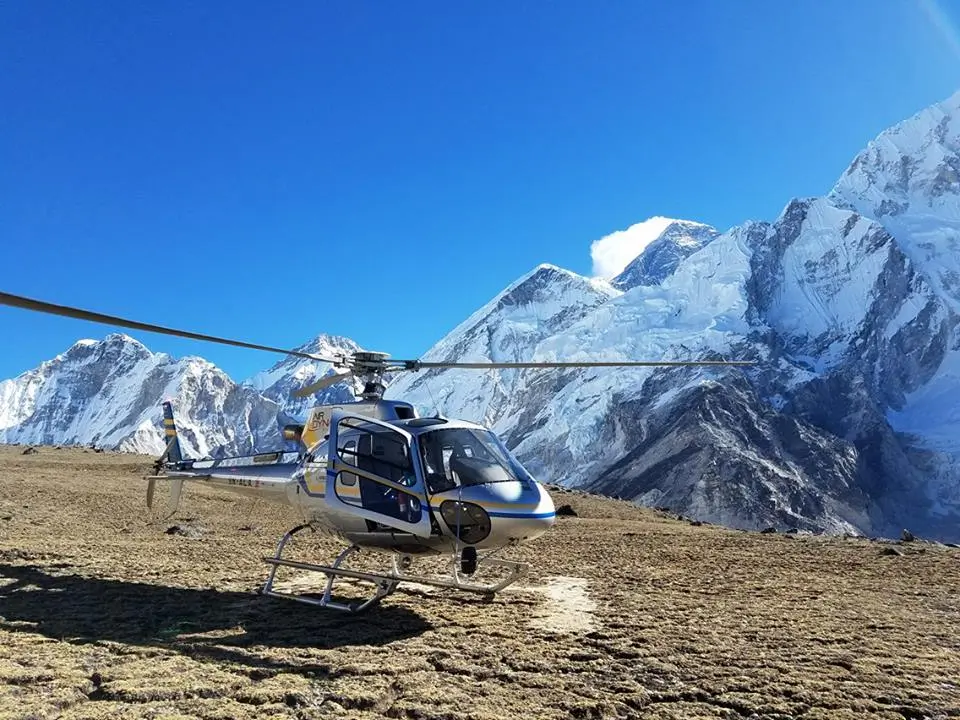
The standard itinerary is usually 15 days. The trekking part, Lukla-EBC-Lukla,takes 11 days. However, you can shorten the trek by taking a helicopter ride either back to Lukla or Kathmandu, from Gorakshep, if you are short on time.
What is the total length of this trail?
The total length of the trail is approximately 107 kilometers. This does not include the acclimatization hikes in Namche and Dingboche and the hike to Kala Patthar.
What is the maximum elevation gained on this trek?
The maximum elevation gained on this Classic EBC Trek is 5,550 meters at Kala Patthar.
How demanding is classic EBC trek?
The classic EBC trek is a multi-day, high-altitude trek in Nepal and is categorized under challenging trek. The trek includes a variety of challenging sections, each for different reasons. Some days are demanding because of the distance covered, particularly the stretches from Phakding to Namche, Namche to Deboche and Lobuche to EBC and back to Gorakshep. Other sections require sustained uphill climbing, most notably the ascents from the Hillary Bridge to Namche and from Phunki Tenga to Tengboche. As you approach higher elevations, the terrain also becomes more rugged, with rocky and boulder-strewn trails between Thukla and EBC requiring careful footing. Altitude is another significant challenge on this section of the trek as much of the route is either close to or above 5000 meters. The thinner air makes even moderate walking more physically demanding, requiring a slower pace and proper acclimatization.
Which is the most difficult section of this EBC Trek?
The most difficult section of this trek is the section between Lobuche and EBC. Most of this section lies at or above 5,000 meters, making the high altitude a significant challenge. In addition, the trail is predominantly rocky and covered with boulders, requiring careful footing and adding to the overall difficulty of the trek. Many trekkers also find the ascents of the Hillary Bridge to Namche and Phunki Tenga to Tengboche particularly difficult due to their long, steep climbs.
I do not have 15 days to do this trek. Is there any possibility to shorten the itinerary?
Yes, if you are short on time, you definitely have an option to shorten this standard 15 days EBC trek itinerary.
For this you will have to take a helicopter ride from Gorakshep, either to Lukla or Kathmandu, which helps you cut down 3 days that you’d normally take if you followed standard 15 days Everest Base Camp trek itinerary to return to Lukla from Gorakshep.
Note: Helicopters are available on both private and sharing basis and can be arranged at an additional cost.
How many acclimatization days are included in this itinerary?
Amigo Treks and Expedition has included two essential acclimatization days in this Everest Base Camp trek itinerary to help your body adjust to the increasing altitude. The first acclimatization stop is in Namche Bazaar after crossing 3,000 meters, and the second is in Dingboche after crossing 4,000 meters.These rest days are crucial for reducing the risk of altitude sickness while allowing you to acclimatize safely before continuing to higher elevations.
What happens on the acclimatization days? Are they rest days or are there short hikes?
Although they’re also called rest days, they aren’t spent entirely at the lodge. Instead, a good part of the day is spent on short acclimatization hikes to higher elevations, before returning to the lodge to rest. Typically, you will aim for around 200 meters ascent from your sleeping spot. This “climb high, sleep low” approach helps your body adjust to the altitude more effectively and prepares for your higher sections of the trek.
Usually these hikes are around 5 kilometers in distance (roundtrip).
Namche offers a number of hiking trail options. The most common ones are the hike to Hotel Everest View or to the villages of Khumjung and Khunde. These are short hiking trail options. The longer one is a hike to the village of Thame located west of Namche on Everest Three Passes trail, which takes a full day. Depending on your preference and fitness level, your guide will take you on one of these hikes.
Note: If you prefer mountain views over traditional Sherpa villages, choose to hike to Hotel Everest View. If you prefer a more cultural experience, with opportunities to explore traditional villages, choose to hike to Khumjung and Khunde Village. If you enjoy long scenic valley walks, quieter and less crowded experiences and gentler acclimatization day (gradual altitude gain with time to explore), choose to hike to Thame Village.
Dingboche offers two major hiking trails. For those who prefer a half-day hike, we take them to the viewpoint of Nagarjuna Hill, located just above the village of Dingboche. However, those who prefer a longer acclimatization hike and explore more areas of Everest region, we take them to Chhukung. Hike to Chhukung is a full-day hike.
Note: While you’ll have a choice of acclimatization hikes, your guide will also consider your fitness level and walking pace to help you choose the option that’s best suited to you.
Does this standard Everest Base Camp trek package include meals?
Yes, this standard EBC trek package includes basic meals.
In Kathmandu, breakfast and farewell dinner is included and during the trek Breakfast, Lunch and Dinner are included in the package.
Moreover, every day, 3 cups of normal tea or coffee (served in cups only) and seasonal fruits after dinner are also included in the package.
Where will I eat during the Everest Base Camp Trek?
All meals during this Everest Base Camp Trek are served at the teahouses/lodges where you’ll be staying or stopping for breaks along the trail. Each teahouse/lodge has a dining hall where trekkers gather to enjoy freshly prepared meals in a warm social atmosphere. Breakfast and dinner are typically served at the teahouse where you spend the night, while lunch is enjoyed at a teahouse along the day’s trekking route.
What kind of food can I expect to be served on this Everest Base Camp Trek?
Lodges/tea-houses offer a variety of meals, including Nepali, Tibetan and basic Western cuisine for breakfast, lunch and dinner.
Breakfast options at most of the tea-houses are Toasts with cheese, butter, jam or honey, eggs (boiled or made to order), fried sausages or potatoes, porridge, muesli, pancakes and bread (Indian or Tibetan), tea, coffee, fruit juice etc.
Lunch and dinner options include typical Nepali set meal (Rice, Lentil soup. Curry,pickles etc.), Momo, Pizza, Indian Curries with Plain Rice, Sandwiches served with Chips and Salads, Spring Roll, Thukpa (Noodle Soup), Chopsuey, Chowmein (noodle), Fried Rice, Salad, Sizzler, Soup, Grilled Chicken, Roasted Chicken, Spaghetti, Macaroni as well as steak.
Note:
The food options become limited with the increase in altitude. Most of the above listed food options are available up till Dingboche. All the meals are locally prepared by local cooks using local ingredients, therefore, while they are prepared with care, the taste may vary and may not fully match traditional or authentic versions of the cuisine.
Can vegetarian, vegan or gluten-free dietary requirements be accommodated on this Everest Base Camp Trek?
Yes, all vegetarian, vegan and gluten-free dietary requirements can be accommodated on this Everest Base Camp Trek.
Vegetarian meal options are widely available and are often considered the safest options at high altitudes, where meat may not always be fresh.
Basic vegan meals such as vegetable curry, rice, noodles, potatoes and soups are served to vegans.
Options such as rice, lentil soup, eggs, yak cheese and vegetables are usually available for trekkers requiring gluten-free meals.
Note:
The options become more limited with the increase in elevation, therefore, it is helpful to inform us regarding your dietary preferences in advance.
Can you accommodate food allergies or special dietary requirements?
Yes, most teahouses accommodate common dietary requirements, however, choices may be limited at higher altitude. Therefore, we request that you inform us of any food allergies or special dietary requirements before your trek- or, ideally, before booking- so we can advise you on the available options, help you make an informed decision and prepare accordingly.
Is the food on Everest Base Camp Trek safe and hygienic?
Yes, your foods are made to order, thus are prepared fresh. Cooked foods are safe, hygienic and recommended. To be on a safe side, it’s good to avoid raw salads, unpeeled fruits and undercooked foods, especially at higher altitude.
Should I bring my own snacks, or can I buy them along the Everest Base Camp trail?
Most villages along the Everest Base Camp trek have local shops that sell snacks, such as chocolate bars, biscuits, instant noodles, nuts, chips and energy bars. But, their prices in the Everest region are more expensive than in the cities. Moreover, the prices in the Everest region increase with the increase in altitude and sometimes you will end up paying triple the price that you get in Kathmandu.
Hence, it’s best to buy your choice snack either in your home country or in Kathmandu.
What meal is best for maintaining energy during the trek?
The most recommended food is a typical Nepali meal (Dal-Bhat-Tarkari, meaning, lentil soup, rice and curry). This meal is freshly cooked and also provides a balanced combination of carbohydrates, protein, fiber and vitamins to keep you energized and healthy during the trek.
Moreover, choosing this option over Tibetan or Western cuisine gives you the added benefit of free refills at many teahouses, making it a more filling, nutritious and cost-effective meal during the trek.
Do you provide hot drinks as a part of this trekking package?
Yes, normal tea or coffee -3 cups (served in cups only) is included in the package and is provided every day. The teahouse menu also offers other hot drinks, such as ginger tea, lemon tea, hot chocolate, hot lemon, hot lemon with honey etc. At some locations herbal teas are also available. These other drinks come under your personal expenses.
Are there any foods I should avoid while trekking to Everest Base Camp?
Yes, to avoid stomach and digestion-related issues, it’s best to avoid raw salads, unpeeled fruits, meat, deep fried or oily foods and foods that may not have been freshly prepared. At higher altitudes, it’s always best to avoid meat, as it is often transported over long distances without consistent refrigeration.
It is also highly advisable to avoid alcohol as well as limit the consumption of coffee as they contribute to dehydration and interfere with acclimatization.
Is drinking water provided?
Yes, purified drinking water is provided during the trek. The water is locally available tap water, which is purified using purification tablets/drops (chlorine-based disinfectant). These purification tablets/drops take 20-30 minutes to purify water, therefore, trekkers are suggested to carry two bottles.
You will fill your water bottle before leaving the lodge/teahouse in the morning. If you need more water there are options to refill your bottles along the way.
Important!
Drinking water sources in Gorakshep and Lobuche are either frozen or highly contaminated. Therefore, at these two places, trekkers are required to buy mineral water, as mineral water is not included in the package.
Similarly, hot water for drinking or any other purposes is also not included in this package. However, if needed, you can easily purchase hot water directly from tea-houses along the trail.
Is it ok to drink alcoholic beverages during the trek?
Alcohol consumption contributes to dehydration and may affect acclimatization. Since this is a high-altitude trek, proper acclimatization is essential for your safety and comfort. Therefore, we strongly recommend avoiding alcohol during the trek, especially at higher elevations, to allow your body to adjust properly to the changing altitude.
After reaching the base camp, when you come back to Namche, you can drink and celebrate your success.
Does this standard EBC package include accommodation?
Yes, this standard Everest base camp trek package includes accommodation, both in Kathmandu and in the Everest region, during the trek.
In Kathmandu, the accommodation is arranged in a centrally located 3 Star Hotel and in the Everest region (during the trek), the accommodation is arranged in normal standard lodges at every nightstop.
What is meant by a normal-standard lodge during the trek?
In the Everest region, normal-standard lodges refer to standard lodges that provide basic accommodation and meal facilities.
The rooms are simple with usually two beds. Each bed has a mattress, a pillow and a blanket/quilt. An attached bathroom with hot shower facility is available in Phakding, Namche, Deboche and Lukla. An attached toilet without a hot shower is available in Dingboche and Pheriche. At other places, toilets and hot/cold shower options are shared/common. Gorakshep does not have any shower option.
Do I have an option to upgrade accommodation? What options are available?
Yes, you have the option to upgrade accommodation both in Kathmandu and in the Everest region.
In Kathmandu, 4 Star, 5 Star, Heritage Hotels and Luxury Resorts are the available options. However, in the Everest region, the options are limited to Deluxe and Luxury Lodges.
Deluxe lodges are available in Phakding, Namche, Deboche, Dingboche and Lukla. Deluxe lodges are higher in standard than the standard ones, but not equal to luxury lodges. They have bigger rooms, cozy and well-maintained beds, mattresses, pillows and quilts and attached bathroom/toilet with hot and cold shower facilities at most locations. Some even provide the comfort of an electric blanket. Additionally, compared to the standard lodges, deluxe lodges typically offer a wider variety of meal options, providing guests with more choices and greater dining flexibility.
Luxury lodges, on the other hand, are only available in Phakding, Namche, Deboche, Dingboche and Lukla. Luxury lodges are the highest-standard lodges in the Everest region and provide premium accommodation, exceptional meal options and world-class hospitality.
Note:
Luxury lodges are also available in Tengboche, if you prefer to stay a night in Tengboche, instead of Deboche.
Depending on your choice, the accommodation, both in Kathmandu and in the Everest region can be upgraded for an additional fee.
IMPORTANT!
5 Star, Heritage Hotel and Luxury Resort accommodation in Kathmandu and Luxury-Lodge accommodation in the Everest region is subject to availability. Due to high demand and limited options, rooms fill up quickly; therefore, confirmation will be provided only after availability has been verified and confirmed by the hotels, resorts and lodges.
In which hotel will I be staying in, in Kathmandu with this package?
This package ensures your stay in a 3 star hotel in Kathmandu. You will be staying in one of these 3 star hotels, Apsara Boutique Hotel, Surya Heritage, Landmark Kathmandu, Kantipur Village and Nepali Ghar or any other similar category hotel.
All of these hotels are located in or near Thamel, which is a major tourist town in Kathmandu. These hotels are carefully selected for their convenient central location, offering easy access to trekking gear shops, restaurants, clubs, pubs, massage and spa centers, and plenty of places to explore on foot. Additionally, several UNESCO World Heritage Sites are located nearby, making it easy to experience the cultural highlights of the area during your stay.
The confirmed hotel details will be provided after your booking is finalized.
Which hotel options do you provide if I would like to upgrade to a 4-star hotel in Kathmandu?
If you’d like to upgrade to a 4-star hotel in Kathmandu, the centrally located options are Barahi Kathmandu, Aarya Hotel and Spa- Eternal Heritage and Ramada Encore by Wyandham Kathmandu Thamel. The final hotel will be confirmed after your upgrade request is processed.
Which hotel option do you provide if I would like to upgrade my accommodation to a 5-star property in Kathmandu?
If you’d like to upgrade to a 5-star property in Kathmandu, we offer the Soaltee Kathmandu-Autograph Collection, Hotel Yak and Yeti and Mercure Kathmandu Sukedhara Heights or a similar category hotel, subject to availability at the time of booking. The final hotel will be confirmed after your upgrade request is processed.
If I am a solo traveller, do I need to pay extra for a single room?
If you are a solo traveler and are willing to pay the cost of 1 Pax for the 15 days Everest Base Camp package, you can enjoy a single room in Kathmandu, as the package price already includes a single room in Kathmandu. However, in the Everest region, the accommodation will be on a twin-sharing basis. A single room can be arranged at an additional cost.
Note:
Single rooms are not available in Lobuche and Gorakshep on this trek.
Moreover, if you are a solo traveler looking to join a group and enjoy the group price (2 or 2+ Pax package price) the accommodation, both in Kathmandu and in the Everest region will be on a twin-sharing basis. You will share your room with another member of the group (same gender).
During the trek, if there is no other participant of the same gender within your group, you will be paired with a trekker of the same gender from another trekking company for accommodation and room-sharing arrangements. This is done to ensure your comfort, privacy, and adherence to standard trekking practices.
This arrangement is made only when a group has an odd number of participants (such as 3, 5, or 7), making it necessary to pair one trekker with a participant of the same gender from another trekking company for room-sharing purposes.
Nevertheless, if you prefer private/single room accommodation in Kathmandu and during the trek, it can be arranged at an additional cost (except at Lobuche, Gorakshep and Dzongla).
Can I book my own accommodation in Kathmandu before and after the trek?
Yes, you can book your own accommodation in Kathmandu, before and after the trek. Please share your hotel details with us so we can coordinate the arrangements accordingly.
Does this package include airport pick-up and drop-off service upon arrival and departure? Is the service also available for late-night or early morning arrivals and departures?
Yes, both airport pick up and drop off services are included in this package. This service is guaranteed regardless of your arrival or departure time.
How do I get in and out of the Everest region ?
As per this package, you will fly in and out of Lukla (Tenzing Hillary Airport- Everest region) in a regularly scheduled flight.
Flights to and from Lukla operate from Manthali Airport in Ramehhap district of Nepal instead of Tribhuvan International Airport in Kathmandu during peak trekking seasons (March-May and October and November). The sole purpose of this is to reduce air traffic and congestion at Kathmandu airport, allowing flights to operate more smoothly and efficiently during these busy periods.
Hence, if you are planning on taking this trip during peak season, you will drive to Ramechhap (4-5h) to catch your flight to Lukla. After the trek, you will fly back to Ramechhap from Lukla and drive to Kathmandu. As per this package, this transfer will be in a private vehicle (car/jeep/minivan-depending on group size.)
Nevertheless, during off-season (December-February and June to September), Lukla flights operate directly from Kathmandu, allowing you to fly from Kathmandu to Lukla and return directly to Kathmandu without having to drive to and from Ramechhap.
Fact: There are only three airlines that provide service in this sector. They are Tara Air, Summit Air and Sita Air.
Note:
If you prefer to avoid the drive to and from Ramechhap, you can opt for a private or shared helicopter flight to and from Lukla. The helicopters provide direct Kathmandu-Lukla-Kathmandu service. We can arrange the helicopter transfers for you at an additional cost.
Do I have an option to fly directly from Kathmandu to Lukla and back, even during peak seasons?
There are a few aircrafts (max 2-3) that come to park at Tribhuvan International Airport in Kathmandu, every day. These aircraft operate one direct morning flight from Kathmandu to Lukla and one return flight from Lukla to Kathmandu after completing their scheduled Ramechhap–Lukla services. Since seats on these flights are limited and in high demand, they must be booked well in advance.
Additionally, if your direct flight is cancelled due to adverse weather or other unforeseen circumstances, it may not be possible to secure a seat on the following day's direct flight from Kathmandu to Lukla as well as Lukla to Kathmandu. In such cases, you will need to drive to Ramechhap to board a flight to Lukla, which may result in additional travel time and logistical arrangements.
However, if you prefer to avoid the Kathmandu–Ramechhap–Kathmandu drive altogether, both private and shared helicopter services are available for direct flights between Kathmandu and Lukla in either direction at additional cost.
Will I get a discount on the package price if I choose shared transportation to and from Ramechhap instead of private?
Yes, the package price will go down a little, if you choose shared transportation to and from Ramechhap. However, the shared vehicles depart for Ramechhap from Kathmandu only in the early morning at around 1:00-2:00 AM, which may not be convenient and comfortable for all travellers. Therefore, for a more comfortable and flexible journey, we have included private transportation in this package.
What are the vehicle options for private transportation between Kathmandu and Ramechhap?
The vehicle options for private transportation between Kathmandu and Ramechhap depends on the group size.
Up to 4 Pax including guide - Private Car (SUVs- Maruti Suzuki Brezza, Nissan Magnite, Tata Nexon EV or similar)
Up to 5 Pax including guide - Jeep/4WD (Mahindra Scorpio, Bolero or similar)
6 and 6+ Pax- Toyota HiAce
How do I stay connected with my family members during the trek?
To stay connected with your family we recommend:
Buying local SIM card in Kathmandu, before flying to Lukla
Carry a fully charged power bank. Fully charge it again at lower altitude if needed, as at high altitude the device charging prices increase significantly.
Use WiFi wisely and mostly for the purpose of communication.
Your guide will inform you in advance about sections of the trek where mobile network coverage and internet access are unavailable. Please let your family and friends know that you may be out of reach during these periods.
In the event of an emergency, you may use your guide’s phone to contact our office team. Our staff will promptly relay the message to your designated emergency contacts. For this we request you to provide your emergency contact details before the trek begins.
Will I have WiFi or internet access during the Everest Base Camp Trek?
Yes, almost all the stopovers on the Everest Base Camp trek have some forms of internet facilities that trekkers can access for a fee. The most common one is the Everest Link network. These internet services, however, are more reliable at lower altitudes, such as Namche and Lukla. As you gain altitude , especially around Lobuche and Gorakshep and Pheriche, the internet speed gets slower and outages are more common (mostly during bad weather).
How much does WiFi or internet usage cost in the Everest region?
The cost of internet usage varies by location and often increases at higher altitude. Depending on the altitude, the internet usage might cost you somewhere between Npr 1000- Npr 1500 for 24 to 48 hours.
How reliable are local SIM cards and mobile data?
There are two major SIM card service providers in Nepal, Nepal Telecommunications Corporation (NTC) and Ncell. Their coverage is reliable till Namche. However, beyond Namche, the coverage is patchy and at high altitudes, such as Dingboche, Lobuche, Gorakshep and Pheriche the service is either unavailable or unreliable.
Does the internet at lodge/tea houses support apps like WhatsApp, Viber, Facebook, Instagram and video calls?
At lower altitudes, such as in Lukla and Namche, the available internet supports most of these social networking apps, however, as you gain altitude, it mostly supports calling apps such as Whatsapp and Viber.
Is the internet fast enough for remote work?
For basic messaging, emails and light browsing, the internet connection is good, however, if your remote work involves large file uploads, video calling/conferencing or other works that require intensive bandwidth, then the internet in the Everest region is not suitable for your remote work.
Which parts of the trek have little to no internet connectivity?
Connectivity is weakest to none at following sections of the EBC, Gokyo Cho La route:
Lobuche, Gorakshep (weak)
At Everest Base Camp and Kala Patthar (none)
Between villages (none)
During power outages and bad weather (none)
Is it advisable to download important apps and maps before the trek?
Yes, it’s highly advised to download offline maps and other apps before leaving Kathmandu. Apart from maps and apps, it is also advisable to download important documents, such as a copy of your insurance policy.
Does this package include porter and guide service?
Yes, this 15 days Standard Everest Base Camp trek package includes the service of both guide and porter.
Guides:
All our guides are government-licensed, English-speaking, experienced and knowledgeable. One guide will lead the group of maximum 6 trekkers. Once the number of trekkers exceeds 6 in a group, for additional assistance, an assistance guide will be provided. Thus, making the guest-guide ratio is 6:1.
Please note: Language guides, for example French-speaking, Spanish-speaking, Chinese-speaking etc. can also be arranged at an additional cost. The charges for language-guides are more than normal English-speaking guides. Language guides are also very limited in number, therefore, we need to be booked in advance and are also subject to availability.
Porters:
Porter service is also included in this package. We hire local Everest-region porters to create job opportunities for the local people and contribute to their economy. On this trek, these porters meet you in Lukla, assist you carry your major luggage during the trek and end their service in Lukla. One porter carries the luggage of 2 trekkers, making the guest-porter ratio 2:1.
What is the weight limit for a porter during the trek?
The weight limit for a porter during the trek is 30 kilograms (66.13 pounds).
What should I pack in a porter bag?
The porter carries your major luggage, therefore, except your valuables, such as money, passport, important documents, important electronic gadgets and the items that you will be using during the day, while walking, such as water bottle, snacks and chocolates for the day, medicines, moisturizers, SPF, electrolytes & water purifier (if you are bringing your own), lightweight windproof jacket, scarf, etc , you can pack everything else in the porter bag.
Note:
Private porter can be arranged at an additional cost.
Recent guest reviews
How travelers describe Everest Base Camp Trek
A short review summary from the related live trip page, kept lightweight so the guide still reads cleanly.
Average rating
5.0
Showing now
4
recent review summaries
Review source
Related trip page
Everest Base Camp Trek

Robert Moynihan
IE
Everest Base Camp Trek
I completed the 15 Day Everest Base Camp in Jan 2025. Kishor was my guide and Dilip my porter. Between them, they delivered an unforgettable experience for me. They looked after me like a mother looks after a t...

Tomokjr
JP
Everest Base Camp Trek
My hiking friend(Zsu) used Amigo Treks & Expedition twice in the past and she highly recommended this trekking company to do 12 days of Everest Base Camp trekking. My trekking friend and I booked a flight and s...

Sharleen
AU
Everest Base Camp Trek
Had the most memorable and amazing experience with Amigo Trekking. 4 years in the planning due to Covid restrictions but we finally made it! What a trip, around every corner another beautiful scene. The most am...

David Martinez
US
Everest Base Camp Trek
Amigo Treks & Expedition has arranged a trek to Everest Base Camp in March 2022, and Niti provided exceptional customer service from the outset, promptly responding to all of our queries. She presented us with...
Continue with live itineraries
Related trips in Nepal
Use the guide for planning context, then compare these live itineraries for duration, price, and route fit.
Nepal Tour Package
Nepal Tour Package 8 Days covers maximum tourist interesting places of Nepal which we have arranged by viewing our customer interest.
Everest Base Camp Trek
From the capital to the Base of Everest and back - Fly to Lukla, Trek Through Sherpa Trails, Sleep in Mountain Lodges and Return Changed.
Ultimate Luxury Everest Base Camp Trek
Experience the 13- day Ultimate Luxury Everest Base Camp Trek with 5-star or heritage hotels in Kathmandu, luxury lodges in the Everest region, gourmet meals, helicopter rides, and 24/7 private transfers.Perfect for travelers seeking an unf
Luxury Everest Base Camp Trek
Experience Classic Everest Base Camp Trek in Comfort - Premium Lodges, Deluxe Stays and Direct Flights or Shared Helicopter Transfers to and from Lukla