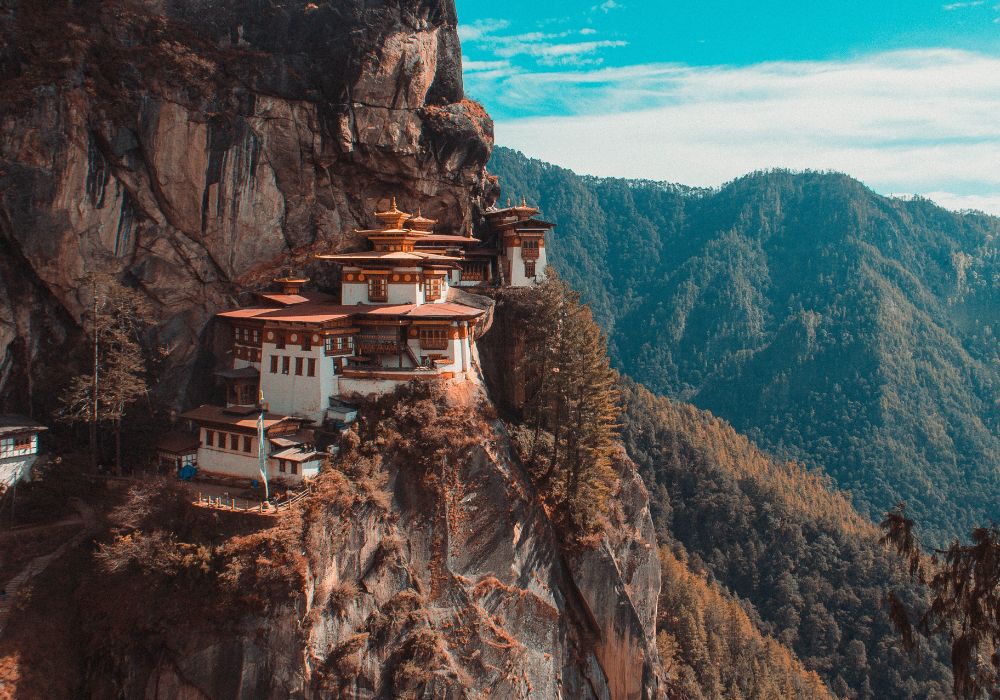



Beyond the iconic Paro Taktsang and Buddha Dordenma statues, Bhutan’s tourist attractions hide secret treasures waiting to be discovered by adventurous travelers like you.
While most visitors flock to the popular landmarks that boast impressive TripAdvisor ratings—like Punakha Dzong with its 4.8/5 rating from 1,431 visitors or the breathtaking Dochula Pass rated 4.6/5 by 2,294 travelers—there’s a whole different Bhutan beneath the surface. Surprisingly, this carbon-negative country, where nearly 70% of the land is covered in lush forests, harbors destinations even seasoned travelers rarely experience.
Instead of limiting yourself to the standard tourist circuit, you can venture into lesser-known bhutan tourist places that showcase the authentic soul of the “last true illusion of Shangri-La”. From remote villages where ancient weaving traditions thrive to hidden monasteries perched on forgotten ridges, these must-see places in bhutan offer experiences far from the daily $100 tourist fee concerns.
The majestic Himalayan kingdom, divided into 20 distinct districts called dzongkhags, contains breathtaking bhutan landmarks and destinations that locals typically keep to themselves. Although the journey might be challenging—crossing high mountain passes like the 3800m Thrumshing La—the rewards of discovering these hidden gems are immeasurable.
Get ready to explore 13 extraordinary places to see in bhutan that will transform your understanding of this unique kingdom where happiness matters more than GDP.
Lhuentse Valley
Tucked away in the northeastern corner of Bhutan, Lhuentse Valley stands as one of the most captivating bhutan destinations with its pristine landscapes and profound cultural significance. This remote jewel offers an authentic glimpse into Bhutanese heritage far from the usual tourist trails.
What makes Lhuentse Valley special
Lhuentse Valley’s distinction begins with its royal heritage as the ancestral homeland of Bhutan’s ruling Wangchuck dynasty. This connection to the monarchy adds remarkable historical depth to your experience.
The valley showcases dramatic scenery characterized by steep cliffs, dense conifer forests, and picturesque gorges. Furthermore, it serves as a vital biological corridor connecting three major national parks—Wangchuck Centennial Park, Bumdelling Wildlife Sanctuary, and Thrumshingla National Park.
Lhuentse’s crown jewel is undoubtedly its textile tradition. The valley is renowned nationwide for the exquisite Kishuthara fabric, an intricately patterned silk textile meticulously crafted by local artisans. In Khoma Village, women from less than 80 households maintain this extraordinary weaving tradition passed down through generations. Each Kishuthara piece requires immense focus and typically takes one to two years to complete—making these textiles highly sought-after throughout Bhutan.
Notable bhutan landmarks include the majestic Lhuentse Dzong (also called Lhuentse Rinchentse Dzong), which overlooks the Kuri River from its hilltop perch. Additionally, the impressive 157-foot bronze statue of Guru Nangsey Zileon at Takila offers spectacular valley views.
How to get to Lhuentse Valley
Reaching this remote must see place in bhutan requires determination. The nearest airport is Paro International Airport, approximately 500 km away. From Paro, you must travel to Thimphu before continuing your journey.
You can reach Lhuentse via road through multiple routes:
- From Thimphu: Regular busses operate on Mondays, Thursdays, and Fridays, departing at 7:00 AM and arriving around 5:30 PM.
- From Bumthang: Fly to Bumthang’s domestic airport (30-minute flight) then drive to Lhuentse.
- From India: Enter through Samdrup Jongkhar and continue via Mongar and Trashigang.
Best time to visit Lhuentse Valley
The optimal period to explore these bhutan tourist places is during fall/autumn (September to November) when temperatures remain mild, rarely exceeding 25°C. During these months, you’ll enjoy pleasant weather and clear skies—perfect for photography and outdoor exploration.
Throughout the year, Lhuentse maintains a warm, temperate climate. Nevertheless, pack light jackets for evenings as temperatures can drop significantly after sunset. Spring months (March-May) offer another excellent window for visiting, with wildflowers and good visibility enhancing your experience.
Khoma Village
Nestled in the heart of northeastern Bhutan, Khoma Village stands as a living museum of Bhutan’s textile heritage, where time seems to slow down amid the rhythmic sounds of traditional looms. This hidden gem among bhutan tourist attractions offers visitors a rare glimpse into an ancient art form preserved through generations.
What makes Khoma Village special
Khoma Village, located about 11.5km east of Lhuentse Dzongkhag, is nationally celebrated for its exceptional textile craftsmanship. The village has earned widespread fame throughout Bhutan for its signature creation—the Kishuthara, an intricately patterned silk textile unique to Bhutanese culture.
What truly sets this bhutan landmark apart is how deeply the weaving tradition is woven into daily life. More than 80% of the women in Khoma rely on Kishuthara weaving for their socio-economic livelihood. This isn’t merely a craft—it’s the village’s cultural identity and economic backbone.
Walking through the village reveals rows of women seated in simple textile sheds, skillfully creating vibrant patterns with silk threads on traditional backstrap looms. Each Kishuthara is a masterpiece of patience and precision, often worn by Bhutanese women only during special festivals and celebrations.
Moreover, the village maintains this tradition through familial bonds, as mothers teach daughters the intricate techniques, ensuring the art form’s survival through generations.
How to get to Khoma Village
Reaching this must see place in bhutan requires some planning. The village lies approximately 10 kilometers from Lhuentse Dzong. From Paro International Airport, you’ll need to:
- First travel to Thimphu (about 50km, 1.5-2 hours by car)
- Continue eastward toward Lhuentse District
- Finally, take a local vehicle from Lhuentse Dzong to Khoma Village
Alternatively, you can fly to Bumthang Airport from Paro, then proceed by road to Lhuentse, which significantly reduces travel time.
For adventurous travelers, a pleasant hour-long walking path connects the main road to Lhuentse Dzong with Khoma Village, offering a journey through gentle slopes and pine forests.
Best time to visit Khoma Village
The ideal seasons to explore bhutan tourist places like Khoma are spring (March to May) and autumn (September to November) when weather conditions are most favorable. These months provide comfortable temperatures and clear skies—perfect for both photography and enjoying the village atmosphere.
Winter months present a unique opportunity for textile enthusiasts, however. During this agricultural off-season, the women of Khoma dedicate themselves fully to weaving Kishuthara. Consequently, winter visits offer the richest experience of seeing the village’s weaving culture in full swing, with numerous artisans working simultaneously on their looms.
January specifically offers fewer crowds along with pleasant daytime temperatures in eastern Bhutan, creating an ideal environment for immersive homestays that provide genuine insight into rural Bhutanese life.
Gasa Hot Springs
Renowned throughout Bhutan for its therapeutic powers, Gasa Hot Springs offers visitors a sacred healing experience unlike any other bhutan landmark. Located at the base of a majestic Himalayan peak beside the tranquil Mo Chhu River, these natural thermal waters represent one of the country’s most treasured natural wonders.
What makes Gasa Hot Springs special
The extraordinary healing properties of Gasa Tshachu (hot spring) attract over 8,000 visitors annually, making it the most visited place in Bhutan’s largest yet least populated district. Particularly valued for its curative powers, the mineral-rich waters provide relief for multiple health conditions including:
- Rheumatism and arthritis
- Skin diseases and ulcers
- Tuberculosis and digestive disorders
- Indigestion and joint pain
Local belief holds that these springs originated from Buddha’s blessings, essentially giving them spiritual significance beyond their physical benefits. In fact, Gasa Tshachu is believed to cure thirteen different types of diseases, collectively known as Neyrig Chusum.
The area features ten uniquely designed ponds with varying temperatures and different medicinal values. Eight ponds in two C-shaped sheds accommodate approximately 180-200 people, with separate facilities designated for men and women.
How to get to Gasa Hot Springs
Reaching this must-see place in bhutan requires traveling approximately 134 kilometers from Thimphu or 47 kilometers from Punakha. The journey from Punakha takes roughly two hours by road.
Notably, recent improvements have made access much easier for visitors:
- Road connectivity extends directly to the hot springs
- A blacktopped road connects from Gasa Dzong (about 2 km away)
- Light or medium-sized vehicles are recommended due to road conditions
Best time to visit Gasa Hot Springs
Winter months (December to March) are traditionally considered ideal for exploring this bhutan tourist attraction. Yet this popularity comes with drawbacks—pools become crowded and accommodation scarce during peak season.
For those seeking a less congested experience, autumn presents an excellent alternative when trees and grasslands change color, creating a picturesque backdrop. Likewise, spring offers pleasant conditions as trees and flowers begin to blossom.
Many locals believe the therapeutic benefits of the hot spring double during the blooming season of plants, further enhancing your experience at this unique destination among bhutan tourist places.
Sakteng Wildlife Sanctuary
Established in 2003 as Bhutan’s newest protected area, Sakteng Wildlife Sanctuary stands as a pristine wilderness paradise in the eastern corner of the kingdom. This extraordinary reserve spans approximately 650 square kilometers across Trashigang District, representing one of the most fascinating yet least explored bhutan tourist attractions.
What makes Sakteng Wildlife Sanctuary special
Hidden within the eastern Himalayan landscape, Sakteng Wildlife Sanctuary showcases remarkable biodiversity with 35 rhododendron species out of Bhutan’s total 46 species, earning its nickname “Paradise of Rhododendrons.” The sanctuary harbors an impressive collection of wildlife, including 20 mammal species and 147 bird species.
Perhaps most intriguingly, this bhutan landmark is the world’s only protected area established partly to safeguard the mythical Yeti (locally called Migoi). Though scientists haven’t confirmed its existence, local legends persist about this mysterious creature.
The sanctuary’s cultural dimension is equally compelling, serving as home to the Brokpa people—a semi-nomadic community with distinctive traditions. Actually, about 83% of their household income comes from livestock husbandry, creating a rare example of humans living harmoniously with protected wilderness.
Noteworthy wildlife includes:
- Red panda (endangered)
- Snow leopard
- Himalayan black bear
- Himalayan red fox
- Musk deer
How to get to Sakteng Wildlife Sanctuary
Reaching this must-see place in bhutan requires determination. The nearest airport is Paro, located approximately 95 kilometers from Trashigang. From Trashigang, a 5-6 hour drive through mountainous terrain leads to the sanctuary.
Alternatively, adventurous travelers can trek from Phongmey town, a journey taking 2-3 days depending on pace.
Best time to visit Sakteng Wildlife Sanctuary
For optimal bhutan destinations experiences, plan your visit between March and August. This period typically avoids heavy rainfall while offering comfortable temperatures.
Spring (March-May) provides ideal conditions with temperatures ranging from 5°C to 15°C, perfect for spotting wildlife and witnessing the spectacular rhododendron blooms. Autumn (September-November) offers another excellent window with clear skies and temperatures between 6°C to 14°C, making it ideal for photography and trekking through this remarkable hidden treasure among places to see in bhutan.
Ura Valley in Bumthang
At first glance, Ura Valley feels like journeying through a time portal into medieval Bhutan. Located at a lofty elevation of 3,100 meters in Bumthang dzongkhag, this highest valley showcases a pristine glimpse of traditional Bhutanese life rarely experienced by ordinary tourists.
What makes Ura Valley special
First and foremost, Ura Valley captivates visitors with its cluster of about 50 traditional houses arranged in an authentic medieval setting, remarkably untouched by modernization. The valley earned the poetic nickname “Ura Serzhong” or “Golden Bowl Valley” thanks to its rolling cereal fields.
The cultural significance runs deep as the valley was named after Padmasambhava, the guru who brought Buddhism to Bhutan in the 8th century. According to local legends, he passed through the valley on his first visit to Bhutan, after which it became known as Urbay, “the hidden land of Ugyen”.
Besides its historical importance, Ura Valley hosts two remarkable festivals:
- Ura Yakchoe – A three-day celebration beginning on the 12th day of the third month
- Matsutake Festival – An August celebration of locally harvested mushrooms
Local life primarily revolves around yak herding, with residents often spotted grazing their animals on verdant meadows. The region produces some of Bhutan’s finest matsutake mushrooms, celebrated through dedicated festivals where various mushroom recipes are showcased.
How to get to Ura Valley
Reaching this bhutan landmark requires approximately a 1½ hour drive from Bumthang town. The journey covers roughly 48 kilometers along scenic mountain roads. As you approach Ura Valley, you’ll climb to heights of 3,500 meters before descending into the village itself.
Best time to visit Ura Valley
Regarding optimal timing for this must see place in bhutan, spring (March-May) offers mild temperatures and blooming landscapes. Autumn (September-November) presents clear skies and striking fall colors, ideal for photography enthusiasts.
Yet many visitors consider May and August the very best months to experience this bhutan tourist attraction, as these periods coincide with the valley’s vibrant festivals. Generally, winter brings extreme cold to this high-altitude region, so it’s advisable to avoid visiting during December-February unless you’re specifically seeking solitude.
Tang Valley
Among Bhutan’s hidden treasures, Tang Valley remains the most secluded of Bumthang’s four valleys, offering serene landscapes and profound cultural heritage far from standard tourist routes. This remote paradise serves as a sanctuary where ancient traditions flourish undisturbed by modern influences.
What makes Tang Valley special
Tang Valley holds exceptional significance as the birthplace of Pema Lingpa, the renowned Bhutanese saint and treasure discoverer. Unlike more agricultural regions, this high-altitude valley’s inhabitants primarily raise sheep at lower elevations and yaks at higher altitudes due to the relatively poor soil quality.
The valley transforms remarkably each October when it turns vibrant pink with blooming buckwheat flowers, creating a photographer’s paradise. Apart from its natural beauty, Tang harbors several sacred sites including Tang Rimochen Lhakhang and the historically significant Mebartsho (Burning Lake), where Terton Pema Lingpa discovered hidden treasures including religious texts and statues in 1475.
Traditional Bhutanese architecture remains perfectly preserved throughout the valley, with houses typically built in 2-3 story designs—upper rooms serving as family living spaces and ground floors previously used for keeping animals.
How to get to Tang Valley
Reaching this bhutan landmark requires a journey from Jakar, following the west-east road toward Ura for approximately 10km. Subsequently, an unpaved road branches northward, climbing uphill through a narrow gorge. Alternatively, from Bumthang central, visitors can take a short drive past the Dechenpelrithang sheep farm to access the northern unpaved road.
This route grants access to numerous places to see in bhutan, including Kunzangdrak (ideal for hiking), Tang Rimochen Lhakhang, Gamling, and Wobtang.
Best time to visit Tang Valley
For optimal experiences at this must see place in bhutan, consider these seasonal characteristics:
Spring (March–May) offers pleasant weather with blooming rhododendrons, creating ideal conditions for hiking and photography.
Summer (June–August) transforms the valley into a lush green paradise, though travelers should prepare for occasional rain.
Autumn (September–November) provides brilliant blue skies and beautiful foliage colors, making it perfect for capturing Tang’s scenic beauty.
Winter (December–February), despite being cold, presents a uniquely serene atmosphere—you might even be the only visitor exploring these bhutan tourist places.
Dorikha Village in Haa
High in the mountains of western Bhutan sits Dorikha Village, a sacred hamlet where ancient traditions remain untouched by time. Located in Samar Gewog of Haa District at an elevation of 2,900 meters, this hidden sanctuary offers spiritual encounters rarely found among typical bhutan tourist attractions.
What makes Dorikha Village special
The village’s name itself carries profound meaning, derived from “Dorjikhar” or “village on top of Vajra,” referring to its distinctive vajra (ritual thunderbolt) shape. Perched strategically on a mountain slope above the Haa-Samtse highway, Dorikha boasts remarkable spiritual heritage dating to the 8th century, when Guru Rinpoche reportedly blessed this land.
At Dorikha’s heart stands the magnificent two-storied Dorikha Lhakhang (monastery), officially known as Dorikha Chokhording Lobdra. This architectural masterpiece features beautiful utse (central tower) and sertog (pinnacle) visible from the highway below. Inside, exquisite mural paintings adorn the walls—Phurpai Lhatshog on the first floor and Guru Tshengey with 16 Arhats on the second floor.
The village structure itself fascinates visitors, with approximately 20 traditional houses centered around both the temple and an archery range—two elements considered equally important in Bhutanese culture.
How to get to Dorikha Village
Reaching this must-see place in bhutan typically requires an hour’s drive from Haa town via the Chelela bypass. Alternatively, visitors can travel through Tergo La pass, climbing from 2900m to 3715m for breathtaking views of Bhutan’s highest mountains, including Gangkhar Puensum (7543m).
Best time to visit Dorikha VillageFor optimal experiences in this bhutan landmark, consider timing your visit around the village’s vibrant religious ceremonies. Noteworthy events include:
- Trelda Tshechu held annually on the 10th day of the 2nd month
- Kanjur recitation from the 11th to 15th day of the 4th month
- Nyungney fasting prayers conducted from the 29th day of the 5th month
Remarkably, visitors can participate in authentic farm activities like milking cows and making cheese, offering genuine insight into Bhutanese mountain life. This enriching cultural immersion makes Dorikha one of the most rewarding yet overlooked bhutan destinations.
Chendebji Chorten
Shrouded in myths and legends, Chendebji Chorten rises mysteriously from a verdant valley in central Bhutan, captivating visitors with its distinctive Nepali-style architecture and sacred significance. This 18th-century stupa, situated approximately 41 kilometers west of Trongsa, represents one of the most enigmatic bhutan landmarks off the beaten tourist path.
What makes Chendebji Chorten special
The Chendebji Chorten stands apart from other bhutan tourist attractions primarily through its unique architectural style. Modeled after Nepal’s famous Boudhanath and Swayambhunath stupas, it features distinctive eyes painted at the four cardinal points, symbolizing Buddha’s all-seeing wisdom. This design is exceptionally rare in Bhutan, making it architecturally significant within the kingdom.
Local legends add mystical depth to this sacred monument. According to traditional beliefs, the chorten was constructed precisely where “three ridges and three edges of the sky meet”. Furthermore, it was built to subdue a malevolent demoness called Ngala Dudm who reportedly terrorized travelers in the region. Yet another fascinating tale suggests the stupa was erected atop a giant evil snake that was defeated at this very spot.
Beyond its mythical origins, the Chendebji Chorten hosts the vibrant Buddhist festival of Sambha Lhundrup Molam Chenmo annually during the ninth month of the Bhutanese calendar. This celebration transforms the normally tranquil site into a hub of spiritual activity with mesmerizing Buddhist songs, prayers, and elaborate ceremonies.
How to get to Chendebji Chorten
Located in Trongsa district along the highway connecting Wangdue Phodrang and Trongsa, this must see place in bhutan is readily accessible by road. If traveling from Thimphu, you’ll find the chorten approximately 25 miles before reaching Trongsa town, visible directly from the main highway.
For those coming from central Trongsa, take the Semtokha-Trashigang highway toward the west. The journey covers about 40 kilometers and typically requires around one hour of driving time.
Best time to visit Chendebji Chorten
The optimal periods to explore this sacred site are during spring (March to May) and autumn (September to November) when pleasant weather and clear skies enhance the experience. Throughout these seasons, temperatures remain moderate, creating ideal conditions for outdoor exploration and photography of the surrounding landscapes.
Monthly temperature variations provide valuable guidance for planning your visit:
- Spring (March-May): 4°C to 20°C
- Summer (June-August): 13°C to 22°C
- Autumn (September-November): 2°C to 20°C
- Winter (December-February): -2°C to 13°C
To fully appreciate the spiritual atmosphere of this bhutan destination, consider timing your visit during the afternoon regardless of season, as the favorable temperatures create optimal viewing conditions.
Rangjung Monastery
Perched on a small hillock overlooking Rangjung town in eastern Bhutan, Rangjung Woesel Choeling Monastery presents a spiritual sanctuary rarely explored by conventional tourists. This thriving Buddhist center, established relatively recently, exemplifies Bhutan’s living religious traditions outside the mainstream circuit.
What makes Rangjung Monastery special
Founded in 1989 by His Eminence Dungsey Garab Dorje Rinpoche, the monastery began humbly with just a handful of monks and nuns residing in simple bamboo huts. Initially facing financial challenges, the monastery gradually expanded through donor contributions, transforming into a significant spiritual center.
The monastery’s primary mission is preserving the Dudjom New Treasure Lineage of Buddhism and supporting Buddhist communities locally and internationally. Its architectural style reflects Tibetan influence, featuring colorful paintings and intricate decorations.
Inside, visitors can marvel at remarkable statues depicting three Buddhist sages:
- Guru Rinpoche from the Western Himalayas
- Shantarakshita from India
- Trisong Detsen from Tibet
Currently, over 300 monks and nuns study at Rangjung Monastery, even as Rinpoche has limited admissions due to space constraints.
How to get to Rangjung Monastery
Located in Trashigang district of eastern Bhutan, the monastery sits approximately a 30-minute drive from Trashigang town. Visitors typically approach via road from major centers like Thimphu or Paro, with Rangjung town serving as the access point.
The monastery occupies a strategic position on a small hilltop, offering sweeping views of the surrounding area, including forests, valleys, and rugged terrain.
Best time to visit Rangjung Monastery
The optimal time to visit coincides with the monastery’s annual Tshechu festival held during the ninth month of the Bhutanese calendar. This vibrant celebration features traditional dances, mask rituals, and ceremonies that showcase Bhutanese Buddhist culture.
For those seeking a more contemplative experience, spring and autumn months provide comfortable temperatures and clear skies, creating ideal conditions for exploring this spiritual haven and interacting with the monastic community.
Dagala Thousand Lakes Trek
Hidden within Thimphu district, the Dagala Thousand Lakes Trek offers an intimate communion with Bhutan’s alpine wilderness, taking hikers through a pristine landscape adorned with crystal-clear mountain lakes and panoramic Himalayan vistas.
What makes Dagala Trek special
This moderate 5-6 day trek stands out primarily for its remarkable high-altitude lakes scattered across the route. As you navigate the trail, you’ll witness spectacular views of the entire Himalayan range, including majestic peaks such as Mount Everest, Kanchenjunga, Jomolhari, Jichu Drake, and Gangche Ta.
The journey traverses through valleys filled with blue poppies (blooming June-July) and meadows where shaggy yaks graze peacefully. Moreover, the highest point reaches an impressive 4,520 meters, offering breathtaking vistas that few other treks in Bhutan can match.
Throughout the trek, you’ll encounter diverse ecosystems, from rhododendron forests to alpine meadows. First thing to remember, the trek also presents opportunities for trout fishing in the pristine lakes, provided you arrange permits beforehand.
How to get to Dagala Trek
The trail typically begins from Geynekha village after a 45-kilometer drive from Thimphu. From there, you descend briefly to a river crossing before starting your ascent.
Altogether, the trek covers approximately 41 kilometers, with the route winding through multiple passes and valleys. The standard itinerary includes overnight camps at locations such as Gur, Labatama, and Panka, each offering unique landscapes.
Best time to visit Dagala Trek
The optimal seasons for this bhutan landmark are spring (April-June) and autumn (September-October). During these periods, you’ll enjoy stable weather, clear skies, and pleasant temperatures ranging from 10°C to 20°C during daytime.
Conversely, summer (June-August) brings monsoon rains that can make trails muddy and challenging, whereas winter (December-February) experiences heavy snowfall and freezing temperatures, making high-altitude trekking difficult.
Despite these challenges, this lesser-visited bhutan destination rewards adventurous travelers with solitude and natural splendor rarely found along more popular routes.
Zhemgang District
In the south-central region of Bhutan lies Zhemgang District, a verdant paradise where nature reigns supreme. Formerly called Shemgang, this extraordinary biodiversity hotspot boasts dense forest cover extending across 86% of its total area, creating one of the most ecologically rich bhutan tourist attractions still untouched by mass tourism.
What makes Zhemgang special
Zhemgang stands out primarily as a biodiversity sanctuary, sheltering 22 endangered animal species including the endemic Golden Langur. The district encompasses three major wildlife reserves—Royal Manas National Park, Jigme Singye Wangchuck National Park, and Phrumshingla National Park.
Culturally, Zhemgang remains one of the last regions where ancient Bon (Animist) religious practices continue alongside Buddhism. Local inhabitants excel at traditional crafts, predominantly creating intricate bamboo products like Bangchungs (matted bowls), Palangs (alcohol containers), and Balaks (hats).
Historic treasures include the pious Zhemgang Dzong dating back to 1163 AD, featuring six sacred Lhakhangs with Goenkhang considered the most revered. Ancient temples such as Buli Lhakhang and Tharpa Choeling Lhakhang, built by Terton Pema Lingpa, enrich this spiritual landscape.
How to get to Zhemgang
By air, travelers can fly to Paro International Airport, then drive along the Sarpang-Gelephu-Trongsa Highway. Domestic flights connect Paro to Bathpalathang Airport, operating twice weekly on Thursdays and Sundays.
For train travelers, Hasimara Railway Station in West Bengal (India) offers the closest rail connection, requiring further road travel through Jaigaon town and Phuentsholing.
Road journeys from Thimphu cover approximately 162 miles, taking around 4 hours 9 minutes. Alternatively, entering through Jaigaon requires a 421km (12-hour) drive.
Best time to visit Zhemgang
January through March provides optimal visiting conditions, currently complemented by April through December as favorable alternatives. Spring (March-May) and autumn (September-November) offer pleasant temperatures and clear skies, ideal for wildlife observation.
Markedly, monsoon season (June-August) brings considerable rainfall, making sightseeing challenging until September when weather typically clears.
Merak Village
Tucked in the eastern Himalayas at 3,500 meters altitude, Merak Village remains one of the most authentic bhutan tourist attractions where time stands still amid pristine alpine landscapes. This semi-nomadic settlement, home to approximately 30 households, preserves centuries-old traditions rarely witnessed by foreign visitors.
What makes Merak Village special
The village’s distinctive identity comes from its inhabitants—the Brokpa people—a semi-nomadic community known for their unique culture, customs, and striking traditional attire. Men wear thick red wool coats often adorned with animal skins, while women don red and white striped dresses that immediately distinguish them from other Bhutanese ethnic groups.
Remarkably, locals sustain themselves primarily through yak herding and sheep raising. Their culinary traditions feature delicacies like fermented yak cheese, yak butter tea, and buckwheat pancakes.
Merak is presently known as “the valley of Yeti” (the abominable snowman), with residents claiming this mythical creature exists, despite lacking scientific evidence. Indeed, the Sakteng Wildlife Sanctuary was partially established to protect this legendary being.
How to get to Merak Village
Reaching this must see place in bhutan requires determination. Starting from Trashigang town in eastern Bhutan, travelers embark on a 3-4 hour drive followed by a challenging 4-6 hour hike to reach the village.
Alternatively, from Samdrup Jongkhar, take the highway toward Trashigang. After reaching Trashigang junction, follow the well-marked road to Merak for approximately 25 kilometers.
Best time to visit Merak Village
The optimal periods to explore this bhutan landmark are spring (April-June) and fall (September-November) when weather conditions are mild and skies remain clear. These seasons often coincide with local festivals, enhancing your cultural experience.
Summer brings monsoon rains, whereas winter temperatures can plummet below freezing. Nevertheless, winter offers unique opportunities to witness the Brokpa yak and ache lhamo dances and observe more weavers at work, as agricultural activities decrease during colder months.
Kila Nunnery
Known as the “second Tiger’s Nest,” Kila Nunnery clings dramatically to a sheer cliff face between Paro and Haa valleys, creating one of the most visually striking bhutan landmarks that relatively few tourists ever witness.
What makes Kila Nunnery special
Established as a meditation site in the 9th century by Drupthob Chhoeje Norbu, Kila Nunnery (alternatively called Chele La Gompa) is reputedly the oldest nunnery in Bhutan. The complex features seven small temples and several retreat huts built into a dizzying cliffside. Approximately seventy nuns live here in self-imposed isolation, pursuing higher Buddhist college studies.
The nunnery’s unique position offers spectacular views of Paro valley and Jele Dzong. After being destroyed by fire, it was meticulously rebuilt by Sherub Gyelthsen. Until recently, the monastery served as a school for Buddhist study, but harsh winter conditions prompted relocation of the school to Paro town. Currently, the monastery exclusively serves Buddhist practitioners seeking retreat experiences.
Analogous to the famed Tiger’s Nest monastery, this spiritual haven is often fondly referred to as the “Little Tiger’s Nest” because it similarly clings to the mountainside.
How to get to Kila Nunnery
The nunnery sits near Chele La Pass, which at 3,810 meters is one of Bhutan’s highest motorable passes. From the road connecting Paro and Haa, visitors can access the nunnery via a dirt track[513]. Alternatively, you can enjoy a scenic hour-long downhill hike from Chele La Pass, passing chortens, prayer flags, and delightful forest stretches.
For those driving from Paro, the right turn for the nunnery appears 10km before reaching Chele La Pass, followed by 3-4km on an unpaved road.
Best time to visit Kila Nunnery
The trail remains accessible year-round, but April, May, September, October, and November offer ideal conditions. During these months, clear skies enhance the magnificent views of the Himalayan ranges.
For a truly special experience, arrive early morning to witness the hypnotic sounds of trumpets and chimes during morning prayer rituals. Winter visits, despite being challenging due to cold conditions, provide unique opportunities to observe the nunnery when fewer tourists visit.
Comparison Table
| Attraction | Location/Region | Main Highlights | Best Time to Visit | Accessibility | Special Features |
| Lhuentse Valley | Northeastern Bhutan | Ancestral homeland of Wangchuck dynasty, textile traditions | Sept-Nov, March-May | 500km from Paro Airport; Regular busses from Thimphu | Famous for Kishuthara fabric weaving |
| Khoma Village | 11.5km east of Lhuentse | Traditional textile weaving center | Spring (Mar-May) & Autumn (Sept-Nov) | 10km from Lhuentse Dzong | 80% women involved in Kishuthara weaving |
| Gasa Hot Springs | Near Mo Chhu River | 10 therapeutic pools, healing properties | Dec-March | 134km from Thimphu, 47km from Punakha | Cures 13 different types of diseases |
| Sakteng Wildlife Sanctuary | Trashigang District | 650 sq km protected area, 35 rhododendron species | March-August | 95km from nearest airport (Paro) | World’s only protected area for Yeti |
| Ura Valley | Bumthang | 50 traditional houses, medieval setting | March-May, Sept-Nov | 48km from Bumthang town | Known as “Golden Bowl Valley” |
| Tang Valley | Bumthang | Birthplace of Pema Lingpa, sheep/yak farming | March-May, Sept-Nov | Access via Jakar | Pink buckwheat flowers in October |
| Dorikha Village | Haa District | Two-storied Dorikha Lhakhang, traditional architecture | Not mentioned | 1 hour drive from Haa town | 8th-century spiritual heritage |
| Chendebji Chorten | Central Bhutan | Nepali-style stupa with distinctive eyes | March-May, Sept-Nov | 41km west of Trongsa | Built to subdue evil demoness |
| Rangjung Monastery | Trashigang | Home to 300+ monks/nuns, Dudjom lineage | Spring & Autumn | 30-min drive from Trashigang | Founded in 1989 |
| Dagala Thousand Lakes Trek | Thimphu district | High-altitude lakes, Himalayan views | April-June, Sept-Oct | Starts from Geynekha village | Reaches 4,520m elevation |
| Zhemgang District | South-central Bhutan | 86% forest cover, wildlife sanctuaries | Jan-March | 162 miles from Thimphu | Home to 22 endangered species |
| Merak Village | Eastern Himalayas | Brokpa semi-nomadic community | April-June, Sept-Nov | 3-4hr drive + 4-6hr hike from Trashigang | Known as “valley of Yeti” |
| Kila Nunnery | Between Paro & Haa | Cliff-side monastery, 7 temples | April-May, Sept-Nov | Near Chele La Pass | Oldest nunnery in Bhutan |
Conclusion
Bhutan remains one of the world’s last untouched destinations, where ancient traditions flourish amidst breathtaking Himalayan landscapes. The 13 hidden gems highlighted above offer you glimpses into authentic Bhutanese life that most travelers never experience. Far beyond the typical tourist circuit lies a kingdom where happiness matters more than GDP, and spiritual traditions thrive undisturbed by modern influences.
These secret bhutan tourist attractions showcase the extraordinary diversity packed into this small carbon-negative nation. From the intricate Kishuthara textiles of Khoma Village to the healing waters of Gasa Hot Springs, each destination tells a unique story. Equally important, places like Sakteng Wildlife Sanctuary – the world’s only protected area established partly for the mythical Yeti – demonstrate Bhutan’s commitment to preserving both natural wonders and cultural legends.
Throughout your journey, you’ll encounter stunning monasteries like Kila Nunnery dramatically clinging to sheer cliff faces, picturesque villages where time stands still, and pristine landscapes untouched by mass tourism. The semi-nomadic Brokpa people of Merak Village, with their distinctive red wool attire, represent just one of many fascinating cultures preserved within Bhutan’s mountainous terrain.
Bhutan’s seasonal variations create different experiences depending on when you visit. Spring transforms valleys with blooming rhododendrons, while autumn paints landscapes with vibrant fall colors. Winter, though challenging, rewards adventurous travelers with solitude and cultural immersion rarely found during busier seasons.
Planning your itinerary requires careful consideration of accessibility and weather conditions. Several destinations demand significant effort to reach – a journey through mountain passes exceeding 3,800 meters or multi-day treks across remote terrain. These challenges, however, ensure these places remain authentic and unspoiled.
The kingdom of Bhutan awaits those willing to venture beyond familiar paths. Pack your spirit of adventure alongside your camera when exploring this Himalayan jewel. These 13 hidden treasures promise experiences that will transform your understanding of Bhutan, creating memories that last long after you’ve descended from the mountains and returned home.
Key Takeaways
Discover Bhutan’s authentic soul through 13 hidden destinations that showcase the kingdom’s untouched cultural heritage and pristine natural beauty beyond the typical tourist circuit.
• Venture beyond popular landmarks – While Tiger’s Nest and Buddha Dordenma attract crowds, hidden gems like Khoma Village’s textile workshops and Gasa’s therapeutic hot springs offer authentic experiences without tourist masses.
• Plan for challenging but rewarding access – Most hidden attractions require significant effort to reach, including multi-day treks, high-altitude passes over 3,800m, and remote village hikes that ensure these places remain unspoiled.
• Time visits strategically for optimal experiences – Spring (March-May) and autumn (September-November) provide ideal weather conditions, while winter offers unique cultural immersion opportunities with fewer crowds.
• Immerse in living traditions and biodiversity – From the semi-nomadic Brokpa people in Merak Village to Sakteng Wildlife Sanctuary’s 35 rhododendron species, these destinations preserve centuries-old customs and rare ecosystems.
• Embrace Bhutan’s spiritual and natural healing heritage – Sacred sites like Dorikha Village’s 8th-century monastery and Gasa’s mineral-rich springs demonstrate how spirituality and nature intertwine in Bhutanese culture.
These hidden treasures reward adventurous travelers with profound cultural encounters and pristine landscapes that reveal why Bhutan remains one of the world’s last authentic destinations, where happiness truly matters more than GDP.
FAQs
Q1. What are some unique cultural experiences in Bhutan? Bhutan offers many authentic cultural experiences, from witnessing traditional textile weaving in Khoma Village to participating in spiritual rituals at remote monasteries like Kila Nunnery. You can also interact with semi-nomadic communities like the Brokpa people in Merak Village to learn about their distinct customs and way of life.
Q2. When is the best time to visit Bhutan’s hidden attractions? The optimal times to visit most hidden attractions in Bhutan are spring (March-May) and autumn (September-November). These seasons offer pleasant weather, clear skies, and beautiful landscapes. However, some places like Gasa Hot Springs are best visited in winter for their therapeutic benefits.
Q3. How accessible are these hidden attractions in Bhutan? Many of these hidden attractions require significant effort to reach, often involving long drives and challenging hikes. For example, Merak Village requires a 3-4 hour drive from Trashigang followed by a 4-6 hour hike. However, this remoteness helps preserve their authenticity and offers a more rewarding experience for adventurous travelers.
Q4. What makes Bhutan’s wildlife sanctuaries special? Bhutan’s wildlife sanctuaries, like Sakteng Wildlife Sanctuary, are known for their rich biodiversity and unique features. Sakteng, for instance, is the world’s only protected area partially established to safeguard the mythical Yeti. These sanctuaries also house numerous endangered species and rare flora, like the 35 rhododendron species found in Sakteng.
Q5. Are there any unique festivals to experience at these hidden attractions? Yes, many of these hidden attractions host unique festivals. For example, Ura Valley in Bumthang celebrates the Ura Yakchoe festival in spring and the Matsutake Festival in August. Rangjung Monastery holds vibrant religious ceremonies, while Merak Village offers opportunities to witness traditional Brokpa dances during local festivals.
Discover Bhutan’s Hidden Tourist Gems (2025),
Explore 13 secret Bhutan tourist attractions beyond Paro Taktsang and Buddha Dordenma. From Lhuentse Valley to Gasa Hot Springs, uncover the kingdom’s untouched beauty and culture.